Head Control Clinch John Saylor
0
Head Control Clinch·welcomematstevescott
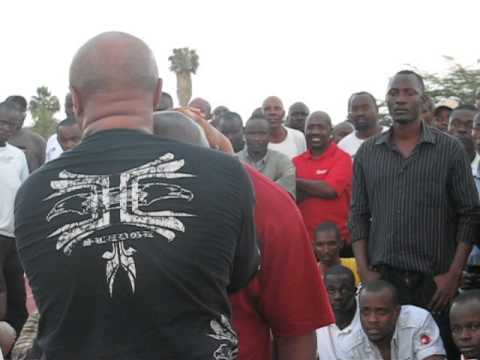
John Saylor teaches pummeling skills useful in no gi grappling, MMA, submission grappling or catch wrestling but can als…
Translation: head control clinch
The Head Control Clinch group encompasses all clinch positions where the primary mechanism of control is managing the opponent's head position, using collar ties, headlocks, front headlocks, or framing techniques to dictate posture and movement. [1] Head control is one of the most powerful clinch strategies because the head weighs approximately 8-12 pounds and sits atop the spine — controlling the head controls the entire spinal column and consequently the opponent's posture, balance, and movement capacity. [1],[2] This group includes the Thai plum (double collar tie), single collar ties, front headlocks, head-and-arm control, and framing positions. [2],[3] Head control clinch work is central to Muay Thai, wrestling, and MMA. [3]
Head control techniques have been practised in clinch fighting for millennia, with ancient pankration and wrestling depicting head control as a primary clinch strategy. [1] Muay Thai's plum clinch (double collar tie) is the most refined head control system, developed over centuries of competition in Thailand. [2] The front headlock became a signature position in wrestling and MMA, where it serves as both a control position and a platform for submissions like the guillotine and anaconda chokes. [2],[3]
Head control clinch positions are among the most commonly used in MMA, tracked by FightMetric as 'clinch control time.' [1]
No images yet for this technique.
Sign in to suggest an image.
John Saylor teaches pummeling skills useful in no gi grappling, MMA, submission grappling or catch wrestling but can als…
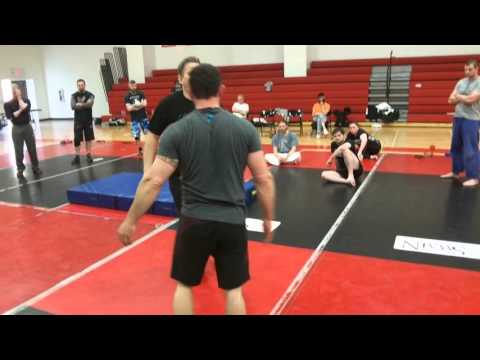
In this video clip, Military Combatives Instructor Kevin James demonstrates an easy to learn and execute head control "c…
No instructional courses yet for this technique.
Sign in to suggest a course.
Risk of injury to the person this technique is applied to
Head/neck control positions create cervical strain; Muay Thai plum is primary striking platform
Skill level needed to execute this technique reliably
Whether this technique is allowed under major competition rule sets
Muay Thai: The Art of Fighting (Yod Ruerngsa, Khun Kao Charuad & James Cartmell, 2002)
Alias sources — [1] Muay Thai: The Art of Fighting (Kraitus & Kraitus, 1988) [2] Wrestling Physical Conditioning Encyclopedia (Welker, 2010) [3] Wrestling for Fighting (Couture, 2007)
Effectiveness sources — [1] Muay Thai Unleashed (Delp, 2006) [2] Wrestling Physical Conditioning Encyclopedia (Petrov, 1977)
Mixed Japanese-Western terminology — combines traditional Japanese terms with katakana loanwords
Alias sources — [1] Muay Thai: The Art of Fighting (Kraitus & Kraitus, 1988) [2] Wrestling Physical Conditioning Encyclopedia (Welker, 2010) [3] Wrestling for Fighting (Couture, 2007)
Effectiveness sources — [1] Muay Thai Unleashed (Delp, 2006) [2] Wrestling Physical Conditioning Encyclopedia (Petrov, 1977)
neck and bicep strength for head control, endurance for sustained clinch
longer forearms for deeper collar tie, strong neck
biceps, forearms, neck muscles, core
Every move, in any martial art, shares a few universal traits. Mix and match below to pinpoint the right tool — or compare equivalents across styles.
The Collar Tie family covers clinch positions where the attacker places one or both hands behind the opponent's neck, gripping the back of the neck or base of the skull to control the head and posture. [1] The collar tie provides direct head control — the attacker can pull the opponent's head down to break posture, push it to the side to create angles, or snap it forward to initiate takedown entries. [1,2] Single collar ties allow one free hand for strikes or secondary grips, while the double collar tie (Thai plum) provides maximum head control for knee strikes and clinch throwing techniques. [2,3]
The Framing Clinch family covers clinch positions where the attacker uses extended arms and forearms as structural frames against the opponent's body, creating distance and control through rigid bone structure rather than gripping. [1] Frames are defensive and transitional tools — they maintain distance, prevent the opponent from closing to dominant clinch positions, and create space for the framing fighter to disengage, re-position, or initiate their own attacks. [1,2] Framing is a fundamental defensive clinch concept used across all combat sports, from boxing's long guard to wrestling's hand fighting. [2,3]
The Front Headlock family covers clinch positions where the attacker controls the opponent's head from the front, wrapping one arm around the head and neck while the opponent is in a bent-forward posture. [1] The front headlock is one of the most versatile clinch positions in combat sports — it serves as a control position, a platform for submissions (guillotine, anaconda, D'arce chokes), and a setup for go-behinds and takedowns. [1,2] Front headlocks typically occur when an opponent's shot is sprawled on, when snap-downs drive the opponent's head down, or when the opponent is broken down in the clinch. [2,3]
The Head-And-Arm Control family covers clinch positions where the attacker simultaneously controls the opponent's head and one arm, creating an asymmetric control that limits the opponent's ability to posture, turn, or defend. [1] Head-and-arm control is one of the most powerful clinch configurations because it addresses two of the opponent's primary defensive tools — the head (posture control) and an arm (frame defence). [1,2] This family includes crossface control and headlock control, each using different methods of combining head and arm manipulation. [2,3]
Head control — collar ties, front headlocks, head-and-arm control — gives the controlling fighter the ability to snap, drag, and direct the opponent. The collar tie appears in 32 passages, front headlock in 105 passages across 12 books. (12+ books; The Ultimate MMA Training Guide; wrestling manuals)
If you're fighting and can't dig for the underhook because your opponent is too tight, use a cross tap: pop your opposite hand on the opponent's elbow to create space, then dig under for the underhook. John Saylor emphasizes this is a basic Greco-Roman technique that works with the upper body control you already have.
Keep your elbows in tight with only a few inches of space between them rather than opening them too far. According to Hostile Control Tactics (HCT), tight elbows create the proper structure for control and allow you to generate power from strikes or takedowns.
Pull down on the head while driving up with an underhook lift across the body, then go to the near leg. John Saylor describes this as a pulling down motion on the head combined with an upward drive on the underhook to execute the takedown.
Use sabaki footwork by stepping to the side while pulling on the head, which creates the angle you need to dig for the underhook. John Saylor notes this is important when direct underhook attempts fail due to tight opponent positioning.
The Head Control Clinch group encompasses all clinch positions where the primary mechanism of control is managing the opponent's head position, using collar ties, headlocks, front headlocks, or framing techniques to dictate posture and movement. Head control is one of the most powerful clinch strategies because the head weighs approximately 8-12 pounds and sits atop the spine — controlling the head controls the entire spinal column and consequently the opponent's posture, balance, and movement capacity.
Head control techniques have been practised in clinch fighting for millennia, with ancient pankration and wrestling depicting head control as a primary clinch strategy. Muay Thai's plum clinch (double collar tie) is the most refined head control system, developed over centuries of competition in Thailand.
Unified MMA: legal — Legal — clinching is integral to MMA; IJF: legal — Legal — kumi-kata (grip fighting) is fundamental to judo; IBJJF: legal — Legal — standing grip fighting and clinch work permitted; IFMA: legal — Legal — the clinch is a core element of Muay Thai, clinch dominance is highly…; WBC/Boxing: restricted — Holding is technically a foul — referee breaks clinch, excessive holding resu…; K: restricted — 1/GLORY — One attack from clinch allowed, then referee breaks; WAKO: restricted — Clinch generally broken by referee — limited or no clinch fighting in most fo…; UWW: legal — Legal — clinch is fundamental to wrestling, the primary position in Greco-Roman
Danger rating 5/10. High — head/neck control positions create cervical strain; Muay Thai plum is primary striking platform
The standard setup chain: Close Distance → Establish Primary Grip → Position the Hips → Apply Pressure.
Standard counters include: Pummeling — fight for inside position by swimming arms under opponent's grips / Frame and Push — create distance using forearm frames against the chest or neck / Hand Fight — strip grips by peeling fingers or pushing the wrist away / Level Change — change levels to break the collar tie angle and attack the legs.
Common variants: Single collar tie (one hand on the nape controlling the head); Double collar tie (plum) (both hands behind the head for maximum control); Collar tie with wrist control (one hand on the nape, other controlling the wrist).
Head control clinch positions are among the most commonly used in MMA, tracked by FightMetric as 'clinch control time.
Top errors to watch for: Pulling the head down without controlling the opponent's arms — they frame out or underhook and escape / Using neck cranking force in a collar tie — the collar tie controls posture through angle, not brute downward force / Staying in the Thai plum without attacking — the position is only valuable when you're throwing knees or turning the … / Losing the head-inside position — once your head goes outside, the opponent controls the angle.
The Head Control Clinch is also known as Atama Seigyo Kurinchi, Neck Clinch, Head Tie, Head Control Position.