Isaac Trumble's Upper Body Series
0
Upper Body Clinch·Earn Your Gold Medal
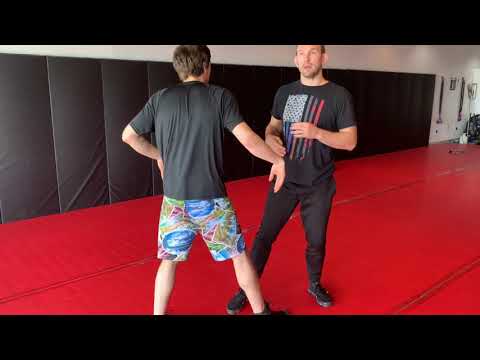
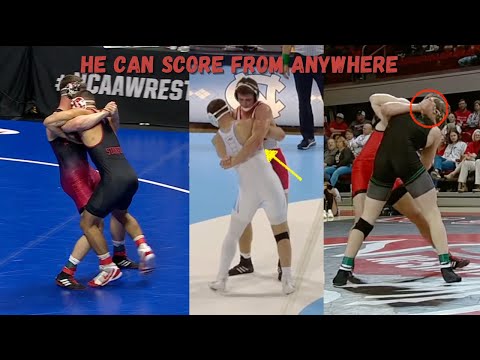
This video focuses on Isaac Trumble's ability to score from the double-under, over/under, and cruncher position. 0:00 …
Translation: upper body clinch
The Upper Body Clinch group encompasses clinch positions defined by specific upper-body tie configurations — underhooks, overhooks (whizzers), and the over-under combination — where the primary control mechanism is hooking the arms under or over the opponent's arms to establish positional dominance. [1] Upper body ties are the fundamental language of clinch fighting in wrestling and MMA, with the battle for underhooks considered one of the most critical aspects of standing grappling. [1],[2] The group includes single and double underhooks, standard overhooks and whizzers, and the fifty-fifty (over-under) position, each creating distinct offensive and defensive dynamics. [2],[3]
Upper body clinch ties have been central to wrestling since its earliest forms, with underhook and overhook positions appearing in ancient Greek wrestling instruction. [1] The modern classification of underhooks, overhooks, and over-under positions was systematised through collegiate and Olympic wrestling in the 20th century. [2] The whizzer (overhook with hip pressure) became a recognised defensive technique through American folkstyle wrestling. [2],[3]
Upper body clinch work is central to all wrestling styles and was refined through decades of international competition. [1]
Upper body clinch control is one of the most tracked metrics in MMA analytics. [1]
No images yet for this technique.
Sign in to suggest an image.
This video focuses on Isaac Trumble's ability to score from the double-under, over/under, and cruncher position. 0:00 …
No instructional courses yet for this technique.
Sign in to suggest a course.
Risk of injury to the person this technique is applied to
Upper body clinch positions for control and transitions
Skill level needed to execute this technique reliably
Whether this technique is allowed under major competition rule sets
Freestyle Wrestling: A Complete Guide for Coaches and Wrestlers (Petrov, 1977)
Alias sources — [1] Wrestling Physical Conditioning Encyclopedia (Welker, 2010) [2] Wrestling for Fighting (Couture, 2007) [3] Wrestling Physical Conditioning Encyclopedia (Welker, 2010)
Effectiveness sources — [1] Wrestling Physical Conditioning Encyclopedia (Petrov, 1977) [2] Mastering Jujitsu (Gracie & Danaher, 2003)
Mixed Japanese-Western terminology — combines traditional Japanese terms with katakana loanwords
Alias sources — [1] Wrestling Physical Conditioning Encyclopedia (Welker, 2010) [2] Wrestling for Fighting (Couture, 2007) [3] Wrestling Physical Conditioning Encyclopedia (Welker, 2010)
Effectiveness sources — [1] Wrestling Physical Conditioning Encyclopedia (Petrov, 1977) [2] Mastering Jujitsu (Gracie & Danaher, 2003)
swimming speed for inside position, shoulder drive, hip pressure
strong shoulders and low centre of gravity
deltoids, pectorals, core, quadriceps
Every move, in any martial art, shares a few universal traits. Mix and match below to pinpoint the right tool — or compare equivalents across styles.
The Overhook-Whizzer family covers clinch positions where the attacker hooks their arm over the opponent's arm from the outside, wrapping around the upper arm or shoulder to control or redirect the opponent's movement. [1] The overhook (also called the whizzer when combined with hip pressure) is primarily a defensive and counter-offensive tool — it neutralises the opponent's underhook by trapping it, and can be used to generate hip pressure, execute throws, and create scramble opportunities. [1,2] The distinction between a standard overhook (arm wrap) and a whizzer (arm wrap plus active hip drive) is critical to understanding the family's tactical applications. [2,3]
The Over-Under Clinch family covers the clinch configuration where one arm has an underhook and the opposite arm has an overhook, creating a neutral or contested clinch position. [1] The over-under position is the most common clinch configuration in wrestling because it occurs naturally when both fighters simultaneously compete for underhooks and each succeeds on one side. [1,2] The fighter with the stronger underhook side typically has a slight advantage, but the over-under position is fundamentally a battle of positioning where both fighters have offensive options. [2,3]
The Underhook family covers clinch positions where the attacker threads their arm under the opponent's arm from inside, hooking around the upper body and securing inside position. [1] The underhook is widely considered the single most important clinch position in wrestling and MMA because inside position — having the arm underneath the opponent's arm — provides direct access to the body for takedowns, lifts, and clinch control. [1,2] Single underhooks provide one-sided inside position, while double underhooks represent one of the most dominant standing clinch positions available. [2,3]
Upper body clinch positions — underhooks, overhooks (whizzers), over-under — determine who has the dominant angle for throws and takedowns. Underhook appears in 607 passages across 30 books. The underhook battle is the fundamental clinch exchange in wrestling. (30+ books; Gable, Coaching Wrestling Successfully; BJ Penn, Closed Guard)
You have to be able to take what's available instead of forcing one grip. If the opponent isn't giving you your primary grip, adapt and control with whatever position you can establish.
The cruncher grip is an underhook combined with the other hand brought up almost like a collar tie. From this position, you can execute throws or a reverse headlock, and it's particularly useful when you can't establish double underhooks.
When your opponent connects their hands and grabs your hip to control you, switch your arm positioning by stepping back and stepping in while simultaneously switching arms, then squat and push their elbow to regain control.
Upper body clinch work, similar to Greco-Roman wrestling, provides significant benefits across multiple fighting disciplines—it toughens you physically while building valuable technical skills that transfer to many different facets of fighting.
The Upper Body Clinch group encompasses clinch positions defined by specific upper-body tie configurations — underhooks, overhooks (whizzers), and the over-under combination — where the primary control mechanism is hooking the arms under or over the opponent's arms to establish positional dominance. Upper body ties are the fundamental language of clinch fighting in wrestling and MMA, with the battle for underhooks considered one of the most critical aspects of standing grappling.
Upper body clinch ties have been central to wrestling since its earliest forms, with underhook and overhook positions appearing in ancient Greek wrestling instruction. The modern classification of underhooks, overhooks, and over-under positions was systematised through collegiate and Olympic wrestling in the 20th century.
Unified MMA: legal — Legal — clinching is integral to MMA; IJF: legal — Legal — kumi-kata (grip fighting) is fundamental to judo; IBJJF: legal — Legal — standing grip fighting and clinch work permitted; IFMA: legal — Legal — the clinch is a core element of Muay Thai, clinch dominance is highly…; WBC/Boxing: restricted — Holding is technically a foul — referee breaks clinch, excessive holding resu…; K: restricted — 1/GLORY — One attack from clinch allowed, then referee breaks; WAKO: restricted — Clinch generally broken by referee — limited or no clinch fighting in most fo…; UWW: legal — Legal — clinch is fundamental to wrestling, the primary position in Greco-Roman
Danger rating 4/10. Moderate — upper body clinch positions for control and transitions
The standard setup chain: Close Distance → Establish Primary Grip → Position the Hips → Apply Pressure.
Standard counters include: Pummeling — fight for inside position by swimming arms under opponent's grips / Frame and Push — create distance using forearm frames against the chest or neck / Grip Break — systematically strip the opponent's controlling grips / Posture Up — straighten the spine and drive the hips forward to break clinch control.
Common variants: Single underhook (one arm inside for angle and control); Double underhooks (both arms inside for maximum inside position); Underhook with collar tie (combining the underhook with head control).
Upper body clinch control is one of the most tracked metrics in MMA analytics.
Top errors to watch for: Accepting a double-underhook position from the opponent without fighting to pummel back in — this is a losing position / Using the overhook/whizzer as an offensive position — it's primarily defensive; transition to underhook when possible / Pummelling with the arms only, not the whole body — effective pummelling uses hip pressure and body movement / Standing chest-to-chest in over-under without attacking — this neutral position should lead to action, not stalling.
The Upper Body Clinch is also known as Jōhanshin Kurinchi, Tie-Up, Upper Body Control, Pummeling Position.