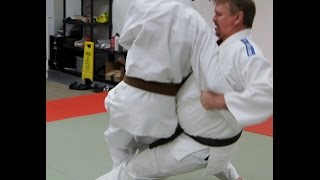
Distance and Entry Principles
The instructor emphasizes that direct entry into an opponent's space is ineffective if they maintain strong positioning. Moving straight in allows the opponent to lock the defender or strike, making frontal approaches impractical for sustainable self-defense.
Critique of Conventional Shihonage Practice
The instructor critiques the common approach of executing shihonage shoulder-to-shoulder with the opponent, which practitioners may repeat for decades without questioning effectiveness. This method places the defender in a vulnerable position where the opponent can control or counter the technique.
Control, Blending, and Leading
True aikido technique requires establishing control of the opponent's movement through blending and leading, rather than relying on physical proximity. When the defender controls the opponent's balance and intention, the opponent cannot effectively attack or defend against the incoming technique.
Three Fundamental Elements
The instructor identifies three essential components of effective aikido throws: establishing balance control, taking the opponent off-balance, and executing the throw. These principles apply regardless of the specific technique and supersede strength-based approaches.
Positioning and Vulnerability
The instructor demonstrates that stepping directly into an opponent's space leaves the defender exposed to strikes and counterattacks. Proper positioning requires maintaining distance and control while approaching, preventing the opponent from effectively landing strikes.
Circular Entry and Off-Balancing
The instructor shows how circular entry paths and angled approaches allow the defender to control the opponent's balance without direct confrontation. This method enables the defender to throw the opponent using a simple hooking motion while maintaining defensive integrity.
Transition to Finishing Technique
After successfully off-balancing the opponent, the defender can transition into any desired finishing technique from a position of control. The foundational work of establishing balance and positioning eliminates the need for defensive measures during technique execution.
Basic Aikido techniques
Key Takeaways
- •Distance and Entry Principles
- •Critique of Conventional Shihonage Practice
- •Control, Blending, and Leading
- •Three Fundamental Elements
Aikido techniques from Aikido Alliance Australia. Explanation as to correct form during practice, and what not to practice. Complacency, lack of focus, and incorrect methods, are the sure way to re-enforce improper Aikido techniques.
Related Techniques
Frequently Asked Questions
What does this video teach about aikido throw?
This video covers distance and entry principles, critique of conventional shihonage practice, control, blending, and leading. It provides detailed instruction from Paul Araki-Metcalfe.
How long does it take to learn aikido throw?
The basic mechanics can be understood in a single session, but developing reliable execution requires consistent drilling over weeks of practice. This 7-part breakdown helps structure your training by isolating each phase of the technique.
What are the key details for finishing aikido throw?
The instructor shows how circular entry paths and angled approaches allow the defender to control the opponent's balance without direct confrontation. This method enables the defender to throw the opponent using a simple hooking motion while maintaining defensive integrity.
![[Aikido Techniques] Simple Aikido Techniques](https://img.youtube.com/vi/BynZ9MYcc8Q/mqdefault.jpg)