Karate
Originating in the Ryukyu Kingdom with influences from Chinese Kung Fu, Karate encompasses striking techniques including punches, kicks, knee strikes, and elbow strikes, along with open-hand techniques such as knife hands. The martial art emphasizes both physical training and mental discipline, with practitioners developing character through forms, sparring, and self-defense study. Rank progression follows the traditional belt system from white to black.
Taekwondo
This Korean martial art is distinguished by its emphasis on high kicks and fast-kicking techniques, including jumping spinning kicks executed at head height. Taekwondo shares with Karate the goal of uniting body, mind, and life to promote peace. The discipline gained international recognition by becoming an Olympic sport in 2000, demonstrating both its global adoption and the athleticism required for its dynamic techniques.
Aikido
Developed in early 20th-century Japan, Aikido—meaning 'the way of harmony with the spirit'—emphasizes redirecting an opponent's momentum and movements rather than confronting them with direct force. Techniques include throws, joint locks, and aggression control, now practiced in over 140 countries. Practitioners wear baggy clothing to facilitate grip-based throws characteristic of the art.
Muay Thai
Known as the 'art of eight limbs,' Muay Thai utilizes fists, elbows, knees, and shins as striking implements, originating from Thailand with deep historical and cultural significance. Training involves intensive physical conditioning, including bone-hardening strikes with sticks, mental discipline, and mandatory respect protocols between fighters. Matches conclude with ritualistic bowing and kneeling, and fighters traditionally wear arm bracelets reflecting Thai cultural tradition.
Judo
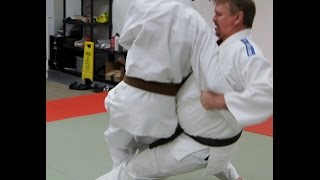
Developed by Jigoro Kano in Japan, Judo emphasizes the principle of 'maximum efficiency, minimum effort' and specializes in throws, pins, joint locks, and chokes. The discipline functions as both competitive sport and self-defense system, teaching practitioners to leverage balance and positioning to overcome stronger opponents. Practitioners train in baggy clothing similar to Aikido, and Judo is often regarded as 'standing jujitsu' for its application of grappling principles in upright combat.
Jujitsu
Jujitsu—meaning 'yielding art'—was developed to combat samurai through manipulation of an opponent's force rather than direct opposition. Designed for fighting armed and armored adversaries without equivalent weapons, the art emphasizes pins, joint locks, and throws that proved more effective than strikes against armor. Advanced students learn potentially dangerous techniques including joint-locking throws and break-falling skills, enabling safe practice of high-risk maneuvers in controlled settings.
Brazilian Jujitsu
Brazilian Jujitsu specializes in ground fighting and grappling, with matches typically beginning from the ground rather than standing position. Developed by a Brazilian family after learning a hybrid of traditional Japanese Jujitsu and Judo from a traveling Japanese practitioner, the system evolved to emphasize dominant positioning and forcing submission through joint locks or chokeholds. A defining characteristic is its effectiveness in allowing smaller fighters to defeat larger opponents through leverage, gaining prominence through mixed martial arts competition.
Kung Fu
A collective term encompassing various schools of Chinese martial arts stretching back to ancient China, Kung Fu combines combat technique with spiritual development. Styles vary widely, with some mimicking animal movements while others draw inspiration from Chinese philosophy or historical figures. Training includes dance-like movements, traditional weapon practice, and is conducted in baggy clothing similar to Aikido.
Krav Maga
Developed for the Israeli military, Krav Maga is a practical self-defense system emphasizing efficiency and instinctive response in real-world situations. It synthesizes techniques from boxing, wrestling, Aikido, Judo, and Karate while incorporating techniques typically prohibited in sport, including eye strikes and biting. Training focuses on defending against grabs, strikes, and weapons with rapid threat neutralization; no competitive tournaments exist, as the system's principles are fundamentally incompatible with sport rules.
Capoeira
An Afro-Brazilian martial art combining dance, acrobatics, and music, Capoeira was developed by African slaves in Brazil and deliberately disguised as dance to permit practice without detection. The art emphasizes quick, complex maneuvers utilizing power, speed, and leverage across diverse kicks, spins, and techniques. Capoeira promotes physical fitness, rhythm, and creativity while embodying significant cultural heritage.
Wing Chun
A southern Chinese kung fu style, Wing Chun specializes in close-range combat and rapid punching techniques, emphasizing efficiency and simplicity. Practitioners utilize stance and structural positioning to generate power while controlling the centerline—the most direct path to an opponent. The system's fast, close-range attacks make it particularly effective for self-defense in confined spaces.
Every Martial Art Type Explained in 12 Minutes
Key Takeaways
- •Karate
- •Taekwondo
- •Aikido
- •Muay Thai
Join my Discord to discuss this video: https://discord.gg/yj7KAs33hw Every famous martial art gets explained in 12 minutes! Subscribe and activate the bell! 💼 Business Mail: [email protected] — TIMESTAMPS — 0:00 Karate 0:32 Taekwondo 1:00 Aikido 1:28 Muay Thai 2:00 Judo 2:28 Jiu-jitsu 3:18 Brazilian Jiu-Jitsu 4:02 Kung Fu 4:33 Krav Maga 5:13 Capoeira 5:41 Wing Chun 6:03 Boxing 6:35 Kickboxing 6:56 Sambo 7:29 Silat 7:54 Taichi 8:17 Savate 8:51 Eskrima 9:11 Kyokushin Karate 9:47 Wushu 10:12 Wrestling 10:44 Taekkyeon 11:14 Systema 11:54 Mixed Martial Arts (MMA) — DISCLAIMER — Do not use this video as your only source of information. This video is for edutainment and entertainment purposes only. It should not be used as the sole basis for decision-making or forming an opinion. Always cross-reference with other sources. This channel's goal is to spark your curiosity and let you do your own research on these topics. Heads up: all the video ideas for the topics and most of the drawings are made by real people! (Yeah, sadly, a lot of similar videos out there are completely AI-generated, so watch out.) | Here, AI is used for voiceovers, image expansion/enhancement/generation, text polishing, and help with writing and research. — COPYRIGHT — For any copyright questions, feel free to reach out. Please use “Copyright Question” as the subject line in your email. You can contact me at [email protected]
Frequently Asked Questions
What does this video teach about art-specific throw?
This video covers karate, taekwondo, aikido. It provides detailed instruction from The Paint Explainer.
How long does it take to learn art-specific throw?
The basic mechanics can be understood in a single session, but developing reliable execution requires consistent drilling over weeks of practice. This 11-part breakdown helps structure your training by isolating each phase of the technique.
What are the key details for finishing art-specific throw?
An Afro-Brazilian martial art combining dance, acrobatics, and music, Capoeira was developed by African slaves in Brazil and deliberately disguised as dance to permit practice without detection. The art emphasizes quick, complex maneuvers utilizing power, speed, and leverage across diverse kicks, spins, and techniques. Capoeira promotes physical fitness, rhythm, and creativity while embodying significant cultural heritage.