Introduction to Beginner Guard Passes
The four fundamental passes covered in this instructional are selected for their low risk, high percentage success rate, and accessibility to beginners. These same techniques form the foundation used by elite competitors to win world championships. The instruction focuses on proper execution and identification of common beginner mistakes to accelerate proficiency on the mat.
The Toriano Pass: Foot Control Fundamentals
The Toriano Pass requires moving the opponent's legs out of the guard while maintaining control of their feet. The critical error beginners make is failing to prevent the guard player's feet from making contact with their body. Foot control must be prioritized as feet function as grips for the legs—allowing connection anywhere compromises the pass.
Toriano Pass: Positioning and Grip Management
Positioning the opponent on the ball of their back with slightly elevated hips enables the necessary rotational control. Preventing initial grip establishment is preferable, but when grips are secured, the practitioner should remove either the feet or hands using opposing force techniques. In gi applications, a two-on-one grip combined with opposing body movement effectively breaks hand control while maintaining base.
Toriano Pass: Execution Tactics and Transitions
Side-to-side leg movement prior to the pass creates defensive uncertainty. When the opponent turns to turtle position, the practitioner should be prepared to take the back. Knee-on-belly control via shin placement provides effective position consolidation when upper body grips are unavailable.
The Sidesmash: Using Body Weight Over Arm Strength
The Sidesmash utilizes body weight to compress both of the opponent's legs together with knees pointing away. Beginners commonly mistake this as an arm-based technique, but leg strength exceeds arm strength in defensive capacity. Chest positioning on the side of the knee, with hands used only for positioning assistance, transfers power efficiently.
Sidesmash: Weight Distribution and Completion
Insufficient weight application to keep legs smashed together creates opportunities for guard re-entry or leg lock vulnerability. Completing the pass requires positioning the knee in front of the opponent's bottom knee for mount or using a backstep to achieve side control. Controlling the opponent's foot during the backstep prevents it from following the practitioner's movement.
The Backstep: Recognition and Execution
The backstep functions as a standalone movement applicable across multiple pass variations rather than a specific technique. Beginners frequently fail to recognize backstep opportunities, particularly from loose half guard positions. Maintaining opponent hip alignment away from the practitioner and controlling the foot with either hand or foot ensures successful execution.
The Knee Slide: Preventing Underhooks and Knee Shield
The knee slide is among the most fundamental passes in jiu-jitsu and requires proficiency for all practitioners. The two primary errors are allowing the opponent to secure an underhook and permitting knee shield insertion during the slide. Taking an underhook first prevents the opponent from establishing one, providing the safest execution pathway.
Knee Slide: Grip Variations and Safety
While underhooks provide optimal security, the knee slide can be executed with lapel control, rib grips, or alternative hand positions. Attempting the knee slide without near-side arm grips creates dangerous underhook vulnerability and should be avoided by beginners. Maintaining back control is essential if the opponent secures an underhook during execution.
The BEST BJJ Passes For Beginners + COMMON MISTAKES | Gi & Nogi
Key Takeaways
- •Introduction to Beginner Guard Passes
- •The Toriano Pass: Foot Control Fundamentals
- •Toriano Pass: Positioning and Grip Management
- •Toriano Pass: Execution Tactics and Transitions
Every time I roll with a blue belt, I already know they're going to make these mistakes... haha ✅ BJJ Beginner Course: https://bjjbeginnercourse.com ✅ Jiu-Jitsu Theory Course: https://jiujitsutheorycourse.com 📩 Newsletter: http://jordanteachesjiujitsu.com/newsletter/ ✅ BJJ Games: A Constraints-Led Approach To Grappling: https://playbjjgames.com ✅ Wrestling For BJJ Course: http://wrestlingforbjj.com/ 💥 Kimura Trap Mastery: http://kimuratrapmastery.com ✅ Rides & Escapes Course: https://ridesescapes.com 🏖️ Trinidad & Tobago BJJ Camp: https://www.rollingintobago.com/ 🔥 X-Martial - https://www.xmartial.com/search?q=limitless --- Support my work: ❤️ Patreon: https://www.patreon.com/jordanteachesjiujitsu 👕 Merch: https://limitless-apparel-22.creator-spring.com/ 🥋 BJJ Fanatics: https://bjjfanatics.com/collections/new-releases/products/jordan-teaches-bottom-half-guard-by-jordan-preisinger Social: 💥 Instagram: https://www.instagram.com/jordanteachesjiujitsu/?hl=en 💥 Facebook: https://www.facebook.com/jordanteachesjiujitsu 💥 Facebook group: https://www.facebook.com/groups/jordanteachesjiujitsugroup/ 💥 TikTok: https://www.tiktok.com/@jordanteachesjiujitsu
Frequently Asked Questions
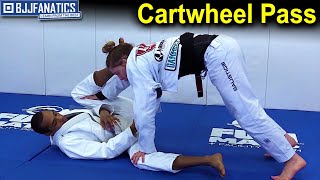
What does this video teach about standard cartwheel pass?
This video covers introduction to beginner guard passes, the toriano pass: foot control fundamentals, toriano pass: positioning and grip management. It provides detailed instruction from Jordan Teaches Jiujitsu.
How long does it take to learn standard cartwheel pass?
The basic mechanics can be understood in a single session, but developing reliable execution requires consistent drilling over weeks of practice. This 9-part breakdown helps structure your training by isolating each phase of the technique.
What are the key details for finishing standard cartwheel pass?
The knee slide is among the most fundamental passes in jiu-jitsu and requires proficiency for all practitioners. The two primary errors are allowing the opponent to secure an underhook and permitting knee shield insertion during the slide. Taking an underhook first prevents the opponent from establishing one, providing the safest execution pathway.