Introduction to Headquarters Position
The headquarters position serves as a foundational setup for multiple guard passes in no-gi grappling. From this position, the top player can assess the opponent's guard strategy and time their passing attacks effectively. It provides strategic flexibility by allowing the passer to evaluate available options before committing to a specific technique.
Establishing Headquarters Positioning
The passer controls one ankle while stepping in deep, positioning their leg between the opponent's legs with pressure against the back of the leg. The hand placement on the opponent's hip combined with ankle control creates a stable base for executing passes. This positioning maintains control while the passer assesses which pass to attempt next.
X-Pass Mechanics
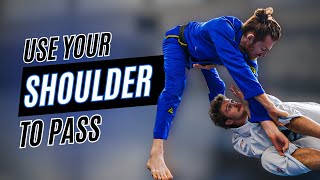
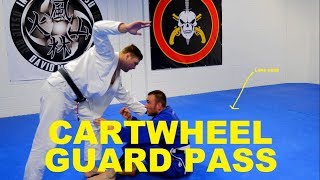
From the headquarters position, the passer executes the X-pass by raising their body slightly while controlling the opponent's hip and knee. They step their leg back and pass it over the opponent's leg, establishing a crossover position. This pass creates opportunities for multiple follow-up attacks depending on how the opponent reacts.
Transition Options After X-Pass
After initiating the X-pass, the passer should be prepared for several defensive responses and transition sequences. Available follow-ups include controlling the opponent's arm for side control, executing foot locks through the doors, or stepping around the head to take the back. The passer should drill these transitions as continuous sequences rather than isolated techniques.
Integrated Passing Strategy
Effective guard passing requires combining multiple techniques into flowing sequences that prevent the opponent from defending against a single threat. The passer should drill transitions between the X-pass and secondary options such as foot locks or back-take position. By presenting compounded attack angles, the passer increases the likelihood of successfully advancing position.
Reading the Opponent for X-Pass Timing
The X-pass becomes available when the opponent is not actively controlling the passer's ankle or is occupied controlling the passer's head instead. The passer clears any arm control before raising up to initiate the pass. Recognizing when the opponent has abandoned ankle control signals the optimal moment to execute the X-pass.
Defensive Integration During Guard Passing
While executing the X-pass, the passer should remain reactive to the opponent's defensive movements and capitalize on submission opportunities that arise during the passing sequence. The passer should be prepared to transition to attacks such as foot locks or positional control based on how the opponent defends. Success depends on fluidly combining the pass with secondary techniques rather than committing rigidly to a single finish.
Headquarters to X-Pass
Key Takeaways
- •Introduction to Headquarters Position
- •Establishing Headquarters Positioning
- •X-Pass Mechanics
- •Transition Options After X-Pass
Rafael Lovato Jr's Powerful NO GI Pressure Passing and Attack System View more instructionals at: https://jiujitsu.com/blogs/instructionals #bjj #jiujitsu #jiujitsuinstructional #instructional #brazilianjiujitsu #halfguard #sweep #gi #grappling #mma #bjjinstructional #guard #sidecontrol #kimura #submission #submissiongrappling #guard #guardpass #guardpassing #openguard
Related Techniques
Frequently Asked Questions
What does this video teach about x-pass?
This video covers introduction to headquarters position, establishing headquarters positioning, x-pass mechanics. It provides detailed instruction from JiuJitsu.com.
How long does it take to learn x-pass?
The basic mechanics can be understood in a single session, but developing reliable execution requires consistent drilling over weeks of practice. This 7-part breakdown helps structure your training by isolating each phase of the technique.
What are the key details for finishing x-pass?
The X-pass becomes available when the opponent is not actively controlling the passer's ankle or is occupied controlling the passer's head instead. The passer clears any arm control before raising up to initiate the pass. Recognizing when the opponent has abandoned ankle control signals the optimal moment to execute the X-pass.