Slow Acceleration Drill
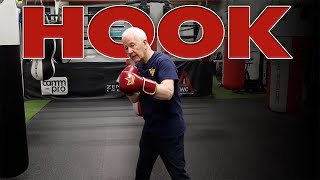
The foundational drill for developing an effective lead hook involves starting from stance at low velocity, then progressively accelerating into the punch at the moment of impact. This technique trains the body to remain relaxed during the initial phases of the movement, preventing tension from dissipating power before contact. Between repetitions, the hand should be allowed to go completely loose to reinforce the distinction between relaxed initiation and explosive finish.
Relaxation and Energy Conservation
Excess tension or premature acceleration in the early stages of a lead hook reduces overall power output and slows technique execution. The initial rotation of the torso should feel like a natural whip rather than a forced movement. By training with deliberate relaxation at the start, practitioners preserve energy for the point of impact, where acceleration generates maximum force.
Double and Triple Hook Repetitions
Throwing two or three consecutive lead hooks develops efficiency and speed while encouraging proper shoulder mechanics. Repeated hook combinations naturally settle the shoulder into the socket, preventing the common error of elevating the shoulder during execution. This drill shifts work from the shoulder joint to the hand and arm, improving leverage and power transfer through proper body positioning.
Shoulder Positioning and Power
Many beginning boxers elevate their shoulders while throwing, which compromises the mechanical advantage of the punch. Pressing against a wall while raising and then lowering the shoulder at the same hand height demonstrates the significant difference in power and connectivity. Maintaining a dropped shoulder in the socket while the hand stays level maximizes leverage and force generation.
Multi-Range Hook Development
Opponents rarely position themselves at the fighter's ideal striking distance, requiring the lead hook to function across multiple ranges. Practitioners should develop competency throwing short-range, medium-range, and long-range variations, adjusting primarily with hand position rather than footwork. Working combinations that mix ranges—such as medium-short-short-medium-long sequences—builds the adaptive capacity necessary for effective ring application.
Short-Range Hook Mechanics
The short-range lead hook requires minimal arm extension and relies heavily on body rotation to generate power. Many beginners struggle with inside fighting because extensive heavy bag training occurs at their comfortable mid-range, leaving them unprepared when opponents close distance. Dedicated practice at close quarters prevents this technical gap.
Long-Range Hook Application
The long-range lead hook extends further than the typical comfortable striking distance, exemplified by professional fighters such as Roy Jones Jr. and Trinidad. This variation maintains effectiveness by traveling through the opponent's guard in a straight-line path before curving toward the target. Integration of long-range hooks into combination work expands offensive options.
Mind-Body Awareness Integration
Developing a superior lead hook requires cultivating kinesthetic awareness beyond pure mechanical knowledge or positional understanding. The nervous system must learn the feel of proper acceleration, relaxation, and weight transfer through repeated drilling. Mastery of this punch represents a significant advantage against most opponents when properly developed through systematic practice.
3 Drills for the Lead Hook
Key Takeaways
- •Slow Acceleration Drill
- •Relaxation and Energy Conservation
- •Double and Triple Hook Repetitions
- •Shoulder Positioning and Power
This document contains all playlists at each level of the membership: https://docs.google.com/document/d/1-IiC9KYudG6TmyRusm_DW1PrW--kmPnx?rtpof=true&usp=drive_fs Learn more! https://precisionstriking.com/ JOIN the membership! Boxing Training and Workouts at the most affordable price! https://www.youtube.com/channel/UC4PwJo76WpTOk-3N8dazt1A/join Level 1: Past Livestreams, Exclusive Workout Videos, Boxing Drills Level 2: Boxing Workouts (Includes DE Bag and Jump Rope Training Camp} Level 3: Beginner Boxer's Portal: Comprehensive training for true beginners Level 4: Week Long Boxing Training Camps to discover your potential Level 5: Reviews and feedback on your boxing training and technique Level 6: Comprehensive Instructional Videos (Footwork, Head Movement, Defense, Padwork etc.) THE BEST BOXING APP iTunes https://apps.apple.com/us/app/precision-boxing-coach-pro/id702519995?ls=1
Related Techniques
Frequently Asked Questions
What does this video teach about hook?
This video covers slow acceleration drill, relaxation and energy conservation, double and triple hook repetitions. It provides detailed instruction from Precision Striking.
How long does it take to learn hook?
The basic mechanics can be understood in a single session, but developing reliable execution requires consistent drilling over weeks of practice. This 8-part breakdown helps structure your training by isolating each phase of the technique.
What are the key details for finishing hook?
The long-range lead hook extends further than the typical comfortable striking distance, exemplified by professional fighters such as Roy Jones Jr. and Trinidad. This variation maintains effectiveness by traveling through the opponent's guard in a straight-line path before curving toward the target. Integration of long-range hooks into combination work expands offensive options.
Related videos
How to Hook in Boxing | Step by Step Basic Guide
Frank's Noble Art

TECHNIQUE OF THE SHOVEL HOOK
PRIDE MARTIAL ARTS

Smokin Joe Frazier's Terrifying Hook & Head Movement Explained - Technique Breakdown
The Modern Martial Artist
Smokin Joe Frazier's Terrifying Hook & Head Movement Explained - Technique Breakdown
The Modern Martial Artist

How to Throw an Uppercut
expertboxing