How to Throw an Uppercut
0
Uppercut·expertboxing
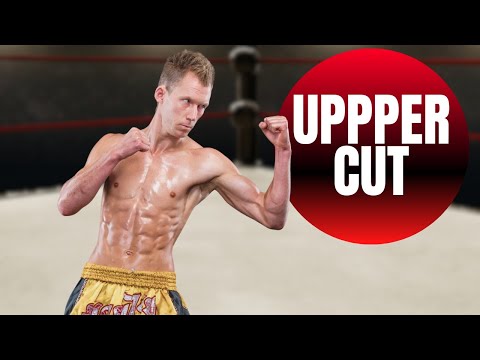
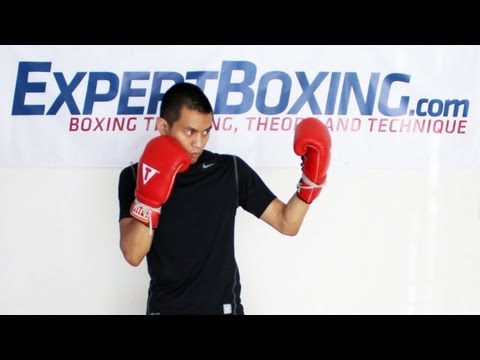
Learn the punching techniques to the boxing uppercut. This deadly punch is often throw incorrectly and with bad punching…
Translation: uppercut
The uppercut is a vertical rising punch delivered from below the opponent's line of sight, targeting the chin, solar plexus, or body. [1] Dempsey described the uppercut as one of the four fundamental punches in boxing (alongside the jab, cross, and hook), noting that its upward trajectory makes it uniquely effective for fighting on the inside. [1] The uppercut has ancient origins in prize fighting, with early references in 18th-century boxing accounts describing rising blows to the chin. [2] Haislet documented two primary forms — the lead uppercut and the rear uppercut — each requiring a dipping motion of the knees and an explosive upward drive through the hips. [3] The technique was also adapted into Muay Thai, kickboxing, and MMA, though it receives less emphasis in arts that permit clinching and kneeing. [4]
The uppercut is one of the four fundamental boxing punches. [1]
The uppercut is a key knockout punch in boxing and MMA. [1]
No images yet for this technique.
Sign in to suggest an image.
Learn the punching techniques to the boxing uppercut. This deadly punch is often throw incorrectly and with bad punching…
ENTER INTO 2026 Like A Champion! Train with me in EDGE https://strikereadycombat.com/edge/ ____________________________…
No instructional courses yet for this technique.
Sign in to suggest a course.
Risk of injury to the person this technique is applied to
Hooks/uppercuts; generate rotational force, high KO rate (Walilko et al. 2005)
Skill level needed to execute this technique reliably
Whether this technique is allowed under major competition rule sets
Karate-Do Kyohan: The Master Text (Gichin Funakoshi, 1935)
Alias sources — [1] Karate-Do Kyohan (Funakoshi, 1935) [2] Championship Fighting (Dempsey, 1950) [3] Dynamic Karate (Nakayama, 1966)
History sources — [1] Championship Fighting (Dempsey, 1950) [2] The Art of Boxing and Manual of Training (Price, 1867) [3] Boxing (Haislet, 1940) [4] Muay Thai Unleashed (Delp, 2006)
Standard katakana transliteration of Western martial arts terminology (外来語) — used in Japanese MMA, boxing, and BJJ communities
Alias sources — [1] Karate-Do Kyohan (Funakoshi, 1935) [2] Championship Fighting (Dempsey, 1950) [3] Dynamic Karate (Nakayama, 1966)
History sources — [1] Championship Fighting (Dempsey, 1950) [2] The Art of Boxing and Manual of Training (Price, 1867) [3] Boxing (Haislet, 1940) [4] Muay Thai Unleashed (Delp, 2006)
leg drive, upward hip thrust, tight vertical alignment
shorter reach fighters effective at inside range
quadriceps, glutes, deltoids, biceps, core
Every move, in any martial art, shares a few universal traits. Mix and match below to pinpoint the right tool — or compare equivalents across styles.
An uppercut thrown with the lead hand, dipping the body slightly and driving the fist upward with rotation from the hips and legs.
An uppercut thrown with the rear hand, generating greater power through full hip rotation and weight transfer while driving upward from the back leg.
Gabriel Varga explains that having your elbow directly under your fist is paramount for power—if your elbow flares out to the side, you lose the ability to punch straight up with maximum force. Additionally, Expert Boxing notes that most people make the mistake of going down and then popping up, which reduces grounding, power, and speed; instead, you should get under the uppercut and stay grounded.
You need to rotate your body and get your shoulder all the way in, with a slight drop of the arm to generate power without dropping your hand way down and swinging. Expert Boxing adds that you should shift your body slightly to the side where you're throwing the uppercut—if throwing a right uppercut, bring your weight to your right leg slightly, then throw it sharp with your palm facing you.
Gabriel Varga recommends leading with a punch beforehand, such as throwing a hook first and then dropping into an uppercut with no extra time between the two. Alternatively, you can use a defensive slip—if somebody attacks you, slip your weight like you're slipping, then immediately counter with an uppercut. From the outside, starting with a straight shot is also a fantastic way to distract your opponent before throwing the uppercut.
Gabriel Varga notes that uppercuts can be thrown at various distances, not just from the ideal mid-range. You can throw short, tight uppercuts at close range, or longer uppercuts when trying to come between a tight guard—in which case you can rotate your palm to face toward you instead of away to slip through the guard more effectively.
A vertical punch thrown upward from a lowered position, traveling along a rising arc to strike beneath the opponent's guard, targeting the chin, solar plexus, or body.
The uppercut is a vertical rising punch delivered from below the opponent's line of sight, targeting the chin, solar plexus, or body. Dempsey described the uppercut as one of the four fundamental punches in boxing (alongside the jab, cross, and hook), noting that its upward trajectory makes it uniquely effective for fighting on the inside.
Unified MMA: legal — Legal striking technique; WBC/Boxing: legal — Legal — punches are the core technique of boxing; WKF: legal — Legal, jodan/chudan punch scores 1 point (yuko) — controlled contact required; Kyokushin: restricted — Body punches legal at full power, head punches banned; WT: restricted — Punches to trunk only (1 point), punches to head banned; ITF: legal — Legal — hand techniques to head and body both permitted; WAKO: legal — Legal in Full Contact and Low Kick formats; K: legal — 1/GLORY — Legal — full power punches to head and body; IFMA: legal — Legal
Danger rating 6/10. High — hooks/uppercuts; generate rotational force, high KO rate (Walilko et al. 2005)
The standard setup chain: Assume Fighting Stance → Generate Power → Execute Strike → Recover to Guard.
Standard counters include: Block — absorb the strike with a protective guard position / Evasion — move the target out of the strike's path / Counter-Attack — time an offensive response during the recovery phase of the strike.
Common variants: Standard uppercut (rising punch from below targeting the chin); Short uppercut (compact version for clinch range); Body uppercut (targeting the solar plexus with the rising punch); Lead uppercut (using the lead hand for a faster, less-telegraphed rising…).
The uppercut is a key knockout punch in boxing and MMA.
Top errors to watch for: Scooping the arm from the hip in a large windup, which is slow and predictable / Rising straight up without rotating the hip, losing most of the power / Throwing uppercuts from outside range — they require close proximity to land effectively / Dropping both hands to load the uppercut, leaving the head wide open for a straight punch counter.
The Uppercut is also known as Appākatto, Age Tsuki, Uppercut Punch, Rising Punch.