Uppercut Tutorial
0
Uppercut to Body·Hitman Huseman
Learn the proper technique of an uppercut punch.
Translation: Body uppercut
The Uppercut to Body drives the fist upward into the opponent's midsection, targeting the solar plexus or liver. [1] Unlike the head uppercut, the body uppercut can be delivered with less risk of counter-punching. [1] It is one of the most devastating body shots in boxing when delivered to the liver. [1]
Boxing techniques including the Uppercut to Body have been documented since the earliest Queensberry Rules era. [1]
The Uppercut to Body is a fundamental boxing technique with proven effectiveness in competition. [1]
Western Boxing tradition. [1]
Used in UFC and professional MMA competition
No images yet for this technique.
Sign in to suggest an image.
Learn the proper technique of an uppercut punch.
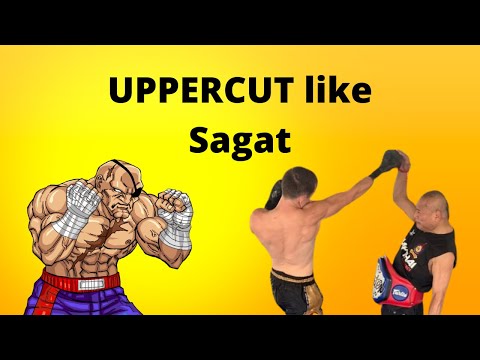
Sagat, the inspiration for the Street Fighter video game character, was known for his devastating uppercut punches, and …
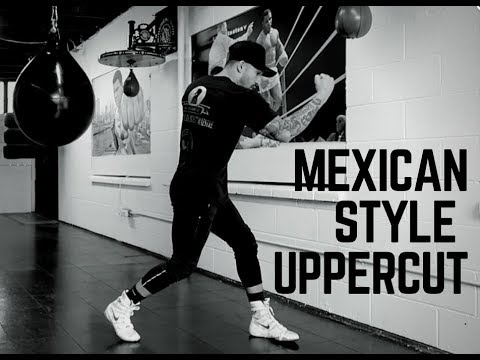
The uppercut to the body is a versatile striking technique that can be executed from multiple ranges and stances. Both Hitman Huseman and Skyhook Martial Arts & Fitness emphasize the importance of generating power from the lower body through hip rotation, knee drive, and ground push-off rather than relying on arm strength alone. Huseman identifies three distance variations—long, medium, and tight range—and focuses on the mid-range execution with controlled hip and shoulder rotation, maintaining an upward trajectory with minimal forward extension. Skyhook introduces a Muay Thai framework (matnak) that differs from boxing technique; the Muay Thai version travels up and out to accommodate kicking range, employing a "spring-loading" bounce mechanism off the ground for added speed and power. Both instructors stress proper hand placement and trajectory alignment: Huseman advocates shooting straight up with clean, flush contact to the chin or forehead, while Skyhook emphasizes extending fully through the target rather than stopping at a locked angle. For body shots specifically, Skyhook notes the technique mirrors the upper-body uppercut but with a last-second drop to target the spleen, diaphragm, or liver depending on opponent positioning. Both agree that repetition and chaining multiple uppercuts back-to-back builds consistency and prevents technical degradation.
Synthesized from 2 instructors
No instructional courses yet for this technique.
Sign in to suggest a course.
Risk of injury to the person this technique is applied to
Boxing punch with significant knockout potential
Skill level needed to execute this technique reliably
Whether this technique is allowed under major competition rule sets
Fencing (Pollock, Grove & Prevost, 1902)
description, historyOrigin: sourced from Pollock, W
description, historyOrigin: sourced from Pollock, W
Requires proper weight transfer
Strong shoulders and core
Use the same motion as a head uppercut, but instead of bouncing up, bounce and then drop your hand at the last second while springing forward to target the body areas like the spleen, diaphragm, or liver depending on your opponent's angle (Skyhook Martial Arts & Fitness).
Turn your hips and shoot straight up with full extension, keeping your hand placement flush and clean rather than angling sideways, then bring your hand back to your face to defend (Hitman Huseman).
Yes, you should get used to doubling or tripling up on uppercuts by consistently extending, coming back, and extending again—this helps ensure you have clean technique from start to finish and prevents getting lazy with transitions (Skyhook Martial Arts & Fitness).
The Uppercut to Body drives the fist upward into the opponent's midsection, targeting the solar plexus or liver. Unlike the head uppercut, the body uppercut can be delivered with less risk of counter-punching.
Boxing techniques including the Uppercut to Body have been documented since the earliest Queensberry Rules era.
Unified MMA: legal — Legal striking technique; WBC/Boxing: legal — Legal — punches are the core technique of boxing; WKF: legal — Legal, jodan/chudan punch scores 1 point (yuko) — controlled contact required; Kyokushin: restricted — Body punches legal at full power, head punches banned; WT: restricted — Punches to trunk only (1 point), punches to head banned; ITF: legal — Legal — hand techniques to head and body both permitted; WAKO: legal — Legal in Full Contact and Low Kick formats; K: legal — 1/GLORY — Legal — full power punches to head and body; IFMA: legal — Legal
Danger rating 6/10. Boxing punch with significant knockout potential
The standard setup chain: Guard position → Uppercut to Body → Follow-up combination.
Standard counters include: Slip / Block / Counter-punch.
Common variants: Power uppercut to body; Speed uppercut to body.
Used in UFC and professional MMA competition
Top errors to watch for: Dropping the guard / Over-extending / Telegraphing.
The Uppercut to Body is also known as Bodi Appākatto, Body Uppercut, Short Uppercut, Liver Uppercut.