Referee's Position: Stand up 🤼♂️
0
Standard Referee Position·KombatPlay
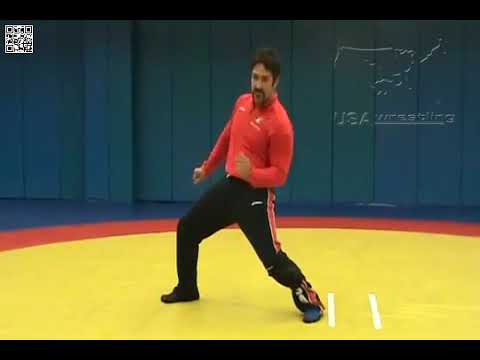
Folkstyle Wrestling - Referee's Position: Stand up - Level 1 USA Wrestling Core Curriculum A folk wrestling style i…
Translation: standard referee position
The Standard Referee Position places the bottom wrestler on hands and knees with the top wrestler positioned behind with one arm around the waist and one hand on the elbow. [1] This standardised starting position ensures both wrestlers begin the ground exchange with a defined grip and body position, creating a fair and consistent restart point. [1],[2] The bottom wrestler's primary objective is to escape to standing or reverse position, while the top wrestler seeks to maintain control and score points. [2],[3]
The standard referee position places one wrestler on all fours with the other controlling from behind, used to restart ground wrestling. [1]
The referee's position was codified in wrestling rules for fair restarts. [1]
Used in all folkstyle and freestyle wrestling competition restarts. [1]
No images yet for this technique.
Sign in to suggest an image.
Folkstyle Wrestling - Referee's Position: Stand up - Level 1 USA Wrestling Core Curriculum A folk wrestling style i…
No instructional courses yet for this technique.
Sign in to suggest a course.
Risk of injury to the person this technique is applied to
Turtle is a defensive shell position; vulnerable to back takes and chokes
Skill level needed to execute this technique reliably
Whether this technique is allowed under major competition rule sets
Jiu-Jitsu University (Saulo Ribeiro, 2008)
Alias sources — [1] UWW Wrestling Rules [2] UWW Wrestling Rules
Effectiveness sources — [1] Wrestling Physical Conditioning Encyclopedia (Petrov, 1977)
Official Kodokan ground technique classification system
Standard katakana transliteration of Western martial arts terminology (外来語) — used in Japanese MMA, boxing, and BJJ communities
Alias sources — [1] UWW Wrestling Rules [2] UWW Wrestling Rules
Effectiveness sources — [1] Wrestling Physical Conditioning Encyclopedia (Petrov, 1977)
core strength, tight elbow position, neck protection
compact build with strong core for stability
core stabilisers, shoulders, neck, hip flexors
Every move, in any martial art, shares a few universal traits. Mix and match below to pinpoint the right tool — or compare equivalents across styles.
Keep your knees bent, back straight, and butt down with one leg forward to prevent being driven out of balance. According to KombatPlay, initiating the stand-up with your head and chest first—by retracting your elbows to your sides—creates momentum while avoiding the mistake of loading and pushing off your hands.
Slide your hip forward to take slack out of their grip, then pop your hips to break it and chop the grip away. KombatPlay emphasizes that once you've cleared their hands, you can attack back into your column while remaining protected.
Master the footwork in three-step motion first: put the leg to the hip, pop your hips, then chop and clear the lower leg. Once you've mastered this solo footwork, you can progress to using a partner or opponent, according to KombatPlay.
Back pressure prevents you from being driven back down and allows you to maintain control as you explode up. KombatPlay stresses that keeping your hips low while maintaining this back pressure is essential for a successful stand-up.
The Standard Referee Position places the bottom wrestler on hands and knees with the top wrestler positioned behind with one arm around the waist and one hand on the elbow. This standardised starting position ensures both wrestlers begin the ground exchange with a defined grip and body position, creating a fair and consistent restart point.
The standard referee position is the official starting position for ground exchanges in wrestling competition, codified in the rules of folk-style, freestyle, and Greco-Roman wrestling. It has been part of formal wrestling rules for over a century.
IBJJF: legal — Legal — common transitional position; IJF: restricted — Legal position but extended turtle without attacking penalized for non-combat…; ADCC: legal — Legal; Unified MMA: legal — Legal; UWW: legal — Legal — bottom position, opponent works to turn/pin; FIAS Sport Sambo: legal — Legal
Danger rating 3/10. Moderate — turtle is a defensive shell position; vulnerable to back takes and chokes
The standard setup chain: Achieve Position → Stabilize → Maintain → Attack.
Standard counters include: Posture Control — maintain strong posture to limit the opponent's offensive options / Escape to Neutral — work back to standing or a neutral position.
Common variants: Standard turtle (hands and knees with elbows tight, head protected); Flattened turtle (driven to the mat from turtle, attempting to re-turtle); Active turtle (using sit-outs or rolls from the turtle position).
Used in all folkstyle and freestyle wrestling competition restarts.
Top errors to watch for: Bottom wrestler starting with the weight on the knees — the weight should be loaded forward on the hands and feet for… / Bottom wrestler not moving immediately on the whistle — any delay allows the top wrestler to establish control / Top wrestler placing hands in the wrong position — one hand on the elbow, one on the waist is the standard grip / Not training both top and bottom referee position — both positions develop essential grappling skills.
The Standard Referee Position is also known as Sutandādo Referī Pojishon, Basic Referee's Position, Standard Par Terre.