Establishing the Long Guard Plum Position
The instructor begins by securing a grip on the partner's wrist while maintaining forward posture. Using elbow pressure, the practitioner pulls the opponent's arm back to establish a modified front headlock position with control behind the armpits. This foundational grip allows for transition into offensive positioning.
Circling Behind the Opponent
From the grip position, the practitioner circles to the side while the opponent's arm blocks the initial path. When blocked, the practitioner executes a drag motion and sits out to achieve a position behind the opponent. This movement works equally well from standing or when transitioning into a body lock control.
Hand Control and Entry Angles
The instructor demonstrates engagement points at either the wrist or collar, emphasizing that both options are viable depending on distance and positioning. A slight angle is maintained during the approach, allowing the practitioner to navigate around the opponent's defensive arm positioning. Proper entry angle is critical for successful circling.
Quadpod Escape Mechanics
When mounted with a body lock, the bottom player transitions to quadpod position by elevating the hips and establishing four points of contact. The escape involves a cartwheel motion where the practitioner moves around the opponent using momentum and hip positioning. Maintaining low hips while the opponent elevates creates the optimal mechanical advantage for this escape.
Directional Changes and Momentum Flow
The practitioner uses circular footwork to create momentum, allowing the opponent to follow before changing direction and passing through their defense. This flowing movement emphasizes timing and reading the opponent's follow-up rather than static positioning. The technique relies on smooth transitions rather than explosive power.
Turtle Position Body Lock Escape
From turtle position with a body lock, the practitioner assesses hip-to-hip contact with the opponent. If the opponent maintains tight hip connection while climbing, the initial quadpod escape remains the primary option. Recognizing when the opponent shoots their leg out and loses hip contact is essential for selecting alternative escape routes.
Single Leg X Transition
When hip contact is lost and the opponent extends their leg, the practitioner executes a switching motion with the top hand, using circular momentum to slide into single leg X position. From this position, the standard progression involves stomping the calf, posting through, and establishing a scoop grip for control. This fundamental escape maintains strong connection points throughout the entire transition.
Reading Directional Pressure and Adjusting Escapes
The distinction between perpendicular forward pressure and hip-driven backward pressure determines which escape variation is most effective. Practitioners must recognize whether the opponent is driving forward or maintaining hip-to-hip contact to select the appropriate response. Flat position scenarios follow the same principle of reading opponent intent before committing to an escape direction.
Redirection and Finishing Sequences
From flat position, the bottom player sweeps underneath the opponent's knee with the bottom hand while using the top hand to redirect across the face. This redirection clears space and allows the practitioner to choose their preferred finishing technique or continued pressure sequence. The sweep-and-redirect combination creates multiple pathways to advantageous positions.
Use The Muay Thai Clinch For Grappling | Duck-Jitsu Teaches Class QuadPod Escapes
Key Takeaways
- •Establishing the Long Guard Plum Position
- •Circling Behind the Opponent
- •Hand Control and Entry Angles
- •Quadpod Escape Mechanics
Duck-Jitsu covers a wrestling class at Kindred Jiu-Jitsu where he mixes techniques you would traditionally see in Muy Thai to snap your partner down to the mat. He goes over a cartwheel quadpod escape and a reach back to ashi grami. If you enjoyed the video make sure to give it a thumbs up. Time Code 0:00 Start 0:17 Muy Thai Clinch Snap Down 1:26 Drag Get Behind 1:55 Cartwheel Quad Pod Escape 3:35 Reach Back To Ashi Garami
Related Techniques
Frequently Asked Questions
What does this video teach about long guard plum?
This video covers establishing the long guard plum position, circling behind the opponent, hand control and entry angles. It provides detailed instruction from Duck_Jitsu.
How long does it take to learn long guard plum?
The basic mechanics can be understood in a single session, but developing reliable execution requires consistent drilling over weeks of practice. This 9-part breakdown helps structure your training by isolating each phase of the technique.
What are the key details for finishing long guard plum?
The distinction between perpendicular forward pressure and hip-driven backward pressure determines which escape variation is most effective. Practitioners must recognize whether the opponent is driving forward or maintaining hip-to-hip contact to select the appropriate response. Flat position scenarios follow the same principle of reading opponent intent before committing to an escape direction.
Related videos
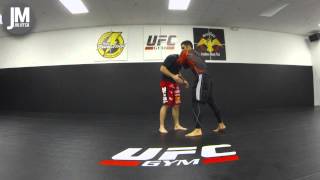
Kyle Bradley counters muay thai clinch with a big takedown
JM Modern Jiu Jitsu
MMA | How to Escape the Thai Clinch
Danny Fung
BEAT the Collar Tie!... Anton Kalista's Throw by
TeachMeGrappling Coach Brian

How To Escape the 50-50 Head Control Tie up - Core JKD
corejkd
Dominate the Muay Thai Clinch with Petchboonchu
fightTIPS