How To Learn Any Martial Arts at Home | Full Guide
0
Standard Plum·Plum Sphere·Added by Admin
Ready to train at home? 🥋💪 This video covers essential gear, basic techniques, training plans, and online resources wh…
Translation: standard plum clinch
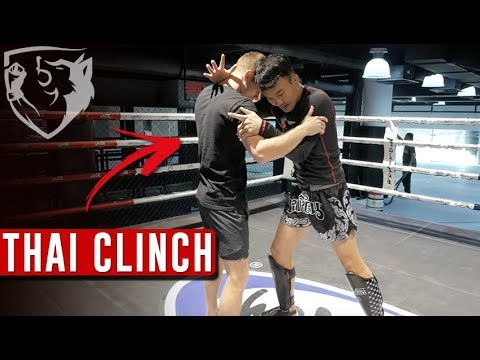
The Standard Plum is the classical Thai plum position with both hands interlocked behind the opponent's neck, elbows pressed tight against the opponent's collarbones, and the attacker's forehead pressed into the opponent's forehead or crown. [1] The tight elbow position creates a frame that prevents the opponent from posturing up or creating distance, while the interlocked hands provide a secure grip for pulling the head down into knee strikes. [1],[2] The standard plum is considered the most dominant clinch position in Muay Thai because it provides complete head control and an ideal platform for the sport's most powerful weapon — the straight knee. [2],[3]
The standard plum is the quintessential Muay Thai clinch position, refined through generations of Thai boxing competition where clinch excellence separates elite fighters from average ones. [1] Thai stadium fighters (nak muay) are renowned for their plum clinch mastery, which often takes years of dedicated training to develop. [2],[3]
The standard plum is the highest-percentage clinch position in Muay Thai for delivering knee strikes. [1] Kraitus and Kraitus note that when the standard plum is fully locked — hands interlocked, elbows tight on collarbones, forehead pressure applied — the opponent's posture is completely broken and escape becomes extremely difficult without specific trained counters. [1] Delp describes it as 'the most dominant position in the clinch,' from which the straight knee to the body or head is almost impossible to defend without releasing the lock. [2]
Anderson Silva's knockout of Rich Franklin at UFC 64 (October 2006) is the most famous MMA demonstration of the standard plum — Silva secured the classic plum position and delivered repeated knees that broke Franklin's nose and ended the fight. [1] In Muay Thai, Dieselnoi Chor Thanasukarn's Lumpinee championship reign (1981–1985) was built on standard plum dominance, using his 6'3" frame to lock the plum and deliver knees that made opponents unable to continue. [2]
No images yet for this technique.
Sign in to suggest an image.
Ready to train at home? 🥋💪 This video covers essential gear, basic techniques, training plans, and online resources wh…
Ming makes it very easy to understand how to use this technique so you can get out of the standard 50-50 clinch range he…
Train with me in Singapore►http://bit.ly/FightTIPSinSingapore I had the honor of taking a private training lesson with P…
The Standard Plum (also called the Thai Plum) is a dominant head-control clinch position in Muay Thai characterized by both hands clasped behind the opponent's head or neck, with the clincher's forearms controlling the upper back and shoulders. According to fightTIPS, the plum grants superior control when both arms wrap around the head, allowing the fighter to break posture, prevent elbow strikes, and generate powerful knee strikes from a strong hip position. Petchboonchu emphasizes that hand positioning—specifically grabbing the back of the head rather than the neck—maximizes control, and that the clincher must maintain a wide stance with bent knees and squared hips to anchor the position and avoid being swept. The position requires constant chin tuck and head movement to defend against upward elbows. Core JKD provides detailed escape mechanics, explaining that the trapped fighter can break free by turning the head on the correct rotational axis while raising the shoulder, which opens the opponent's grip by changing the angle of their curved hand and fingers. Both instructors agree that the plum demands precise hip positioning and posture management: the controlling fighter must keep hips in tight and posture tall, while escaping requires raising the head, turning sharply, and sometimes executing a shoulder shuck or arm drag to dislodge the grip. The position is described as one of the most controlling and difficult to escape in clinch fighting when applied correctly.
Synthesized from 3 instructors
No instructional courses yet for this technique.
Sign in to suggest a course.
Risk of injury to the person this technique is applied to
Head/neck control positions create cervical strain; Muay Thai plum is primary striking platform
Skill level needed to execute this technique reliably
Whether this technique is allowed under major competition rule sets
Muay Thai: The Art of Fighting (Yod Ruerngsa, Khun Kao Charuad & James Cartmell, 2002)
Alias sources — [1] Muay Thai: The Art of Fighting (Kraitus & Kraitus, 1988) [2] Muay Thai Unleashed (Delp, 2006) [3] Muay Thai: A Living Legacy (Prayukvong, 2006) [4] Muay Thai: A Living Legacy (Prayukvong, 2006)
Effectiveness sources — [1] Muay Thai: The Art of Fighting (Kraitus & Kraitus, 1988) [2] Muay Thai Unleashed (Delp, 2006)
Mixed Japanese-Western terminology — combines traditional Japanese terms with katakana loanwords
Alias sources — [1] Muay Thai: The Art of Fighting (Kraitus & Kraitus, 1988) [2] Muay Thai Unleashed (Delp, 2006) [3] Muay Thai: A Living Legacy (Prayukvong, 2006) [4] Muay Thai: A Living Legacy (Prayukvong, 2006)
Effectiveness sources — [1] Muay Thai: The Art of Fighting (Kraitus & Kraitus, 1988) [2] Muay Thai Unleashed (Delp, 2006)
neck and bicep strength for head control, endurance for sustained clinch
longer forearms for deeper collar tie, strong neck
biceps, forearms, neck muscles, core
According to fightTIPS, you want to grab on the triceps in a steering wheel position with both arms on the inside for great control and balance-breaking. If using one hand on the head, grab the back of the head rather than the neck for more control.
fightTIPS instructor Petchboonchu teaches to picture a recycling sign: pull down on the head, lift on the arm, and bump with the knee. Timing is crucial—step in to block the knee as your opponent throws it to knock them off balance.
Core JKD explains that you need to turn on the correct rotational axis by raising your shoulder, tucking your jaw down into the shoulder to manipulate the arm, and keeping your head up while turning. Keep one hand out to defend against punches or counter-attack.
fightTIPS emphasizes keeping your hips square to your opponent—once you turn and twist, you give them the dominant angle and they can break your posture. Keeping hips in tight and staying close prevents escapes.
The Standard Plum is the classical Thai plum position with both hands interlocked behind the opponent's neck, elbows pressed tight against the opponent's collarbones, and the attacker's forehead pressed into the opponent's forehead or crown. The tight elbow position creates a frame that prevents the opponent from posturing up or creating distance, while the interlocked hands provide a secure grip for pulling the head down into knee strikes.
The standard plum is the quintessential Muay Thai clinch position, refined through generations of Thai boxing competition where clinch excellence separates elite fighters from average ones. Thai stadium fighters (nak muay) are renowned for their plum clinch mastery, which often takes years of dedicated training to develop.
Unified MMA: legal — Legal — clinching is integral to MMA; IJF: legal — Legal — kumi-kata (grip fighting) is fundamental to judo; IBJJF: legal — Legal — standing grip fighting and clinch work permitted; IFMA: legal — Legal — the clinch is a core element of Muay Thai, clinch dominance is highly…; WBC/Boxing: restricted — Holding is technically a foul — referee breaks clinch, excessive holding resu…; K: restricted — 1/GLORY — One attack from clinch allowed, then referee breaks; WAKO: restricted — Clinch generally broken by referee — limited or no clinch fighting in most fo…; UWW: legal — Legal — clinch is fundamental to wrestling, the primary position in Greco-Roman
Danger rating 5/10. High — head/neck control positions create cervical strain; Muay Thai plum is primary striking platform
The standard setup chain: Close Distance → Establish Primary Grip → Position the Hips → Apply Pressure.
Standard counters include: Pummeling — fight for inside position by swimming arms under opponent's grips / Frame and Push — create distance using forearm frames against the chest or neck / Grip Break — systematically strip the opponent's controlling grips / Posture Up — straighten the spine and drive the hips forward to break clinch control.
Common variants: Single collar tie (one hand on the nape controlling the head); Double collar tie (plum) (both hands behind the head for maximum control); Collar tie with wrist control (one hand on the nape, other controlling the wrist).
Anderson Silva's knockout of Rich Franklin at UFC 64 (October 2006) is the most famous MMA demonstration of the standard plum — Silva secured the classic plum position and delivered repeated knees that broke Franklin's nose and ended the fight. In Muay Thai, Dieselnoi Chor Thanasukarn's Lumpinee championship reign (1981–1985) was built on standard plum dominance, using his 6'3" frame to lock the plum and deliver knees that made opponents unable to continue.
Top errors to watch for: Placing hands behind the head without the elbow frame — elbows must press against the collarbones to complete the str… / Pulling only straight down — pull to the side to create angular off-balance and open knee targets / Keeping both feet planted and flat — rise on the balls of the feet and move laterally to create angles / Not attacking immediately — every second in the plum without a knee is wasted.
The Standard Plum is also known as Sutandādo Kubi-zumo, Classic Plum, Standard Thai Clinch, Chap Kho Position, Full Plum.