MMA | How to Escape the Thai Clinch
0
Long Guard Plum·Danny Fung
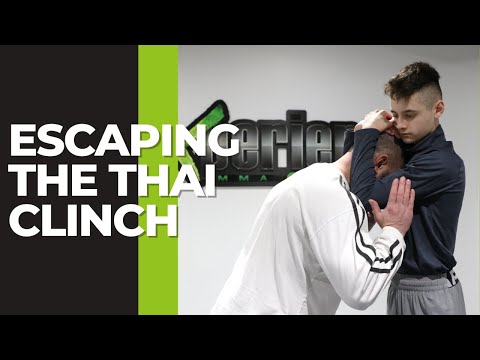
In this video, we show you a few different ways you can use to escape the Thai Clinch in a Mixed Martial Arts fight. D&A…
Translation: long guard plum
The Long Guard Plum is a variation of the Thai plum where the attacker extends the arms to create distance before snapping the head down, using the extended position to manage range and timing. [1] Unlike the tight plum where the elbows are pressed against the opponent's collarbones, the long guard plum maintains some extension in the arms, creating a frame that keeps the opponent at the optimal distance for pull-in knee strikes. [1],[2] The long guard plum allows the attacker to see incoming strikes better and react defensively while maintaining head control. [2],[3]
The long guard plum developed within Muay Thai as a strategic variation for managing distance in the clinch, particularly against aggressive opponents who close distance quickly. [1] It became more visible in MMA where the longer range provides better defence against short punches and elbows in the clinch. [2],[3]
The long guard plum is a transitional variation that allows the clinch fighter to maintain distance management while seeking the full plum lock. [1] Delp describes it as more defensive than the standard plum but useful for taller fighters who can use their reach to control range before closing to the full clinch. [1]
The long guard plum is a Muay Thai clinch variation that uses extended arms to frame before pulling into the full plum clinch. [1]
Used in Muay Thai competition as a transitional position before establishing the full plum. [1]
No images yet for this technique.
Sign in to suggest an image.
In this video, we show you a few different ways you can use to escape the Thai Clinch in a Mixed Martial Arts fight. D&A…
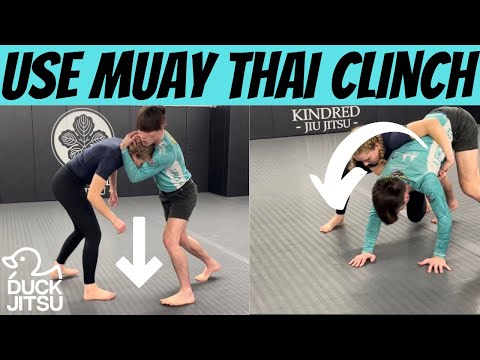
Duck-Jitsu covers a wrestling class at Kindred Jiu-Jitsu where he mixes techniques you would traditionally see in Muy Th…
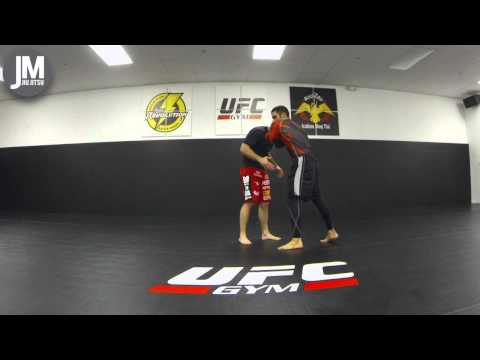
For more exclusive content, sign up at http://www.jmmodernjj.com/
The Long Guard Plum, also called the head clinch or Thai clinch, is a two-handed collar-tie grip applied to an opponent's head from the front. According to Danny Fung, this clinch leaves the defender's face exposed to knee strikes and requires defensive framing with locked elbows and palms pushing the aggressor's hips to create distance. Fung emphasizes that once the aggressor's foot lands after a knee attempt, the defender should close the gap belly-to-belly and hip-to-hip to neutralize further striking, then transition to wrestling techniques like body locks, underhooks, or leg trips. Fung also details alternative exits: lowering the body to pop upward into a body lock, or tapping the inside of the aggressor's elbow to access headlock or head-and-arm control. JM Modern Jiu Jitsu's Kyle Bradley presents a direct counter: while in the plum, the defender overgrips the biceps, pinches and rolls the aggressor down to achieve upright posture, and executes a foot sweep—typically with the front leg—to take the opponent to the ground. Bradley notes that even without precise foot-sweep timing, the hip drive and posture reversal alone can force the aggressor backward across the mat. Duck_Jitsu focuses on grappling transitions from the clinch, emphasizing getting behind the opponent and establishing body locks to control the hands and set up escapes or positional dominance. All three instructors agree the plum is primarily an offensive tool in muay Thai but stress that in MMA and grappling contexts, defensive framing, body-lock transitions, and takedown counters are essential.
Synthesized from 3 instructors
No instructional courses yet for this technique.
Sign in to suggest a course.
Risk of injury to the person this technique is applied to
Head/neck control positions create cervical strain; Muay Thai plum is primary striking platform
Skill level needed to execute this technique reliably
Whether this technique is allowed under major competition rule sets
Muay Thai: The Art of Fighting (Yod Ruerngsa, Khun Kao Charuad & James Cartmell, 2002)
Alias sources — [1] Muay Thai Unleashed (Delp, 2006) [2] Muay Thai: The Art of Fighting (Kraitus & Kraitus, 1988) [3] Muay Thai: A Living Legacy (Prayukvong, 2006)
Effectiveness sources — [1] Muay Thai Unleashed (Delp, 2006)
Mixed Japanese-Western terminology — combines traditional Japanese terms with katakana loanwords
Alias sources — [1] Muay Thai Unleashed (Delp, 2006) [2] Muay Thai: The Art of Fighting (Kraitus & Kraitus, 1988) [3] Muay Thai: A Living Legacy (Prayukvong, 2006)
Effectiveness sources — [1] Muay Thai Unleashed (Delp, 2006)
neck and bicep strength for head control, endurance for sustained clinch
longer forearms for deeper collar tie, strong neck
biceps, forearms, neck muscles, core
Danny Fung recommends lowering your legs and using your palms to pop up out of the clinch, then immediately transitioning into a body lock to regain control and offensive positioning.
Body locking is essential in wrestling and mixed martial arts because it allows you to control your opponent's posture and close the space between you and them, which helps you gain the offensive advantage.
Block the inside of your opponent's elbows to prevent knee strikes to your face or body, and be aware that a skilled Thai clincher will move you around while controlling you.
If you can't complete a foot sweep, focus on getting your opponent's feet off the ground—this prevents them from generating power for crushing strikes or clinch control.
The Long Guard Plum is a variation of the Thai plum where the attacker extends the arms to create distance before snapping the head down, using the extended position to manage range and timing. Unlike the tight plum where the elbows are pressed against the opponent's collarbones, the long guard plum maintains some extension in the arms, creating a frame that keeps the opponent at the optimal distance for pull-in knee strikes.
The long guard plum developed within Muay Thai as a strategic variation for managing distance in the clinch, particularly against aggressive opponents who close distance quickly. It became more visible in MMA where the longer range provides better defence against short punches and elbows in the clinch.
Unified MMA: legal — Legal — clinching is integral to MMA; IJF: legal — Legal — kumi-kata (grip fighting) is fundamental to judo; IBJJF: legal — Legal — standing grip fighting and clinch work permitted; IFMA: legal — Legal — the clinch is a core element of Muay Thai, clinch dominance is highly…; WBC/Boxing: restricted — Holding is technically a foul — referee breaks clinch, excessive holding resu…; K: restricted — 1/GLORY — One attack from clinch allowed, then referee breaks; WAKO: restricted — Clinch generally broken by referee — limited or no clinch fighting in most fo…; UWW: legal — Legal — clinch is fundamental to wrestling, the primary position in Greco-Roman
Danger rating 5/10. High — head/neck control positions create cervical strain; Muay Thai plum is primary striking platform
The standard setup chain: Close Distance → Establish Primary Grip → Position the Hips → Apply Pressure.
Standard counters include: Pummeling — fight for inside position by swimming arms under opponent's grips / Frame and Push — create distance using forearm frames against the chest or neck / Grip Break — systematically strip the opponent's controlling grips / Posture Up — straighten the spine and drive the hips forward to break clinch control.
Common variants: Single collar tie (one hand on the nape controlling the head); Double collar tie (plum) (both hands behind the head for maximum control); Collar tie with wrist control (one hand on the nape, other controlling the wrist).
Used in Muay Thai competition as a transitional position before establishing the full plum.
Top errors to watch for: Extending the arms so far that you lose control of the head — the arms must be long enough for distance but short eno… / Not maintaining pulling pressure through the extended arms — even at long range, pull the head forward and down / Staying in long guard when the opponent closes distance — transition to tight plum when they get inside / Using the long guard passively as a stalling position — the distance should enable kneeing, not resting.
The Long Guard Plum is also known as Rongu Gādo Kubi-zumo, Long Range Plum, Extended Plum Clinch, Muay Thai Long Guard Clinch.