O Guruma Overview and Comparison
O Guruma is a high hip throw with structural similarities to Hasami-goshi, though the leg movement differs directionally. The technique targets the opponent's weight relatively high across the thighs, making it effective when the opponent's weight is elevated and moving forward.
Timing and Entry Conditions
O Guruma works best when the opponent clinches or attempts to attack the legs while their weight is high and their knees are not deeply bent. The technique is ineffective against an opponent with low posture and bent knees, as this positioning already distributes their weight downward.
Entry and Weight Distribution
The thrower steps inside fighting range and pushes inward while pulling the opponent's upper body high and forward. This positioning distributes the opponent's weight approximately 60 percent onto one leg due to their attachment to the thrower, facilitating the throw.
Posture and Hip Mechanics
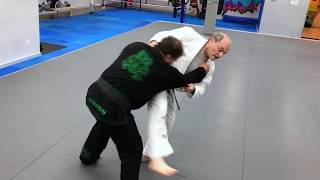
Unlike Uchi-mata and Harai-goshi, O Guruma maintains a more upright posture rather than bowing forward from the hips. The thrower's shoulders rotate as the throwing leg executes, with the center of gravity remaining relatively forward along the root line of movement.
Foot Positioning and Stance
The thrower positions their feet nearly perpendicular to the opponent's body line, similar to a side-by-side stance. The feet generally align along a forward line, though the thrower may position slightly wider; excessive foot turning is neither necessary nor emphasized.
Leg Mechanics and Contact
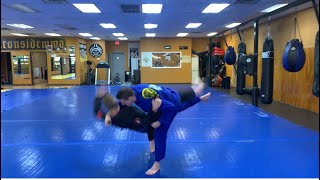
The throwing leg strikes across the opponent's thighs while their weight remains elevated, causing them to flip over rather than being knocked down. If the opponent stands closer, the thrower's upper thigh may serve as a stopping point, with momentum from the lower leg continuing the throwing action.
Execution Focus
The thrower should emphasize pulling the opponent's weight to the corner of their body toward the corner of the thrower's body. Mental focus should remain on the pulling action and rotation rather than deliberate foot positioning or hip cooking, allowing natural mechanics to develop.
Natural Mechanics and Positioning
Minor variations in foot position and leg contact occur naturally during execution and should not become conscious points of focus. The initial positional setup resembles a Harai-goshi entry, with proper weight distribution and pulling action generating the throw without overthinking biomechanical details.
O GURUMA (大車)
Key Takeaways
- •O Guruma Overview and Comparison
- •Timing and Entry Conditions
- •Entry and Weight Distribution
- •Posture and Hip Mechanics
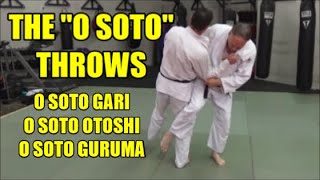
#oguruma #jukidojujitsu #jujitsu #jujutsu #jiujitsu #jukido #judo #nagewaza #大車 #柔術 Rego Sensei, 5th dan, demonstrating the basic method of the throwing technique O Guruma (Big / Large Wheel). O Guruma often misunderstood to be Harai Goshi. However, this frequently under appreciated technique, severs an important function in the throwing syallabus of the Jukido style of jujutsu. Video from the January 2024 Black Belt Class (Yudanshakai) at the JUKIDO JUJITSU ACADEMY in Palm Coast, FL / Flagler County, FL.
Related Techniques
Frequently Asked Questions
What does this video teach about o guruma?
This video covers o guruma overview and comparison, timing and entry conditions, entry and weight distribution. It provides detailed instruction from Jukido Academy.
How long does it take to learn o guruma?
The basic mechanics can be understood in a single session, but developing reliable execution requires consistent drilling over weeks of practice. This 8-part breakdown helps structure your training by isolating each phase of the technique.
What are the key details for finishing o guruma?
The thrower should emphasize pulling the opponent's weight to the corner of their body toward the corner of the thrower's body. Mental focus should remain on the pulling action and rotation rather than deliberate foot positioning or hip cooking, allowing natural mechanics to develop.