O Soto Otoshi Overview
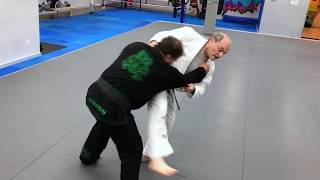
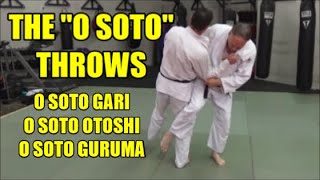
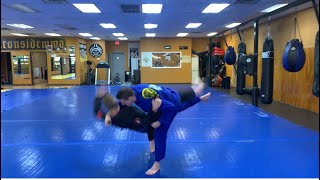
O Soto Otoshi is a throwing technique in judo that combines elements of O Soto Gari with a dropping motion. The technique involves sweeping the opponent's leg while simultaneously using upper body leverage to control the fall. This creates a powerful and efficient throw that can be executed from various distances and angles.
Grip and Positioning
The thrower establishes a dominant grip on the opponent's sleeve and collar, similar to traditional judo gripping mechanics. Proper posture and positioning are essential, with the thrower maintaining a low center of gravity and staying close to the opponent. The feet should be positioned to allow for maximum power transfer during the execution.
Entry and Weight Distribution
The thrower shifts their weight forward and to the side, breaking the opponent's balance toward their front corner. This weight shift occurs simultaneously with stepping the attacking leg between or across the opponent's legs. Proper timing of the weight distribution ensures the opponent cannot resist or counter the technique.
Leg Placement and Sweep
The attacking leg is driven backward and upward across the opponent's outer thigh or hip area. The motion resembles a sweeping action rather than a direct block, creating a continuous flow of movement. The leg should contact the opponent's body at the optimal angle to maximize throwing force.
Upper Body Execution
While the leg sweeps, the upper body pulls downward and rotates, using the grip to control the opponent's trajectory. The thrower's hip and torso rotation amplify the throwing power generated from the leg sweep. This simultaneous action of upper and lower body creates the distinctive dropping effect of O Soto Otoshi.
Completing the Throw
The opponent is projected backward and downward onto the mat through the combined momentum of the sweep and upper body control. The thrower maintains their grip and balance throughout the technique to ensure complete execution. Proper ukemi (falling technique) from the opponent minimizes injury risk from this powerful throw.
Common Applications
O Soto Otoshi is particularly effective against opponents who stand upright or lean back slightly. The technique works well in randori (free practice) when the opponent resists forward pressure. It can be combined with other techniques or used as a follow-up to failed throwing attempts.
Practice and Refinement
Practitioners should drill this technique repeatedly with a compliant partner before attempting it in free practice. Proper footwork, timing, and the coordination between upper and lower body movements must be developed through consistent training. Feedback from instructors and experienced practitioners helps identify and correct technical deficiencies.
O SOTO OTOSHI
Key Takeaways
- •O Soto Otoshi Overview
- •Grip and Positioning
- •Entry and Weight Distribution
- •Leg Placement and Sweep
Technical judo
Related Techniques
Frequently Asked Questions
What does this video teach about o soto otoshi?
This video covers o soto otoshi overview, grip and positioning, entry and weight distribution. It provides detailed instruction from Sport-Management- System.
How long does it take to learn o soto otoshi?
The basic mechanics can be understood in a single session, but developing reliable execution requires consistent drilling over weeks of practice. This 8-part breakdown helps structure your training by isolating each phase of the technique.
What are the key details for finishing o soto otoshi?
O Soto Otoshi is particularly effective against opponents who stand upright or lean back slightly. The technique works well in randori (free practice) when the opponent resists forward pressure. It can be combined with other techniques or used as a follow-up to failed throwing attempts.