Introduction to Liechtenauer's Zwerchau
The Zwerchau (also rendered as 'Zwerchhau' or 'fair shawl') is a master cut within Johannes Liechtenauer's historical fencing system. It is one of several offensive techniques designed to seize initiative by attacking into an opponent's guard rather than responding reactively to incoming strikes.
Liechtenauer's Framework: Safe Entry into Engagement
Liechtenauer's art establishes safe methodologies for entering combat by selecting appropriate master cuts based on the opponent's current guard position. The Zornhau is the sole master cut taught as a direct counter to incoming strikes; all other master cuts, including the Zwerchau, are designed for offensive entry into the bind and subsequent fence control.
Execution of the Zwerchau with Proper Mechanics
The practitioner steps forward with the right foot while striking diagonally inward with the short edge and thumb positioned underneath. If the opponent counters with a cut, the defender should channel the force of that response into the cross guard using the sword's strong, thereby gaining mechanical advantage and the ability to penetrate the opponent's parry.
Zwerchau Continuation and Counter-Response
Should the opponent push the initial Zwerchau aside, the practitioner may execute a second Zwerchau to the opposite side. Liechtenauer then provides the primary counter: the opponent, positioned in Vontag (a specific guard), responds by falling with the long edge onto the attacker's blade to establish a strong parry.
Defending Against Zorn Howl-like Counter to Second Zwerchau
When the opponent counters the second Zwerchau with a Zorn Howl-like action, striking down the long edge onto the attacker's sword becomes ineffective. Instead, the defender may strike their own Zwerchau while maintaining control throughout the circular motion, or alternatively catch the opponent mid-strike to control the hands depending on measure and geometry.
Weak Parry Response and Clearing Technique
If the opponent's counter has created a weak bind position on the defender's sword, the defender may execute a clearing action—either a thrust or cut—around the opponent's blade. This technique is only appropriate when the opponent has established a strong angular disadvantage rather than achieving contact at the cross guard.
Distinction Between Strong and Weak Parries
A parry appears strong when the defender's strong meets the opponent's weak, but true strength requires the defender's sword to be aligned with their skeletal structure and positioned to channel force into the cross guard. A weak parry misaligns the sword or fails to establish an overbind, allowing the opponent to simply redirect rather than meaningfully resist the force.
Throw Technique Against Weak Parry Response
When the opponent parries the Zwerchau weakly, returning (direct counter-striking) becomes impractical due to the cutting mechanics and force channeling involved in the technique. Instead, Liechtenauer prescribes a throw executed by rushing in and positioning the sword behind the opponent's neck, short edge forward.
Layers of Liechtenauer's Fight: Zwerchau
Key Takeaways
- •Introduction to Liechtenauer's Zwerchau
- •Liechtenauer's Framework: Safe Entry into Engagement
- •Execution of the Zwerchau with Proper Mechanics
- •Zwerchau Continuation and Counter-Response
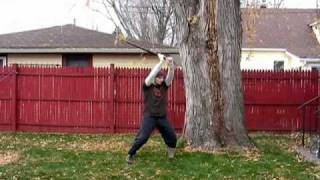
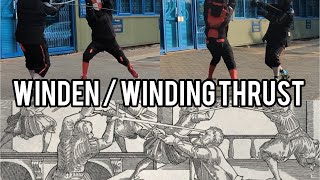
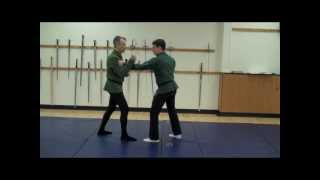
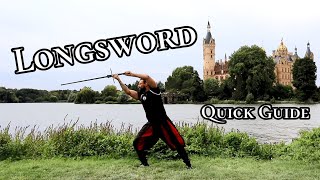
In this video, we discuss our interpretation of the Zwerchau, it's functions and the plays which its sets up. e ave no grand illusion that our version is the correct one. Only that it may have something to offer. Remember, these are not cutting vids. For that, buy Mike Edelson's book
Related Techniques
Frequently Asked Questions
What does this video teach about liechtenauer cut?
This video covers introduction to liechtenauer's zwerchau, liechtenauer's framework: safe entry into engagement, execution of the zwerchau with proper mechanics. It provides detailed instruction from The Historical Fencing Channel.
How long does it take to learn liechtenauer cut?
The basic mechanics can be understood in a single session, but developing reliable execution requires consistent drilling over weeks of practice. This 8-part breakdown helps structure your training by isolating each phase of the technique.
What are the key details for finishing liechtenauer cut?
A parry appears strong when the defender's strong meets the opponent's weak, but true strength requires the defender's sword to be aligned with their skeletal structure and positioned to channel force into the cross guard. A weak parry misaligns the sword or fails to establish an overbind, allowing the opponent to simply redirect rather than meaningfully resist the force.