Introduction to the Spin-Back Kick
Raymond Daniels introduces a comprehensive tutorial on executing the spin-back kick with power across multiple fighting disciplines including Muay Thai, kickboxing, and MMA. The lesson covers entry techniques, exit strategies, and practical applications for full-contact fighting.
Defensive Setup and Distance Management
The fundamental principle of the spin-back kick involves establishing proper distance while maintaining a low center of gravity to generate maximum torque. Rather than executing the traditional spin with a pre-set target focus, the practitioner should position themselves in punching range with their back foot anchored on the baseline, allowing for power generation without telegraphing.
Foot Switch and Simultaneous Execution
The key technical element involves switching the lead foot to the rear foot's position while simultaneously executing the spin kick with a shoulder-line pivot and target acquisition. This coordinated footwork generates torque while maintaining low-ground positioning, converting potential energy into rotational power directed through the striking surface.
Exit Strategy and Space Creation
After landing the spin kick, the practitioner must immediately create distance through a cross-out footwork pattern rather than remaining in the extended position. This exit strategy is critical due to the high-risk, high-reward nature of the technique, ensuring the fighter maintains defensive positioning after committing to the attack.
Entry Combinations and Stance Considerations
The spin-back kick is most effective when preceded by hand combinations such as jab-cross-jab or jab-cross sequences, with execution varying based on open or closed stance positioning. The technique must be practiced on both sides of the body, with lead foot placement determining appropriate entry angles and target exposure opportunities.
Defensive Application: Baiting and Counter Strategy
When employing the spin-back kick defensively, the fighter intentionally baits the opponent into committing a punch, exposing vulnerable target areas including the ribs and liver. The front foot remains connected to the opponent's position during this setup, creating the precise distance needed for both the feint and the explosive rotational strike.
Gap-Closing with Crossover Footwork
To close distance while maintaining power generation, the practitioner uses crossover footwork to enter the optimal striking zone while transitioning stance. This advanced approach requires awareness of opponent engagement; if the opponent remains stationary, foot repositioning and space creation are necessary, while a disengaging opponent requires forward travel adjustment.
Stationary Opponent: Advance and Retreat
When the opponent remains in position after the entry combination, the fighter steps through with the preliminary strikes, then pulls the rear foot backward during the spin kick execution to maintain proper distance. The technique concludes with a cross-out footwork pattern to establish defensive spacing.
Disengaging Opponent: Forward Travel Adjustment
If the opponent retreats after the initial hand combination, the practitioner must adjust by stepping through with forward momentum during the spin kick rather than pulling the foot backward. This modification ensures adequate reach and impact force despite the increased distance created by the opponent's retreat.
Bilateral Practice and Application Summary
Mastering the spin-back kick requires proficient execution from both sides, with the choice of side determined by stance positioning relative to the opponent. The technique functions as both an offensive tool for closing distance and a defensive method for creating space, making it a versatile weapon in comprehensive fighting applications.
Raymond Daniels - How to Set up and Land Spin Back Kicks with Power for Kickboxing / MMA
Key Takeaways
- •Introduction to the Spin-Back Kick
- •Defensive Setup and Distance Management
- •Foot Switch and Simultaneous Execution
- •Exit Strategy and Space Creation
Spinning back kicks are a hugely powerful tool for anyone who can set them up and land them like Raymond Daniels can. Visit https://www.warriorcollective.co.uk for more amazing videos! Raymond Daniels, globally renowned striking talent, multiple times World Champion and highly regarded coach is the featured instructor here filmed by the Warrior Collective. https://www.raymonddaniels.com Thanks for watching, I hope you enjoyed watching this tutorial, please like, share and don't forget to subscribe to this channel for more great videos each week!! You can also follow the Warrior Collective on Facebook - https://www.facebook.com/warriorcolle... Twitter - https://twitter.com/Warriorcollect Google + - https://plus.google.com/u/0/ Pinterest - http://uk.pinterest.com/warriorcollect/
Related Techniques
Frequently Asked Questions
What does this video teach about spin-back back kick?
This video covers introduction to the spin-back kick, defensive setup and distance management, foot switch and simultaneous execution. It provides detailed instruction from Stuart Tomlinson.
How long does it take to learn spin-back back kick?
The basic mechanics can be understood in a single session, but developing reliable execution requires consistent drilling over weeks of practice. This 10-part breakdown helps structure your training by isolating each phase of the technique.
What are the key details for finishing spin-back back kick?
If the opponent retreats after the initial hand combination, the practitioner must adjust by stepping through with forward momentum during the spin kick rather than pulling the foot backward. This modification ensures adequate reach and impact force despite the increased distance created by the opponent's retreat.
Related videos
Muay Thai Tip: Spin Back Kick
BAM Channel
Be More CONFIDENT With Your SPINNING Back Kick Set Up
MMA COACH
How To Back Kick Tutorial | Catholic Karate Lesson
ᴶᴹᴶ Dojo Go ! | Online Kids Martial Arts & Karate
How to Do a Taekwondo Back Kick
Taekwondo Guide
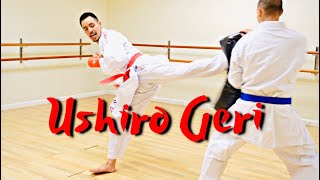
USHIRO GERI TUTORIAL (Spinning Back Kick)
ULTIMATE KARATE