The Fundamental Role of Circles in Hapkido
Circular motion is a cornerstone principle throughout Hapkido training and application. This instructional guide explores how practitioners leverage circles to generate force and control opponents regardless of size or strength differences.
Foundational Exercise: Trading Places Drill
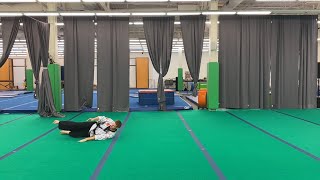
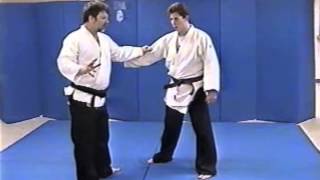
Beginners learn circular principles through a simple partner drill where one student grabs the other's arm and holds firmly. One partner steps inside and wraps their outside leg around the opponent while pulling, causing both practitioners to switch positions and demonstrating how body movement alone generates significant force.
Circular Motion Variations and Tension Control
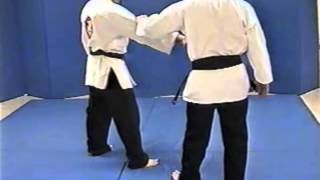
Practitioners can execute the circular principle by stepping inside for a tighter circle or pulling from the outside for a larger rotational arc. The core objective remains creating tension and positioning the opponent at the end of an imaginary rope, establishing superior control throughout the technique.
Physics of Centrifugal Force in Takedowns
Direct downward pressure on an opponent relies solely on the practitioner's strength and body weight, a limitation when facing larger opponents. By introducing circular motion, Hapkido practitioners apply centrifugal force principles, allowing an opponent's mass to generate additional power in the technique rather than relying on strength alone.
Arm Bar Technique with Circular Integration
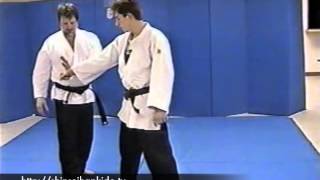
The arm bar becomes more effective when combined with circular motion and external leg placement. Rather than depending on muscular force to drive an opponent downward, the practitioner simultaneously pushes the arm while swinging the leg outward, leveraging the opponent's mass and momentum for superior control.
Redirecting Incoming Force
When an opponent moves toward the practitioner, circular principles allow the defender to intercept and redirect that energy. Similar to catching a moving object on a string, the defender maintains control of the opponent's direction and momentum without requiring counterforce.
Circular Blocking and Hip Throw Application
Upon receiving a punch, the practitioner blocks in a circular motion away from the body, then continues the arc and pulls downward along the outside of the opponent's arm. The defender simultaneously drives their hip forward to execute a smooth hip throw while maintaining rotational control.
Over-the-Body Throw Alternative
For situations where a hip throw proves difficult, the practitioner can redirect an incoming punch inward, lift the opponent's arm across their own body, and execute a throw that positions the opponent beneath them. This variation maintains the same circular principle while adapting to different combat scenarios.
Core Practice Guidelines and Proximity Control
Students should focus on the foundational partner drill, emphasizing circular motion over complex grip variations. Maintaining close proximity to the core maximizes control—pulling the opponent toward the center of gravity proves far more effective than extending force through outstretched arms.
Strategic Application and Situational Adaptation
Rather than forcing predetermined techniques onto unpredictable situations, practitioners should remain responsive to incoming forces and adapt accordingly. Extensive training across varied scenarios develops the ability to recognize opportunities and apply circular principles fluidly, transforming the opponent's energy into the defender's advantage.
Concepts of Hapkido | Circles
Key Takeaways
- •The Fundamental Role of Circles in Hapkido
- •Foundational Exercise: Trading Places Drill
- •Circular Motion Variations and Tension Control
- •Physics of Centrifugal Force in Takedowns
In this video I illustrate the basic utility of circles in Hapkido and how they enhance our abilities in self defense no matter the size of the opponent. Actually, heavily dependent on the size of the opponent. By Matt Hinkamp
Related Techniques
Frequently Asked Questions
What does this video teach about hapkido circular throw?
This video covers the fundamental role of circles in hapkido, foundational exercise: trading places drill, circular motion variations and tension control. It provides detailed instruction from Matt Hinkamp.
How long does it take to learn hapkido circular throw?
The basic mechanics can be understood in a single session, but developing reliable execution requires consistent drilling over weeks of practice. This 10-part breakdown helps structure your training by isolating each phase of the technique.
What are the key details for finishing hapkido circular throw?
Students should focus on the foundational partner drill, emphasizing circular motion over complex grip variations. Maintaining close proximity to the core maximizes control—pulling the opponent toward the center of gravity proves far more effective than extending force through outstretched arms.