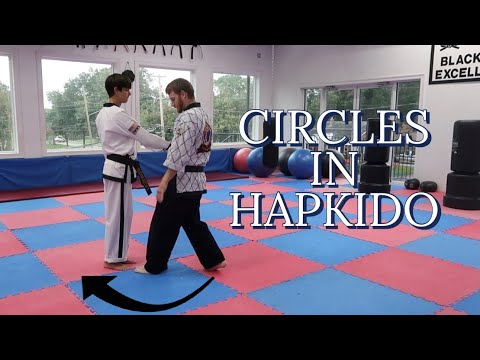
Concepts of Hapkido | Circles
0
Hapkido Circular Throw·Matt Hinkamp
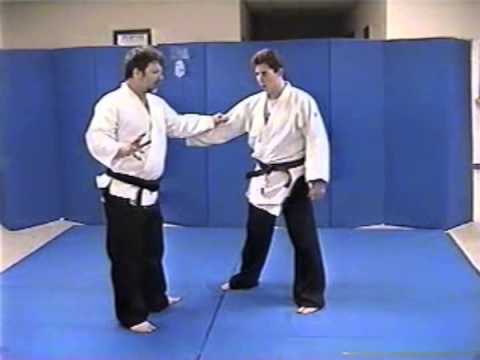
In this video I illustrate the basic utility of circles in Hapkido and how they enhance our abilities in self defense no…
Translation: hapkido circular throw
The Hapkido Circular Throw uses the principle of circular motion to redirect the opponent's force and project them in an arc. [1]
Documented across multiple grappling traditions. [1]
Proven in competition and cross-style challenge matches. [1]
Multi-style grappling tradition. [1]
Used in UFC and professional MMA competition
No images yet for this technique.
Sign in to suggest an image.
In this video I illustrate the basic utility of circles in Hapkido and how they enhance our abilities in self defense no…
Shinsei Hapkido Judo Throws
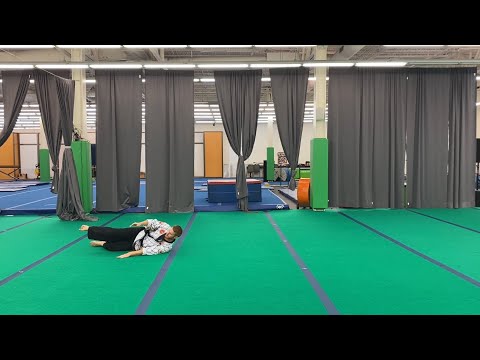
Detailed instruction on how to apply the sideways breakfall when rolling or flipping sideways. Extremely important for b…
The Hapkido circular throw leverages rotational physics and centrifugal force to generate power independent of the practitioner's strength, making the technique effective regardless of size differential. Matt Hinkamp emphasizes that circular motion introduces the opponent's mass into the equation, transforming a strength-dependent push into a physics-based throw that scales with opponent size. The fundamental principle involves stepping inside or outside the opponent, wrapping the leg around them, and creating tension while pulling them along a circular path—essentially making the opponent the end of a rope. Hinkamp stresses keeping the opponent close to one's center of gravity for maximum control, contrasting this with extended-arm swinging. The technique can be applied after deflecting incoming strikes, converting the attacker's momentum into throwing force rather than resisting head-on. Richard Milliken's Shinsei Hapkido approach addresses related judo-based throws that share common principles: stealing balance by positioning oneself inside the opponent's stance (at the angle of weakness, 90 degrees from their foot line) and lifting by placing the hips underneath them. Both instructors agree that footwork and body positioning are critical; stepping to match the opponent's stance weakness and maintaining close control with tucked elbows enables smooth execution. Hinkamp's supplementary instruction on circle flip break falls demonstrates how practitioners absorb the landing force from being thrown, completing the throw-and-recovery cycle essential to safe Hapkido training.
Synthesized from 3 instructors
No instructional courses yet for this technique.
Sign in to suggest a course.
Risk of injury to the person this technique is applied to
Positional technique
Skill level needed to execute this technique reliably
Whether this technique is allowed under major competition rule sets
The Ultimate Guide to Grappling (Sattler, 2007)
description, historyOrigin: sourced from Sattler, J
description, historyOrigin: sourced from Sattler, J
Good body control and flexibility
Hapkido circular throws use round, flowing motions — redirecting the attacker's energy in a circle. Hapkido appears in 474 passages across 61 books. The Ultimate Guide to Grappling: 'Hapkido throws almost always end with a finishing strike.' (61 books; Ultimate Guide to Grappling)
Matt Hinkamp explains that centrifugal force means the mass of your opponent matters in the equation—the bigger they are, the more the circular principle helps. By rotating your opponent in a circle rather than pushing straight, you leverage physics to make the technique work regardless of size difference.
Richard Milliken emphasizes that you must match your opponent's feet and position yourself inside of their feet, as the angle of weakness is 90 degrees from the line between their feet. You then steal their balance point by pushing your hips into it and moving them out of the way.
Matt Hinkamp advises against swinging your opponent with arms outstretched. Instead, use a tight pull, which allows you to apply pressure points and perform different takedowns or immobilizations more effectively.
Matt Hinkamp teaches that the circle allows you to work with incoming force rather than against it—instead of deflecting attacks head-on or resisting them, you let the attack run its course and use it to help you, embodying the principle of habkyo.
The Hapkido Circular Throw uses the principle of circular motion to redirect the opponent's force and project them in an arc.
Documented across multiple grappling traditions.
IJF: legal — Legal throwing technique; IBJJF: legal — Legal at all belt levels; UWW: legal — Legal in both freestyle and Greco-Roman; Unified MMA: legal — Legal throwing technique; ADCC: legal — Legal; FIAS Sport Sambo: legal — Legal; FIAS Combat Sambo: legal — Legal
Danger rating 3/10. Positional technique
The standard setup chain: Position → Hapkido Circular Throw.
Standard counters include: Technique-specific counters.
Common variants: Standard Hapkido Circular Throw.
Used in UFC and professional MMA competition
Top errors to watch for: Poor control / Rushing.
The Hapkido Circular Throw is also known as Hapkido Circular Throw, Won Hyung Dunjigi, Circular Projection.