Shinsei Hapkido Projections
0
Hapkido Projection Throw·Richard Milliken
Shinsei Hapkido Projections
Translation: hapkido projection throw
The Hapkido Projection Throw uses directional force alignment to project the opponent in the direction of their own momentum. [1]
Documented across multiple grappling traditions. [1]
Proven in competition and cross-style challenge matches. [1]
Multi-style grappling tradition. [1]
Used in UFC and professional MMA competition
No images yet for this technique.
Sign in to suggest an image.
Shinsei Hapkido Projections
Shinsei Hapkido Sacrifice Throws
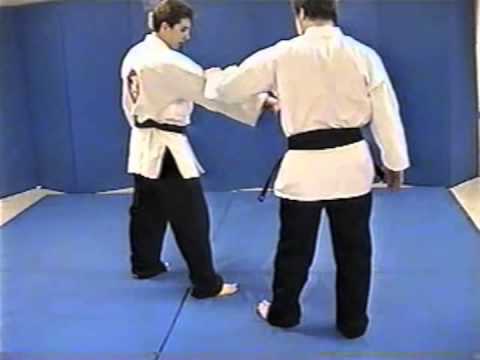
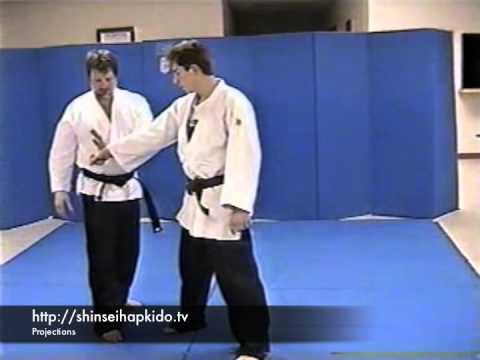
The Hapkido projection throw is a dynamic throwing technique executed primarily from punching attacks or forward momentum, where the defender extends the attacker's energy beyond their intended direction to launch them into the air. Richard Milliken's instructional videos on Shinsei Hapkido demonstrate that projections differ fundamentally from sacrifice throws in their application and mechanics. Projections typically originate from wrist techniques and punching defense, using soft blocks and minimal force to redirect the opponent's own momentum. Key variations include hyper-extension techniques where the defender pulls the attacker backward before reversing stance to throw toward their rear balance point; spinning projections that disorient through rotational control of the head and arm; fireman's carry applications effective against downward strikes or weapons; and arm-lock throws combining blocking with close-range positioning to lock the shoulder and elbow before executing the throw. Critical principles emphasized across all variations include maintaining close proximity to the opponent, keeping the arm control low rather than elevated, avoiding jerking motions that could cause injury, and using controlled trips that exploit the body's natural tendency to strain against balance disruption. The technique can be executed with one or both feet, and variations function effectively against haymakers and other aggressive linear attacks.
Synthesized from 2 instructors
No instructional courses yet for this technique.
Sign in to suggest a course.
Risk of injury to the person this technique is applied to
Positional technique
Skill level needed to execute this technique reliably
Whether this technique is allowed under major competition rule sets
The Ultimate Guide to Grappling (Sattler, 2007)
description, historyOrigin: sourced from Sattler, J
description, historyOrigin: sourced from Sattler, J
Good body control and flexibility
Hapkido projection throws launch the opponent forward using joint manipulation as the throwing mechanism — the wrist, elbow, or shoulder lock is what creates the throwing force. Unique among throwing arts because the joint lock IS the throw. (Ultimate Guide to Grappling; Hapkido texts)
According to Richard Milliken, you need to control your opponent's center of balance, located at the Hara (approximately two inches below the navel and halfway in). Moving and controlling this balance point is the secret to executing effective throws.
Richard Milliken demonstrates landing your opponent face to face, cheek to cheek, which allows you to maintain control and transition into follow-up techniques like chokes or rolls.
In a standard throw, you push almost straight up and down to drop your opponent directly in front of you for control. For a roll-up finish, you throw your opponent farther out to generate momentum that pulls you onto their chest, allowing you to roll up and maintain arm control.
The Hapkido Projection Throw uses directional force alignment to project the opponent in the direction of their own momentum.
Documented across multiple grappling traditions.
IJF: legal — Legal throwing technique; IBJJF: legal — Legal at all belt levels; UWW: legal — Legal in both freestyle and Greco-Roman; Unified MMA: legal — Legal throwing technique; ADCC: legal — Legal; FIAS Sport Sambo: legal — Legal; FIAS Combat Sambo: legal — Legal
Danger rating 3/10. Positional technique
The standard setup chain: Position → Hapkido Projection Throw.
Standard counters include: Technique-specific counters.
Common variants: Standard Hapkido Projection Throw.
Used in UFC and professional MMA competition
Top errors to watch for: Poor control / Rushing.
The Hapkido Projection Throw is also known as Hapkido Projection Throw, Tu Hyung Dunjigi, Directional Throw.