The Guard Stalling Problem
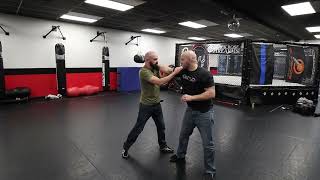
Guard players worldwide encounter opponents who prioritize distance management through pushing and posting rather than engaging. These stalling tactics—including thumb posts, palm strikes, and backward movement—prevent the guard player from establishing contact necessary for sweeps, leg control, or back exposure. The following instructional sequence addresses systematic solutions to neutralize this defensive strategy.
Establishing Initial Contact with Two-on-One Control
Once the opponent makes contact through a post or push, the guard player immediately transitions to a two-on-one grip on the opponent's arm. The weak point of the grip (where fingers create an opening) must be sandwiched with the strong portion of the secondary grip to create an unbreakable connection. The guard player anchors their body by keeping elbows tight to the ribs, ensuring that if the opponent pulls away, they pull the guard player forward into attacking position.
Transitioning from Upper Body to Lower Body Control
While upper body grips establish connection, transitioning to lower body control is essential against skilled guard passers. The guard player uses the opponent's backward pull momentum to drive into double leg lock (kawuchi) position, targeting the inside of both knees. If the opponent successfully posts or the technique doesn't fully secure them, the guard player at minimum achieves inside leg position and maintained connection for upgrades to shin guard or other leg-lock entries.
Proper Shin Guard Mechanics and Underhook Defense
When establishing shin guard, the grip must be wrist-deep in the back of the knee while the elbow tucks tightly on the inside of the guard player's own leg. This positioning prevents the opponent from accessing an underhook and eliminates space for a successful knee cut pass. The tight elbow placement creates structural integrity that makes both underhook and knee cut responses extremely difficult for the opponent.
Countering the Knee Cut with Body Positioning
When the opponent attempts a knee cut—one of the most common reactions from shin guard—the guard player falls to their side and drives their torso underneath the opponent's primary leg. Simultaneously, the guard player secures secondary leg control on the opponent's second leg. This body positioning creates the foundation for a deep over-under hook and the transition into the Riniashi (hip raise) escape sequence.
Executing the Riniashi Sequence and Hip Elevation
From the underneath position, the guard player straightens their shin to create a deep over-under hook while maintaining secondary leg control. Connection points include the heel on the opponent's hip, the adductor on the back of their calf, and knuckles on the inside of the knee. The guard player then raises their hips explosively off the floor, driving weight into the opponent's leg through coordinated knee and heel contact to destabilize their base.
Maintaining Control During the Stand-Up Transition
As the guard player stands from the Riniashi position, maintaining grip on the opponent's ankle is critical—releasing creates an immediate escape opportunity. By keeping the ankle positioned above hip level during the stand-up, the guard player forces the opponent to kick their leg up to regain vertical base. This forced leg extension creates the opening for the guard player to rotate behind and establish back control.
How To Attack Anyone From Seated Guard - Delete Stallers
Key Takeaways
- •The Guard Stalling Problem
- •Establishing Initial Contact with Two-on-One Control
- •Transitioning from Upper Body to Lower Body Control
- •Proper Shin Guard Mechanics and Underhook Defense
Like and Subscribe Want me to privately mentor you on your BJJ Journey? Join My Community Today: https://www.skool.com/hpu-community/about HPU ATHLETIC: https://hpuathletic.com/password Want to train with us?: https://www.swma.com.au/ MY INSTAGRAM: https://www.instagram.com/hpucoaching/ FOLLOW ME ON TIKTOK: https://www.tiktok.com/@hpucoaching?lang=en Jake's instagram: https://www.instagram.com/thirdeyenegative/ #bjj #jiujitsu #grappling . 00:00 Intro 00:22 Getting a 2 on 1 02:48 Shin Guard And Sweep 05:30 Ashi to XGuard Sweep/backtake 08:40 Cross Ashi Entry & Heel Hook
Related Techniques
Frequently Asked Questions
What does this video teach about from seated : guard?
This video covers the guard stalling problem, establishing initial contact with two-on-one control, transitioning from upper body to lower body control. It provides detailed instruction from Josh Saunders .
How long does it take to learn from seated : guard?
The basic mechanics can be understood in a single session, but developing reliable execution requires consistent drilling over weeks of practice. This 7-part breakdown helps structure your training by isolating each phase of the technique.
What are the key details for finishing from seated : guard?
From the underneath position, the guard player straightens their shin to create a deep over-under hook while maintaining secondary leg control. Connection points include the heel on the opponent's hip, the adductor on the back of their calf, and knuckles on the inside of the knee. The guard player then raises their hips explosively off the floor, driving weight into the opponent's leg through coordinated knee and heel contact to destabilize their base.
Related videos
How to play seated open guard (BJJ Analysis)
Less Impressed More Involved BJJ
BJJ No Gi Kimura from Sit up Guard Tutorial
Stuart Tomlinson
Takedowns For BJJ Are Easy Once You Understand This
Josh Saunders
Standing BJJ Submissions & Takedown Options | Texas BJJ
Aces Jiu Jitsu Club
BJJ Black Belt and former UFC fighter show law enforcement control techniques.
Gard Defense Solutions