How To Attack Anyone From Seated Guard - Delete Stallers
0
From Seated : Guard·Josh Saunders
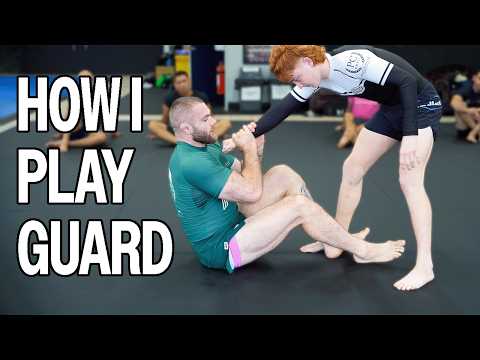
Like and Subscribe Want me to privately mentor you on your BJJ Journey? Join My Community Today: https://www.skool.com/…
Translation: from seated/guard
The chin-down wrist lock from seated guard uses a sharp downward flexion of the opponent's wrist while controlling the forearm from guard position. [1] The attacker traps the opponent's hand and drives the wrist into extreme flexion using body weight and guard mechanics, targeting the carpal and radiocarpal ligaments. [1],[2]
The chin-down wrist lock from guard applies downward flexion pressure on the opponent's wrist by pushing the hand toward the inner forearm. Wrist locks (kote-gaeshi and related techniques) appear in classical Japanese jujutsu and were included in Kodokan judo's katame-waza, though they were later restricted in judo competition rules. [1] In Brazilian Jiu-Jitsu, wrist locks from guard gained prominence through practitioners who exploited opponents' gripping habits during guard passing. [2] Cunningham documents the chin-down variation as a small-joint lock that capitalises on the natural weakness of the wrist in flexion, noting that the guard position provides the attacker with two free hands to isolate and manipulate the opponent's wrist while their hands are occupied with grips. [3]
Seated guard submissions exploit the seated position's hip mobility to attack with guillotines, arm drags to back takes, and leg entanglements. [1]
Seated guard submissions were refined in modern BJJ competition, particularly in no-gi formats where seated guard became a primary playing position. [1]
Seated guard attacks are a standard part of modern no-gi competition, used extensively at ADCC and no-gi IBJJF events. [1]
No images yet for this technique.
Sign in to suggest an image.
Like and Subscribe Want me to privately mentor you on your BJJ Journey? Join My Community Today: https://www.skool.com/…
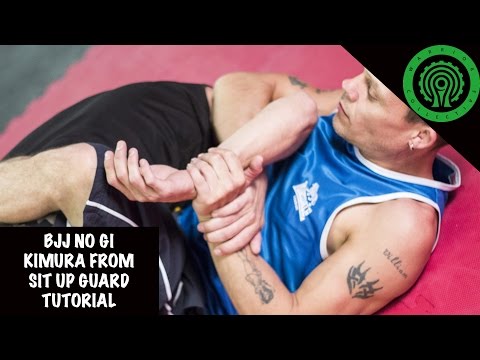
Jimmy Hey, Head Coach of Apex MMA in Great Harwood is here filmed by the Warrior Collective giving a step by step tutori…
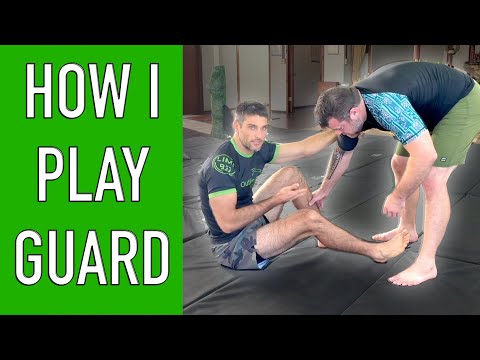
Outlier Database: https://outlierdb.com/ Membership includes: -1500 Member Discord -My $97 instructional on half guard …
From seated guard, practitioners employ integrated systems combining upper-body grip control, leg positioning, and positional transitions to neutralize aggressive guard passers. Josh Saunders (Delete Stallers) emphasizes gaining initial contact through two-on-one grip upgrades when opponents pull away, then transitioning to shin guard with deep wrist control and secondary leg engagement, progressing into reaping sequences or ex-guard depending on opponent resistance. Stuart Tomlinson (Apex MMA) teaches a disguised Kimura setup from sit-up guard that keeps submission intentions hidden until the final moment, utilizing hip elevation and controlled tricep trapping before rolling back and applying wrist pressure. Less Impressed More Involved provides systematic risk management through foot positioning and hip control: maintaining both feet on the outside when possible to preserve hip switching ability, using one-hip-loaded posture with grip-fighting to control opponent hand placement, and orchestrating movement to predictably force the passer into specific leg attacks like inside-reach single-leg takedowns. All three instructors agree on the critical importance of hip elevation and control—whether through riniashi mechanics (Saunders), guard stability (Tomlinson), or preventing pinned-hip positions like reverse de la riva or headquarters (Less Impressed). They diverge slightly on entry methodology: Saunders prioritizes aggressive leg wrapping from initial contact, Tomlinson emphasizes disguised arm-trapping submissions, and Less Impressed focuses on preventative positional design and hand-fighting hierarchies. Each approach shares the principle that maintaining superior connection and weight distribution over the opponent determines control and submission access.
Synthesized from 3 instructors
No instructional courses yet for this technique.
Sign in to suggest a course.
Risk of injury to the person this technique is applied to
Wrist lock variant targeting carpal and radioulnar joints through forced deviation or torsion
Skill level needed to execute this technique reliably
Whether this technique is allowed under major competition rule sets
Japanese BJJ community standard katakana transliteration
Japanese BJJ community standard katakana transliteration
Mixed Japanese-Western terminology — combines traditional Japanese terms with katakana loanwords
Japanese terminology sourced from Japanese BJJ community standard katakana transliteration
fine motor control, grip sensitivity, quick hand transitions
dexterous hands with strong fingers
forearm flexors and extensors, intrinsic hand muscles
Josh Saunders emphasizes using your opponent's momentum against them, especially when they keep moving back. Keep your elbows and knees together to anchor your entire body, so if your opponent tries to pull away, they pull you with them instead of creating distance.
According to Josh Saunders, you should get a full grip wrist-deep in the back of the knee and tuck your elbow on the inside of your own leg. This prevents your opponent from easily punching an underhook and limits the space they have to execute a knee cut.
Josh Saunders stresses keeping good tension in your hooks and constantly driving your opponent's weight forward toward their hands and head. If you don't maintain this weight distribution, your opponent can put weight into their feet and use a C-post to pass your guard.
Stuart Tomlinson explains that elevating your hips off the floor prevents your opponent from pushing your leg down and starting a guard pass. Keeping your hips elevated neutralizes escape attempts and makes the submission finish much stronger.
The chin-down wrist lock from seated guard uses a sharp downward flexion of the opponent's wrist while controlling the forearm from guard position. The attacker traps the opponent's hand and drives the wrist into extreme flexion using body weight and guard mechanics, targeting the carpal and radiocarpal ligaments.
The chin-down wrist lock from guard applies downward flexion pressure on the opponent's wrist by pushing the hand toward the inner forearm. Wrist locks (kote-gaeshi and related techniques) appear in classical Japanese jujutsu and were included in Kodokan judo's katame-waza, though they were later restricted in judo competition rules.
IBJJF: legal — Legal at all belt levels; IJF: banned — Only elbow joint locks (kansetsu-waza) permitted in judo — all other joint lo…; ADCC: legal — Legal — all submissions legal in ADCC; Unified MMA: legal — Legal submission technique; FIAS Sport Sambo: legal — Legal; FIAS Combat Sambo: legal — Legal
Danger rating 5/10. Wrist lock variant targeting carpal and radioulnar joints through forced deviation or torsion
The standard setup chain: Establish Position → Create the Threat → Secure the Hold → Finish.
Standard counters include: Early Recognition — identify the submission attempt early and begin defence immediately / Posture and Base — maintain strong posture and base to prevent submission setups / Grip Fight — deny the attacker their preferred gripping configuration.
Common variants: Standard wrist lock (kote gaeshi) (two-handed rotational lock on the wrist); Gooseneck wrist lock (flexion lock bending the wrist down toward the forearm); Standing wrist lock (applied during grip fighting or a standing exchange); Ground wrist lock (catching the opponent's posted hand from mount, side cont…).
Seated guard attacks are a standard part of modern no-gi competition, used extensively at ADCC and no-gi IBJJF events.
Top errors to watch for: Sacrificing guard position for the wrist lock — maintain guard integrity while attacking the wrist; losing guard for … / Not using the legs to prevent posture — the guard must restrict the opponent's ability to retract the arm / Attempting against retracted hands — the opponent's hands must be committed (pushing, posting, gripping) for the wris… / Not integrating wrist locks with the guard game — wrist locks should complement sweeps, armbars, and triangles, not e….
The From Seated : Guard is also known as Zai / Gādo kara, Guard Chin-Down Wrist Lock, Seated Chin-Down Lock.