Introduction to Yoko Geri Keage
Yoko Geri Keage is a distinctive Shotokan karate technique not commonly found in other martial arts styles. This instructional guide covers the fundamental mechanics, practical applications, and strategic principles of this unique rising side kick. The instructor emphasizes that multiple valid approaches exist within karate, and this represents one effective teaching methodology.
Foundational Stance and Foot Positioning
The technique begins from a mai geri (front kick) stance with feet parallel and facing forward. The practitioner rotates the feet 45 degrees while maintaining the knee trajectory toward the original front target. This subtle angle distinguishes Yoko Geri Keage from a direct side kick (yoko geri kekomi), creating a hybrid position between front and side mechanics.
Foot Inversion and Contact Point
As the knee lifts toward the front angle, the foot inverts at the ankle with toes turning inward. The striking surface uses the outside edge and top portion of the foot rather than the heel or sole. This foot position is critical for proper technique execution and prevents the kick from degenerating into a roundhouse pattern.
Hip Drive and Snapping Mechanics
The kick executes through explosive hip elevation followed by an immediate snap-back retraction. The practitioner pops the hip upward while the knee maintains its forward angle, creating a rising rather than penetrating motion. This snap-back mechanism prevents the leg from being caught or grabbed by an opponent.
Common Errors and Height Limitations
Practitioners often mistakenly elevate Yoko Geri Keage to head height, causing it to transform into a roundhouse kick (mawashi geri). The technique's biomechanics are specifically designed for low-target striking; achieving significant height requires the foot to turn outward and the pelvis to open, which fundamentally changes the technique into a different kick.
Primary Target Areas and Kata Applications
Traditional Yoko Geri Keage targets low-line objectives including the groin, inner thigh, and hip joint. Classical kata applications reflect this low-kick methodology, using the technique as a setup strike rather than a power-generating finish. The kick appears consistently in kata sequences followed by elbow strikes, indicating its role in creating defensive reactions.
Tactical Application with Grabbing Opponents
When an opponent commits to a grab, the practitioner executes Yoko Geri Keage to the groin, driving the attacker's body backward. The sudden impact creates the necessary distance and reaction for follow-up strikes, typically elbow techniques that conclude the combination. This application demonstrates the kick's primary function as a range-adjustment tool rather than a standalone power strike.
Snap-Back Versus Thrust Mechanics
While Yoko Geri Keage snaps back after striking, this retraction alone does not define it as distinct from a thrust kick (yoko geri kekomi). Both techniques should incorporate return mechanics to prevent limb capture. The fundamental difference lies in the knee angle, foot positioning, and hip mechanics rather than solely in the retraction phase.
Close-Range Execution and Hip Mechanics
Yoko Geri Keage functions effectively at close fighting range where full side kicks cannot deploy. The technique blends front-kick knee trajectory with side-kick hip elevation, allowing practitioners to strike while maintaining compact positioning. This hybrid approach explains why classical kata consistently position this kick before close-range elbow combinations.
Head-Height Variation and Tactical Adaptation
Practitioners may elevate Yoko Geri Keage toward head height by increasing hip pop and adding slight rotational hook characteristics. At this higher elevation, the kick develops closer similarities to a hook kick pattern while maintaining the snap-back principle. This variation provides tactical versatility for practitioners adapting to different combat ranges and opponent positions.
How to Use this Unique Shotokan Karate Kick - “Yoko Geri Keage”
Key Takeaways
- •Introduction to Yoko Geri Keage
- •Foundational Stance and Foot Positioning
- •Foot Inversion and Contact Point
- •Hip Drive and Snapping Mechanics
#karate #martialarts #shotokan #tips #kicks #coaching #training 🔥Art Martial Clothing - use code “CLUB20” for a 20% discount off your first order here: https://artmartialclothing.com/?sca_ref=7366489.bbArOal1WgGnt
Related Techniques
Frequently Asked Questions
What does this video teach about yoko keage?
This video covers introduction to yoko geri keage, foundational stance and foot positioning, foot inversion and contact point. It provides detailed instruction from John Gardiner.
How long does it take to learn yoko keage?
The basic mechanics can be understood in a single session, but developing reliable execution requires consistent drilling over weeks of practice. This 10-part breakdown helps structure your training by isolating each phase of the technique.
What are the key details for finishing yoko keage?
Yoko Geri Keage functions effectively at close fighting range where full side kicks cannot deploy. The technique blends front-kick knee trajectory with side-kick hip elevation, allowing practitioners to strike while maintaining compact positioning. This hybrid approach explains why classical kata consistently position this kick before close-range elbow combinations.
Related videos
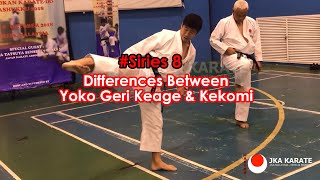
#Siries 8 : Yoko Geri Keage vs Kekomi, How to release with powerful Empi
JKA Karate Club Perlis Malaysia
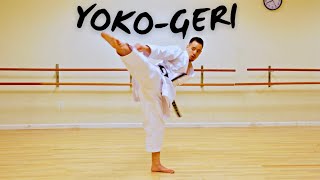
HOW TO YOKO GERI // KARATE SIDE KICK🥋⛩
ULTIMATE KARATE
How to do side thrusting kick (yoko geri) like a pro
Kapawen Kai Jka Karate
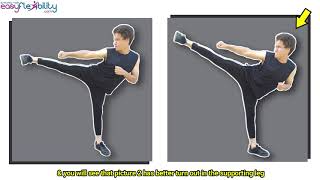
How to do a Side Kick Analysis #8
Elasticsteel
(How to) Side Kick Tutorial - Taekwondo
wootaekwon