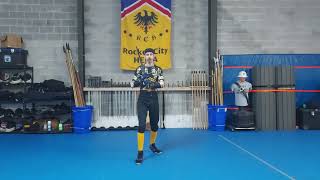
Introduction to Scheitelhau
The Scheitelhau, or 'squinting strike,' is a defensive-offensive technique that allows the practitioner to defend and attack simultaneously. Named for the cautious expression one makes while executing it, this technique is particularly effective against aggressive opponents applying sustained pressure.
Basic Mechanics and Guard Positioning
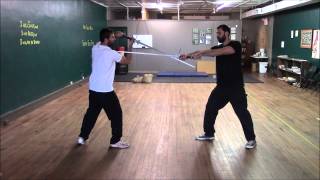
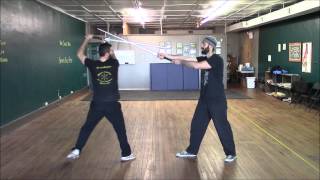
The Scheitelhau begins from most guards, particularly vom Tag. The first phase crosses the body to block an incoming attack, while the second phase delivers either a downward cut or thrust, depending on distance. The sword moves along the inside flat from left to right, maintaining contact with the opponent's weapon throughout.
Distance and Follow-Up Attacks
The type of follow-up attack depends directly on the distance established after the initial defensive movement. Against cutting attacks at close range, the practitioner executes an immediate cut; against thrusting attacks at greater distance, a thrust follows. Both scenarios maintain the sword's online position before the opponent can reestablish their own attack.
Target Selection and Aiming Strategy
Practitioners should aim for the opponent's far upper opening (opposite side of their body) rather than the nearest one. This principle accounts for contact pressure during the technique—aiming across the body ensures the strike lands on target even if the initial defensive contact deflects the trajectory slightly.
Defense Against Durchwechsel
The Scheitelhau effectively counters the Durchwechsel (changing through), where an opponent attempts to pull their sword underneath to attack from the opposite side. Because the Scheitelhau appears purely defensive initially, opponents may attempt this counter-technique, only to find themselves caught out by the practitioner's immediate cutting commitment.
Timing Advantage Against Durchwechsel
Two tactical outcomes emerge when opposing a Durchwechsel attempt. If the opponent executes a tight pulling motion, the practitioner catches and controls their sword, enabling a follow-up cut or thrust. If a larger Durchwechsel motion is attempted, the practitioner's direct attack line forces the opponent to reposition before their counter can develop, creating a timing advantage.
Long Edge and Range Optimization
When distance prevents an immediate cut, the practitioner winds the sword outward and upward to present the long edge for the thrust, maximizing reach. The long edge provides superior range compared to the short edge, allowing the practitioner to attack the body or head before an opponent can clear the sword and execute their own technique.
Schielhau, Beat Buffel and Durchwechseln: Longsword Lesson 11
Key Takeaways
- •Introduction to Scheitelhau
- •Basic Mechanics and Guard Positioning
- •Distance and Follow-Up Attacks
- •Target Selection and Aiming Strategy
We are pleased that so many of you find these videos useful in your training, especially those of you fairly new to HEMA. As always, we know that there is more than one legitimate interpretation to Liechtenauer's techniques. You are welcome to disagree with us, but know that we have reasons for doing things the way we do them. If you think we missed something on the Schielhau...you're right! We will be bringing you Part 2 next time. Thanks for watching!
Frequently Asked Questions
What does this video teach about scheitelhau?
This video covers introduction to scheitelhau, basic mechanics and guard positioning, distance and follow-up attacks. It provides detailed instruction from Sword Carolina.
How long does it take to learn scheitelhau?
The basic mechanics can be understood in a single session, but developing reliable execution requires consistent drilling over weeks of practice. This 7-part breakdown helps structure your training by isolating each phase of the technique.
What are the key details for finishing scheitelhau?
Two tactical outcomes emerge when opposing a Durchwechsel attempt. If the opponent executes a tight pulling motion, the practitioner catches and controls their sword, enabling a follow-up cut or thrust. If a larger Durchwechsel motion is attempted, the practitioner's direct attack line forces the opponent to reposition before their counter can develop, creating a timing advantage.