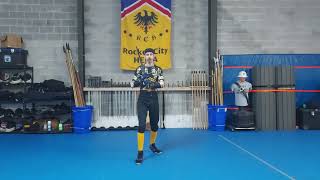
Introduction to Scheitelhau
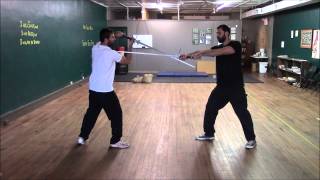
The Scheitelhau represents the final Meisterhau technique in this instructional series. Unlike the diagonal Zornhau, the Scheitelhau is executed as a vertical cut aimed directly at the opponent's head and face. This technique maintains high hand positioning throughout execution rather than extending downward into Alber.
Defensive Advantages of High Hand Position
By keeping the hands elevated during the Scheitelhau, the practitioner maximizes reach and range while protecting vulnerable targets. This positioning is particularly effective when the opponent fights from lower guards such as the Plow or Alber, preventing them from striking the attacker's hands without exposing themselves to the descending blade.
Kron Defense and Its Limitations
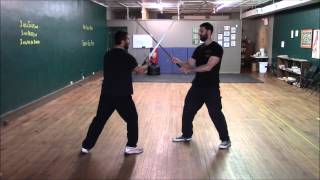
An opponent may defend against the Scheitelhau by raising their sword into Kron, with both point and hilt positioned above the head. While Kron provides protection against scalp strikes and enables counter-attacks such as winding thrusts or Schnappen movements, it remains vulnerable to properly executed follow-up techniques when the initial attack is not interrupted.
Pommel Grab Thrust and Adaptability
When an opponent successfully blocks the Scheitelhau in Kron, the attacker responds by grasping the pommel and driving a thrust over the opposing sword toward the face. This modern variation offers greater directional freedom than traditional winding into Ox, allowing the practitioner to adjust and move laterally while maintaining offensive pressure.
Yielding and Winding Strategies
Should the opponent redirect the initial thrust, the attacker yields to their pressure while winding into the appropriate Ox guard based on the direction of deflection. From this position, the practitioner executes a chest thrust while maintaining elevated hand position for continued defense, then immediately transitions to a secure defensive posture to prevent counter-attacks.
Preventing Wrestling Through Arm Slices
When an opponent attempts to close distance and enter wrestling from the high Kron position, the attacker counters by winding and executing an arm slice rather than a chest thrust. This variation of the fundamental winding strategy prevents the opponent's wrestling entry while simultaneously potentially damaging the defender's arms.
Transitioning Between Ranges
The Scheitelhau strategy remains consistent whether executed at far range or as an opponent closes distance, requiring only a variation in the finishing technique. By maintaining the same fundamental winding mechanics while adjusting from thrusts to slices based on proximity, the practitioner develops reliable and economical responses to multiple defensive scenarios.
Scheitelhau: Longsword Lesson 13
Key Takeaways
- •Introduction to Scheitelhau
- •Defensive Advantages of High Hand Position
- •Kron Defense and Its Limitations
- •Pommel Grab Thrust and Adaptability
In the first HEMA class I ever took, the instructor said that the Scheitelhau was a worthless cut and didn't work. Nothing could be further from the truth! Here is our take on the last of Liechtenauer's Meisterhau. Enjoy! If you like our videos, please continue to share them with others. It helps!
Frequently Asked Questions
What does this video teach about scheitelhau?
This video covers introduction to scheitelhau, defensive advantages of high hand position, kron defense and its limitations. It provides detailed instruction from Sword Carolina.
How long does it take to learn scheitelhau?
The basic mechanics can be understood in a single session, but developing reliable execution requires consistent drilling over weeks of practice. This 7-part breakdown helps structure your training by isolating each phase of the technique.
What are the key details for finishing scheitelhau?
When an opponent attempts to close distance and enter wrestling from the high Kron position, the attacker counters by winding and executing an arm slice rather than a chest thrust. This variation of the fundamental winding strategy prevents the opponent's wrestling entry while simultaneously potentially damaging the defender's arms.