Introduction
Eric Paulson presents his instructional system on kick catches and takedowns. This curriculum synthesizes defensive techniques against kicking attacks with offensive grappling applications.
Historical Context
Paulson notes that Muay Thai's prevalence in the early 1990s relied primarily on shielding and checking as defensive tools against kicks. The introduction of catch-based counters, exemplified by practitioners like Yuri Nakamura who would absorb hard Thai kicks and execute immediate takedowns, presented a novel tactical answer to striking-based offenses.
Dual Training Approach
The system encompasses both defensive and offensive applications. Practitioners learn to catch incoming kicks and execute takedowns, while also practicing offensive kicking scenarios followed by shooting takedowns in response to the opponent's defensive positioning.
Four Fundamental Catch Categories
The instructional framework divides kick catches into four basic categories labeled A through D, each with distinct mechanical applications. This taxonomy provides practitioners a systematic progression for learning defensive catch mechanics.
Catch A: Hard and Soft Variations
Catch A is subdivided into two methods depending on initial hand positioning and defensive stance. A soft catch occurs when the defender's arm is positioned close to the body with minimal distance to cover, while a hard catch requires the defender to intercept the kick away from the torso with greater force absorption.
Hand Positioning and Facial Control
A critical principle across all catch variations is that the catching hand must simultaneously move toward the opponent's face. This hand placement serves both defensive and controlling functions in setting up subsequent takedown techniques.
Riding the Kick
Rather than absorbing a hard kick statically on the ribs, the defender must move forward with the incoming kick to dissipate its force. This forward motion—either by riding through or by parrying and wrapping while extending the hand—prevents impact trauma while maintaining control for the takedown sequence.
Kick Catches - Introduction - Catch A
Key Takeaways
- •Introduction
- •Historical Context
- •Dual Training Approach
- •Four Fundamental Catch Categories
CSW Kick Catches - Takedowns - Submissions now available for download! https://gumroad.com/l/kickcatches Kick Catches Counters To Head Kicks Counters To Body Kicks Counters To Leg Kicks Evasion Takedowns Against The Round Kick Takedowns Against The Front Kick Takedowns Against The Side Kick Takedowns Against The Spinning Back Kick Submissions From Catch A Submissions From Catch B Submissions From Catch C Submissions From Catch D Offensive Punching - Kicking - Shooting Defensive Takedowns Countering The Kick Catch 1080p HD - 1 Hour 53 Minutes. 11 page printable booklet included. Enjoy! #csw #cswassociation #kickcatches #shooto #kicktakedowns #kickdefense #mma #erikpaulson
Related Techniques
Frequently Asked Questions
What does this video teach about kick catch throw?
This video covers introduction, historical context, dual training approach. It provides detailed instruction from CSW Association.
How long does it take to learn kick catch throw?
The basic mechanics can be understood in a single session, but developing reliable execution requires consistent drilling over weeks of practice. This 7-part breakdown helps structure your training by isolating each phase of the technique.
What are the key details for finishing kick catch throw?
A critical principle across all catch variations is that the catching hand must simultaneously move toward the opponent's face. This hand placement serves both defensive and controlling functions in setting up subsequent takedown techniques.
Related videos
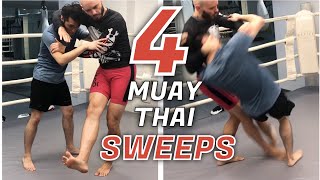
4 foot sweeps from the clinch for Thai boxing, MMA, and Sanda
Ramsey Dewey

Manipulations in Sticky Boxing / Clinch #kungfu #shuaijiao #sanda #mma
The Wandering Warrior

5 Best NoGi Judo Takedowns/ Throws for BJJ
Grappling Education
Basic Judo throws and concepts
Shintaro Higashi
3 Easy Judo Throws for Beginners
Skyhook Martial Arts & Fitness