Entry to Turtle Position
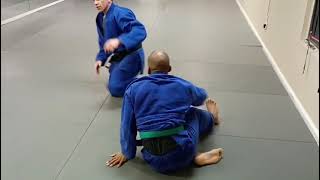
From a punch block defense, the instructor establishes a body lock and steps over the opponent to transition into the turtle position. This foundational setup creates the baseline for defensive work against back control attacks.
Understanding the Threat
The primary concerns from back mount with hooks and seat belt control are hand strangulation and collar attacks. The instructor emphasizes that the top arm controlling the collar presents the most immediate threat requiring attention.
Hip Escape Fundamentals
To initiate escape from back mount, the defender posts their bottom leg to create distance and removes their hips. Simultaneously, the elbow is glued to the ground to prevent the attacker's hips from advancing, creating space for the next movement.
Transitioning to Leg Attack
As the attacker attempts to bring their leg over to establish mount, the defender uses this opportunity to move into an offensive leg attack position. This reversal converts a defensive moment into an attacking scenario.
Arm Removal and Hook Defense
The defender secures the attacker's arm, pulls themselves down for leverage, and pops the arm over their shoulder before gluing it to their body. Proper elbow placement on the ground prevents the attacker from establishing mount pressure during hook removal.
Complete Sequence from Takedown
Starting from a body lock takedown, the defender addresses the threat hierarchy: first controlling the top arm, then extending the inside leg and rotating the attacker over. This comprehensive approach neutralizes back control before it becomes fully established.
Gi-Assisted Roll Escape
When the attacker is locked in with the body lock, the defender traps the gi, extends the inside leg completely straight, and sits through to roll the attacker over. This technique is particularly effective in gi-based grappling due to the grip security provided by the fabric.
Shoulder Roll Defense
An alternative method involves pointing the feet away from the attacker and driving the elbow through to execute a shoulder roll. This forces the attacker to release their grip as their face contacts the ground, disrupting their control significantly.
Variation and Continuity
The shoulder roll can be executed from various positions, including when the attacker has achieved deeper control. If the attacker maintains the clinch during the roll, the defender seamlessly transitions into the previously demonstrated turning escape sequence.
Turtle & Back Mount Defense Vol 1
Key Takeaways
- •Entry to Turtle Position
- •Understanding the Threat
- •Hip Escape Fundamentals
- •Transitioning to Leg Attack
Trillo Jiujitsu Academy 18400 NW 75 Place #122 Miami, Florida 33015 786-294-0447 trilloacademy.com https://www.facebook.com/TrilloAcadem... Official Tom DeBlass Association Professor Freddy Trillo 27 Year Police Officer/SWAT/ Defense Tactics Police Instructor 25 Year Training Brazilian Jiujitsu Trillo Academy is located on Miami Gardens Drive, just a few blocks north of Miami Lakes and Hialeah area. We have classes for Adults, Teens, and Children. After School Program and Summer Camps available.
Frequently Asked Questions
What does this video teach about standard defensive turtle?
This video covers entry to turtle position, understanding the threat, hip escape fundamentals. It provides detailed instruction from Trillo Jiujitsu Academy.
How long does it take to learn standard defensive turtle?
The basic mechanics can be understood in a single session, but developing reliable execution requires consistent drilling over weeks of practice. This 9-part breakdown helps structure your training by isolating each phase of the technique.
What are the key details for finishing standard defensive turtle?
An alternative method involves pointing the feet away from the attacker and driving the elbow through to execute a shoulder roll. This forces the attacker to release their grip as their face contacts the ground, disrupting their control significantly.