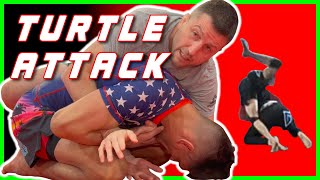
Introduction to Turtle Position
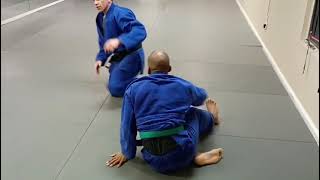
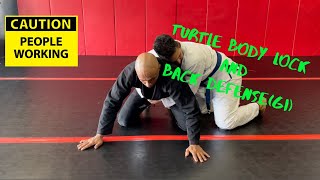
The turtle position serves as a defensive posture when opponents attempt to take the back. Rather than passively waiting for escape opportunities, practitioners should explore offensive applications and leverage points to maintain control.
Arm Control Principles
The fundamental principle of turtle defense centers on controlling the opponent's arms to prevent them from settling into dominant positions. By maintaining arm control as the opponent initiates their approach, the defender can immediately shut down the attack and maintain a tight, defensive posture.
Preventing Seatbelt Control
Once an opponent establishes a seatbelt grip around the defender's torso, the position becomes significantly more difficult to escape. Proactive arm control before the opponent achieves this grip is essential to maintaining defensive integrity.
Elbow Positioning and Hip Integration
Elbows should sit slightly outside rather than tucked inward, resting on the hip bones with minimal daylight between arm and body. This positioning prevents opponents from wedging their arms into the space between the elbows and knees while maintaining structural support through head placement.
Foot Engagement and Recovery
Maintaining active foot positioning provides drive and enables explosive escape options when opponents pressure from above. The defender can execute windshield wiper motions with the legs to recover guard position while maintaining a small, protected profile.
Defending Against Arm Wraps
Opponents commonly attempt to over-wrap the defending arm, creating opportunities for the defender to counter. By catching the attacking arm above the elbow and pulling it tight to the body, the defender can roll the opponent and establish dominant position.
Arm Bar Finish from Turtle
After securing control above the opponent's elbow, the defender can execute a roll that transitions into an armbar position. The key is maintaining close proximity to the opponent while keeping pressure on the trapped arm throughout the transition.
Advanced Turtle Techniques
Practitioners seeking to develop a deeper turtle game can explore specialized variations, such as leg-lock transitions and entries developed by turtle specialists. These advanced applications require solid foundational understanding before implementation.
Private Lesson: Turtle Position
Key Takeaways
- •Introduction to Turtle Position
- •Arm Control Principles
- •Preventing Seatbelt Control
- •Elbow Positioning and Hip Integration
OLD GRAPPLER SUMMIT IS HAPPENING! An all-inclusive immersion retreat on Halloween weekend 2025. https://oldgrapplersummit.com/sandiego1025 ——— FOLLOW RICK ELLIS LinkTree: https://linktr.ee/rickellis Website: https://rickellis.com YouTube: https://www.youtube.com/theartofskill Facebook: https://facebook.com/rickellishq Instagram: https://instagram.com/rickellishq TikTok: https://www.tiktok.com/@rickellishq ——— VIDEO DESCRIPTION Part two of Ken Knight’s BJJ private lesson. In this episode we discus the turtle position in Jiu Jitsu.
Frequently Asked Questions
What does this video teach about standard tight turtle?
This video covers introduction to turtle position, arm control principles, preventing seatbelt control. It provides detailed instruction from The Art of Skill.
How long does it take to learn standard tight turtle?
The basic mechanics can be understood in a single session, but developing reliable execution requires consistent drilling over weeks of practice. This 8-part breakdown helps structure your training by isolating each phase of the technique.
What are the key details for finishing standard tight turtle?
After securing control above the opponent's elbow, the defender can execute a roll that transitions into an armbar position. The key is maintaining close proximity to the opponent while keeping pressure on the trapped arm throughout the transition.