Hand Positioning and Two-on-One Control
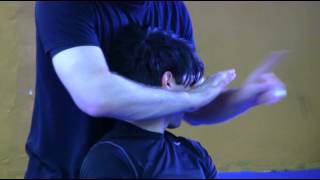
The instructor establishes that controlling the top hand is critical, as the bottom hand presents unnecessary complications. Using a two-on-one grip, the practitioner pushes the opponent's arm downward toward the hip to set up the double wristlock.
Executing the Double Wristlock
With proper hand positioning established, the practitioner inhales, locks the double wristlock firmly, then applies a sharp pop to break the opponent's grip. This creates the necessary opening to transition into the finishing position.
Primary Finish: Chest Adhesion and Hip Control
The instructor glues the opponent's arm tightly to his own chest while twisting upward and positioning the opponent's arm behind their back. By pivoting on the opponent's foot and stepping into them, the practitioner rotates their hips, forcing the opponent downward to relieve pressure.
Controlling the Defense
Once the double wristlock is secured and the arm is positioned at the waist, the practitioner maintains control regardless of defensive attempts. Even if the opponent attempts trips or takedowns, a tight double wristlock grip prevents escape and allows completion of the technique.
Transition to Roll Escape
When the opponent defends by drawing their arm inward to prevent the arm from being raised further, the practitioner accepts this defense and transitions into a rolling counter. This mirrors the Zenga roll principle used from other pinning positions.
Executing the Roll Technique
The practitioner changes level, steps through the opponent, and rolls forward while pushing the double wristlock through the opponent's stomach. Maintaining a firm grip without pulling inward ensures the practitioner rolls over top of the opponent.
Expected Opponent Response
An unprepared opponent will often fall awkwardly when the roll is unexpected, potentially landing face-first. A trained opponent will recognize the movement and execute a judo-style roll to protect themselves from impact and prevent the submission from deepening.
double wristlock waist lock counter
Key Takeaways
- •Hand Positioning and Two-on-One Control
- •Executing the Double Wristlock
- •Primary Finish: Chest Adhesion and Hip Control
- •Controlling the Defense
countering the waste lock with a double wrist lock
Frequently Asked Questions
What does this video teach about standard front waist lock?
This video covers hand positioning and two-on-one control, executing the double wristlock, primary finish: chest adhesion and hip control. It provides detailed instruction from Hook and Catch Wrestling Club.
How long does it take to learn standard front waist lock?
The basic mechanics can be understood in a single session, but developing reliable execution requires consistent drilling over weeks of practice. This 7-part breakdown helps structure your training by isolating each phase of the technique.
What are the key details for finishing standard front waist lock?
The practitioner changes level, steps through the opponent, and rolls forward while pushing the double wristlock through the opponent's stomach. Maintaining a firm grip without pulling inward ensures the practitioner rolls over top of the opponent.