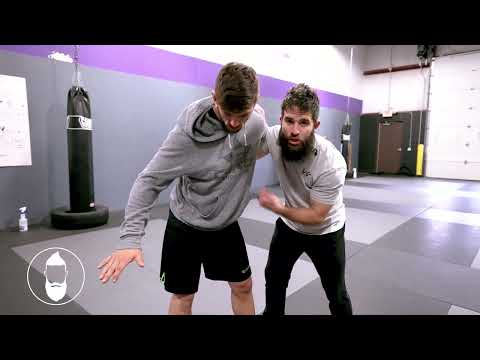
double wristlock waist lock counter
0
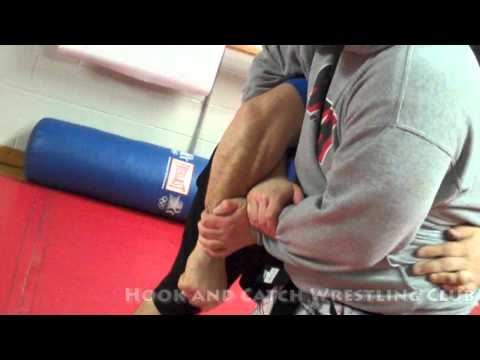
Standard Front Waist Lock·Hook and Catch Wrestling Club·Added by Admin
countering the waste lock with a double wrist lock
Translation: standard front waist lock
The Standard Front Waist Lock secures a locked grip (Gable or S-grip) around the opponent's waist from the front, with the attacker's forehead driven into the opponent's sternum and hips positioned below the opponent's centre of gravity. [1] The low hip position and locked grip create a powerful platform for lifting — the attacker extends through the legs and hips to elevate the opponent's hips off the mat. [1],[2] This is the primary starting position for many standing lift takedowns in Greco-Roman wrestling. [2],[3]
The standard front waist lock clasps hands around the opponent's waist from the front, controlling their hip movement. [1]
A core wrestling position taught from beginner through elite levels. [1]
The standard front waist lock is a baseline Greco-Roman and sambo grip used at every level of competition from youth through senior World Championships. [1]
No images yet for this technique.
Sign in to suggest an image.
countering the waste lock with a double wrist lock
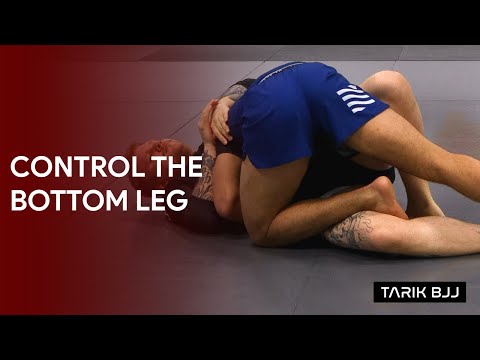
There are general SOPs in most cases for optimizing certain positions. That said, we all have different body types, back…
🔗 Links: Follow me on Instagram for more jiu-jitsu content: https://www.instagram.com/tarik_bjj/ Discover top-qualit…
The standard front waist lock serves as a foundational clinch control that creates access to multiple offensive systems. Hook and Catch Wrestling Club emphasizes the technique's integration with the double wristlock, demonstrating how securing the waist lock allows the top hand (the controlling hand) to break the opponent's grip and transition to arm control before rotating the opponent to the ground through postural torque. The instructor notes that once the double wristlock is secured, defensive attempts such as leg attacks or trips are secondary concerns, as the upper body control dominates the exchange. Tarik BJJ approaches the body lock (front waist lock variant) from a passing position in Brazilian Jiu-Jitsu, focusing on how the clinch controls leg hooks during positional transitions toward mount or knee-slide passes. The method involves heavying the hips, isolating the opponent's leg, and maintaining the body lock through the pass or releasing strategically when ground position is established. Aaron Jannetti provides conceptual framework for understanding waist-lock mechanics, categorizing the underhook position (which relates to waist-lock variants) as providing primary access to the body and legs, secondary access to back control through duck-under opportunities, and tertiary applications in posture breakdown and control. All three instructors implicitly agree that front waist locks create positional dominance and multiple submission or positional pathways, though they emphasize different contexts: wrestling takedown finishes, BJJ guard passing, and clinch control concepts respectively.
Synthesized from 3 instructors
No instructional courses yet for this technique.
Sign in to suggest a course.
Risk of injury to the person this technique is applied to
Body clinch positions enable throws and takedowns; rib compression risk
Skill level needed to execute this technique reliably
Whether this technique is allowed under major competition rule sets
Freestyle Wrestling: A Complete Guide for Coaches and Wrestlers (Petrov, 1977)
Alias sources — [1] Wrestling Physical Conditioning Encyclopedia (Welker, 2010) [2] Greco-Roman Wrestling (Petrov, 1987) [3] UWW Technical Terminology (UWW, 2018)
Effectiveness sources — [1] Wrestling Physical Conditioning Encyclopedia (Petrov, 1977)
Mixed Japanese-Western terminology — combines traditional Japanese terms with katakana loanwords
Alias sources — [1] Wrestling Physical Conditioning Encyclopedia (Welker, 2010) [2] Greco-Roman Wrestling (Petrov, 1987) [3] UWW Technical Terminology (UWW, 2018)
Effectiveness sources — [1] Wrestling Physical Conditioning Encyclopedia (Petrov, 1977)
grip strength, upper body endurance, balance under pressure
strong arms and shoulders, stable base
forearms, deltoids, core, hip muscles
Aaron Jannetti explains that from an underhook position, you can come across the opponent's body and squeeze into a front waist lock, potentially buckling them down to the outside or getting a seat belt grip. This gives you access to control their body and legs aggressively.
Hook and Catch Wrestling Club advises that if your opponent tries to trip you or take you down while you're holding a front waist lock with a double wrist lock, you shouldn't panic—the grip stays locked even if you go down, and you can roll with the momentum to maintain control.
Tarik BJJ recommends pinching down with your elbow to hinder the opponent from bringing their knee up when defending against the waist lock.
The Standard Front Waist Lock secures a locked grip (Gable or S-grip) around the opponent's waist from the front, with the attacker's forehead driven into the opponent's sternum and hips positioned below the opponent's centre of gravity. The low hip position and locked grip create a powerful platform for lifting — the attacker extends through the legs and hips to elevate the opponent's hips off the mat.
The standard front waist lock has been a cornerstone position of Greco-Roman wrestling for over a century, serving as the launch point for the sport's characteristic lift-and-return techniques. It remains one of the most commonly drilled clinch positions in wrestling rooms worldwide.
Unified MMA: legal — Legal — clinching is integral to MMA; IJF: legal — Legal — kumi-kata (grip fighting) is fundamental to judo; IBJJF: legal — Legal — standing grip fighting and clinch work permitted; IFMA: legal — Legal — the clinch is a core element of Muay Thai, clinch dominance is highly…; WBC/Boxing: restricted — Holding is technically a foul — referee breaks clinch, excessive holding resu…; K: restricted — 1/GLORY — One attack from clinch allowed, then referee breaks; WAKO: restricted — Clinch generally broken by referee — limited or no clinch fighting in most fo…; UWW: legal — Legal — clinch is fundamental to wrestling, the primary position in Greco-Roman
Danger rating 4/10. Moderate — body clinch positions enable throws and takedowns; rib compression risk
The standard setup chain: Close Distance → Establish Primary Grip → Position the Hips → Apply Pressure.
Standard counters include: Pummeling — fight for inside position by swimming arms under opponent's grips / Frame and Push — create distance using forearm frames against the chest or neck / Grip Break — systematically strip the opponent's controlling grips / Posture Up — straighten the spine and drive the hips forward to break clinch control.
Common variants: Standard variation (primary clinch configuration from the most common entry); Gi variation (adapted with collar and sleeve grips for gi-based grappling); No-gi / MMA variation (modified for no-gi or cage fighting conditions); Offensive variation (configured to set up strikes, takedowns, or submissions f…).
The standard front waist lock is a baseline Greco-Roman and sambo grip used at every level of competition from youth through senior World Championships.
Top errors to watch for: Locking above the hips — too high loses the lifting leverage / Not bending the knees — the legs must be loaded for the explosive drive / Popping the hips without following through — the hip pop must lead immediately into the throw or drive / Standing with feet close together — wide staggered base provides stability.
The Standard Front Waist Lock is also known as Sutandādo Mae Koshi-gatame, Basic Front Waist Lock, Standard Frontal Waist Grip, Front Midsection Lock.