Dynamic Movement and Approach
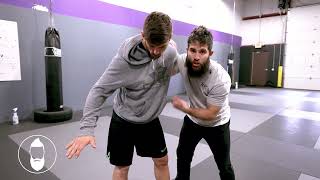
Effective execution of the rear waist lock takedown requires dynamic movement rather than static positioning. The instructor emphasizes using a "cheater step"—essentially a running start—to generate greater power and momentum before executing the technique, similar to how an athlete might approach a throw or golf swing.
Coordinated Execution
The practitioner must integrate all components simultaneously: stepping across the opponent's body, establishing the waist lock, and executing the lift and rotation as one fluid movement. Separating these elements—such as walking around, stopping, then squatting—significantly reduces the technique's effectiveness and power output.
Defense Against the Lift: Quad Block
One primary defense against the waist lock takedown is the quad block, where the defending opponent reaches back with the thumb to block the attacking wrestler's knee or quad. By preventing the attacker from stepping in front, this defense makes it mechanically impossible to execute a back suplex or lift.
Defense Against the Lift: Hip Block and Counterbalance
A second common defense involves blocking the attacker's position underneath the opponent's hip while leaning forward to counterbalance. This defensive posture prevents the attacker from generating sufficient leverage to execute the back suplex, even when the attacker achieves an advantageous low hip position.
The Sitting Takedown Counter
When the opponent successfully defends the lift, the attacker pivots to an alternative finish by cutting across the opponent's hip and quad with upward pressure from the elbow. The attacker then steps back and pulls the opponent's hip in a circular direction while sitting back, anchoring the opponent's foot position and forcing them to fall onto their rear.
Position Maintenance and Follow-Up Control
After forcing the opponent to the ground in a seated position, the attacker maintains pressure while circling around the opponent's body with elbow inside wrist control. Alternative finishes include moving directly to the opponent's back for rear control, establishing leg drag positions, or transitioning to mounted submissions such as triangles or leg entanglements.
Hand Position Variations
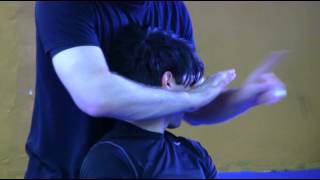
While palm-up hand positioning is preferred for optimal mechanical advantage and cutting action, the technique can still function with reverse palm positions if the waist lock remains tight. The palm-up grip allows the ulna (forearm bone) to cut more effectively into the opponent's body, but variations in grip can be viable depending on the situation.
Combination Training and Chess-Like Execution
Effective grappling requires understanding techniques as part of predetermined combinations rather than isolated moves. The attacker should anticipate the opponent's defense to the initial lift attempt and have a second move ready to execute immediately, creating a strategic progression where the attacker controls the sequence through understanding predictable defensive responses.
Rear Standing TAKEDOWN Combo!
Key Takeaways
- •Dynamic Movement and Approach
- •Coordinated Execution
- •Defense Against the Lift: Quad Block
- •Defense Against the Lift: Hip Block and Counterbalance
This video I breakdown a follow up to a lift from the rear standing position. Check out the details and you are sure to find something useful! Enjoy! If you have any questions, comments, or suggestions, please comment below. More videos to come! Please like, share, and subscribe!! PLEASE Click this link to SUPPORT the TeachMeGrappling Channel!!! https://www.patreon.com/TeachMeGrappling or https://www.paypal.me/CoachBrianPeterson Your contribution is much appreciated and will help me continue to bring you content! 🙏 www.NextLevelGuy.com The NextLevelGuy Podcast with Coach Brian Peterson has been released!! Check it out!
Related Techniques
Frequently Asked Questions
What does this video teach about rear waist lock?
This video covers dynamic movement and approach, coordinated execution, defense against the lift: quad block. It provides detailed instruction from TeachMeGrappling Coach Brian.
How long does it take to learn rear waist lock?
The basic mechanics can be understood in a single session, but developing reliable execution requires consistent drilling over weeks of practice. This 8-part breakdown helps structure your training by isolating each phase of the technique.
What are the key details for finishing rear waist lock?
While palm-up hand positioning is preferred for optimal mechanical advantage and cutting action, the technique can still function with reverse palm positions if the waist lock remains tight. The palm-up grip allows the ulna (forearm bone) to cut more effectively into the opponent's body, but variations in grip can be viable depending on the situation.