Lever Mechanics in Restraint
The instructor establishes the fundamental principle that longer levers provide greater mechanical advantage in restraint techniques. Using comparative examples—military shovels and boat paddles—the concept is illustrated: equal circumstances favor maximum leverage for efficiency.
Fulcrum Stability
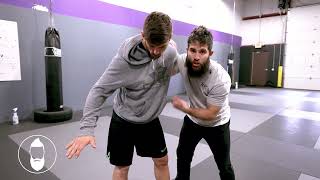
A critical error in applying leverage is moving the fulcrum during the technique. The instructor demonstrates that once the fulcrum (the contact point on the opponent's face) is positioned correctly at the practitioner's sternum, it must remain stationary throughout the technique application.
Pressure Application Principles
The instructor compares anatomical pressure points to demonstrate that sensitive structures like the sternocleidomastoid muscle or eye socket require minimal force when properly targeted. Correct placement eliminates the need for excessive muscular effort.
Elbow Positioning and Movement
Rather than moving the entire arm or cross-face grip, the instructor restricts movement to the elbow, which draws backward to apply pressure. This isolated elbow movement maintains fulcrum stability while generating the necessary restraint force.
Transitional Lever Length
When initially securing the position, a longer lever assists in lifting and positioning the opponent's head. Once positioned correctly, the lever shortens as the elbow retracts, shifting from an elevation phase to a pressure-application phase.
Response to Escape Attempts
If the opponent attempts to turn or escape during the restraint, the practitioner responds by moving the elbow backward rather than re-adjusting the grip or position. This maintains control while increasing applied pressure.
restraint tactics part 10-fine tuning the face lock
Key Takeaways
- •Lever Mechanics in Restraint
- •Fulcrum Stability
- •Pressure Application Principles
- •Elbow Positioning and Movement
Part 10 of 14 of a class on essential restraint tactics To view Kevin's complete intervention and restraint library, please visit: https://combatprofessor.uscreen.io/categories/intervention-and-control-tactics
Related Techniques
Frequently Asked Questions
What does this video teach about front waist lock?
This video covers lever mechanics in restraint, fulcrum stability, pressure application principles. It provides detailed instruction from Kevin Secours.
How long does it take to learn front waist lock?
The basic mechanics can be understood in a single session, but developing reliable execution requires consistent drilling over weeks of practice. This 6-part breakdown helps structure your training by isolating each phase of the technique.
What are the key details for finishing front waist lock?
When initially securing the position, a longer lever assists in lifting and positioning the opponent's head. Once positioned correctly, the lever shortens as the elbow retracts, shifting from an elevation phase to a pressure-application phase.