Setup: Rear Waist Lock from Butterfly Guard
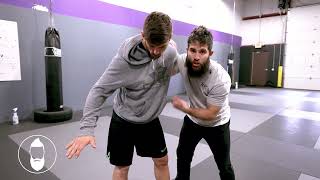
The instructor begins with a casual control position, wrapping both hands around the opponent's torso while they occupy butterfly guard. This foundational grip establishes the rear waist lock that will control the passing sequence. The top player maintains pressure while preparing to isolate one of the opponent's legs.
Pressure and Positioning: Eliminating the Hook
When the initial pass encounters resistance from a sticky hook on the far side, the top player applies heavy hip pressure directly onto the hooked leg and steps out on the mat. This positioning forces the opponent's knee toward the floor and prevents them from maintaining the butterfly guard. The weight distribution is critical to neutralizing the defensive hook before advancement.
Hip Drive and Leg Isolation
The instructor walks their hips laterally while maintaining downward pressure, which brings the opponent's knee progressively closer to the mat. By moving the opposite hip down and stepping up with the top leg, the top player isolates the opponent's leg from their body. The bottom player's remaining leg often remains trapped between both competitors, forming the primary work position for the remainder of the pass.
Head Repositioning and Elbow Pinch Control
The top player moves their head to the opposite side while bringing their hands down to maintain control of the isolated leg. An elbow-to-hip pinch can be applied to prevent flexible opponents from raising their knee and escaping the position. This dual control system keeps the opponent's leg flat against the mat while the pass progresses.
Pressing to Prone and Creating the Hook
By moving the head to the opposite side, the top player applies downward pressure that flattens the opponent onto their stomach. Once the opponent is pressed prone, the top player establishes an inside hook on the isolated leg. At this point, the passer can choose to advance either toward a knee slide position or directly into mount.
Foot Placement and Hip Elevation
The top player places their foot on the inside of the opponent's thigh to pin the leg flat against the floor. This foot placement enables the passer to drive their hips upward and extract their free leg from underneath the opponent. The leg pin is essential for maintaining control while transitioning through the final stages of the pass.
Grip Release and Transition to Underhook
Once the top player has secured floor contact and positioning, they can release the rear waist lock grip to transition into a traditional knee slide grip. Releasing early prevents the passer from being compromised by a scramble that might require their hands for floor posting. The deep underhook replaces the body lock and allows smoother progression toward mount or side control.
Final Knee Slide to Mount Position
From the underhook position with the opponent pinned prone, the top player moves their head to the opposite side and drives through to establish a standard knee slide position. This technique concludes with the passer advancing to mount control using conventional knee slide mechanics. The entire sequence converts initial rear waist lock pressure into a dominant pinning position.
Bodylock Passing Stapling One Leg
Key Takeaways
- •Setup: Rear Waist Lock from Butterfly Guard
- •Pressure and Positioning: Eliminating the Hook
- •Hip Drive and Leg Isolation
- •Head Repositioning and Elbow Pinch Control
🔗 Links: Follow me on Instagram for more jiu-jitsu content: https://www.instagram.com/tarik_bjj/ Discover top-quality gear at Progress JJ. Use "TARIK15" for 15% Discount! UK Progress Referral: https://shorturl.at/joJMX EU Progress Referral: https://shorturl.at/pADPQ Teespring merch: https://shorturl.at/opHK3 Patreon: https://www.patreon.com/tarikbjj BJJ Fanatics: https://shorturl.at/cqsEI Twitch: https://www.twitch.tv/tarik_bjj
Frequently Asked Questions
What does this video teach about standard rear waist lock?
This video covers setup: rear waist lock from butterfly guard, pressure and positioning: eliminating the hook, hip drive and leg isolation. It provides detailed instruction from Tarik BJJ.
How long does it take to learn standard rear waist lock?
The basic mechanics can be understood in a single session, but developing reliable execution requires consistent drilling over weeks of practice. This 8-part breakdown helps structure your training by isolating each phase of the technique.
What are the key details for finishing standard rear waist lock?
Once the top player has secured floor contact and positioning, they can release the rear waist lock grip to transition into a traditional knee slide grip. Releasing early prevents the passer from being compromised by a scramble that might require their hands for floor posting. The deep underhook replaces the body lock and allows smoother progression toward mount or side control.
Related videos
Dominate the Muay Thai Clinch with Petchboonchu
fightTIPS
Self-defense moves for release of strong waist grip from the back
Self defense Classes
restraint tactics part 10-fine tuning the face lock
Kevin Secours
Rear Standing TAKEDOWN Combo!
TeachMeGrappling Coach Brian
Breaking Down Underhook Concepts
Aaron Jannetti