Initial Setup: Bodylock Position
The instructor begins with the opponent in butterfly guard while maintaining a tight bodylock. From this casual setup position, the goal is to progress toward a knee slide or mount by systematically dismantling the opponent's leg hooks.
Weight Distribution and Hip Control
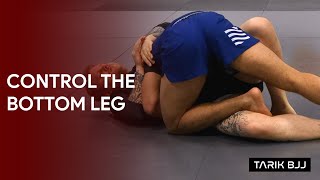
The passer applies heavy pressure through the hips while stepping out to one side to de-hook the far-side leg. This controlled weight distribution prevents the opponent from maintaining their butterfly hooks and forces their knee closer to the mat.
Isolating the Trapped Leg
By keeping the hip heavy on the opposite side and stepping up, the passer isolates the opponent's leg against the floor. The passer simultaneously relocates their head to the opposite side to increase downward pressure and control.
Preventing Knee Elevation
If the opponent attempts to elevate their knee, the passer can use an elbow-to-hip pinch to suppress the movement. This defensive measure ensures the leg remains grounded while the passer transitions to the next phase.
Establishing the Inside Hook
With the opponent's body flattened on the mat, the passer posts an inside hook on the trapped leg. This hook pins the leg in place while the passer drives their hips upward and extends their free leg.
Grip Release and Knee Slide Transition
The passer has the option to release the bodylock grip once the opponent is fully flattened on the mat. The passer then transitions to a deep underhook with the head on the opposite side to complete a standard knee slide pass.
Final Position: Mount or Knee Slide
The technique concludes with the passer achieving either a knee slide or mount position depending on timing and opponent reactivity. The methodical leg isolation and controlled pressure throughout ensure a high-percentage pass completion.
Bodylock Passing Stapling One Leg
Key Takeaways
- •Initial Setup: Bodylock Position
- •Weight Distribution and Hip Control
- •Isolating the Trapped Leg
- •Preventing Knee Elevation
🔗 Links: Follow me on Instagram for more jiu-jitsu content: https://www.instagram.com/tarik_bjj/ Discover top-quality gear at Progress JJ. Use "TARIK15" for 15% Discount! UK Progress Referral: https://shorturl.at/joJMX EU Progress Referral: https://shorturl.at/pADPQ Teespring merch: https://shorturl.at/opHK3 Patreon: https://www.patreon.com/tarikbjj BJJ Fanatics: https://shorturl.at/cqsEI Twitch: https://www.twitch.tv/tarik_bjj
Frequently Asked Questions
What does this video teach about standard front waist lock?
This video covers initial setup: bodylock position, weight distribution and hip control, isolating the trapped leg. It provides detailed instruction from Tarik BJJ.
How long does it take to learn standard front waist lock?
The basic mechanics can be understood in a single session, but developing reliable execution requires consistent drilling over weeks of practice. This 7-part breakdown helps structure your training by isolating each phase of the technique.
What are the key details for finishing standard front waist lock?
The passer has the option to release the bodylock grip once the opponent is fully flattened on the mat. The passer then transitions to a deep underhook with the head on the opposite side to complete a standard knee slide pass.