Introduction to the Bow and Arrow Choke
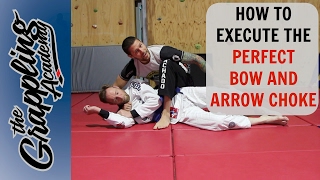
The bow and arrow choke is a powerful variation of the basic collar choke that significantly increases the effectiveness of back control submissions. This technique is more potent than the fundamental collar choke and has become increasingly popular among advanced practitioners. The name derives from the mechanics of the position, which will become evident as the technique is executed.
Step 1: Establishing the Grip
Begin with the same deep collar grip used in the basic collar choke, ensuring the hand penetrates as far as possible into the collar. This initial grip provides the foundation for all subsequent movements in the technique. Proper depth at this stage is critical to the choke's success.
Step 2: Securing the Secondary Grip
Rather than grabbing the collar with the second hand as in the basic variation, reach across the opponent's body and grip their pants or belt on the far side. This unconventional secondary grip distinguishes the bow and arrow choke from traditional collar submissions. The pants grip provides a mechanical advantage that will be utilized in the final execution.
Step 3: Disengaging and Extending
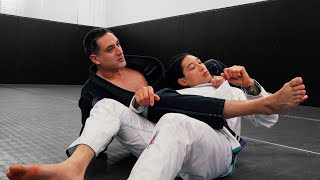
Simultaneously disengage the back control hooks and extend the legs to the side while pulling the collar grip tight. The practitioner acts as the arrow while the opponent's body functions as the bow, bending backward under the combined pressure. This synchronized movement creates the distinctive stretching action that gives the technique its name.
Advanced Variation: Adding Knee Pressure
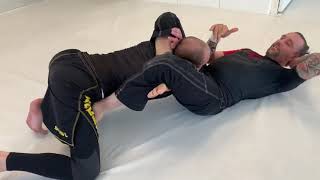
For increased effectiveness, position the knee on the back of the opponent's head or neck while executing the choke. Push the knee away from the body while simultaneously pulling the collar grip to create opposing forces that intensify the submission. This advanced version significantly amplifies the choke's power and should only be added after mastering the basic technique.
Execution Progression
Practitioners should first develop proficiency with the basic bow and arrow choke before incorporating the knee pressure variation. Execute the technique in this order: secure the collar grip, obtain the pants grip, extend the legs to stretch, and only then add knee pressure if additional leverage is needed. This progressive approach builds proper fundamentals while allowing for controlled intensity increases.
How To Do The Bow And Arrow Choke From The Back
Key Takeaways
- •Introduction to the Bow and Arrow Choke
- •Step 1: Establishing the Grip
- •Step 2: Securing the Secondary Grip
- •Step 3: Disengaging and Extending
For a free class visit - http://www.BamBamMartialArtsHouston.com 713-307-5375 Bam Bam Martial Arts 4007 Bellaire Blvd. ii Houston Tx 77025 [email protected] Bam Bam Martial Arts is a SAFE, BENEFICIAL, and ENJOYABLE martial arts school for anyone, of any age, with varying levels of fitness and ability. Since 2007 we having been teaching muay thai, kickboxing, brazilian jiu jitsu, MMA, and other martial arts disciplines for 1000's of Houston residents. We look forward to teaching you soon.
Related Techniques
Frequently Asked Questions
What does this video teach about bow and arrow choke?
This video covers introduction to the bow and arrow choke, step 1: establishing the grip, step 2: securing the secondary grip. It provides detailed instruction from Bam Bam Martial Arts Houston.
How long does it take to learn bow and arrow choke?
The basic mechanics can be understood in a single session, but developing reliable execution requires consistent drilling over weeks of practice. This 6-part breakdown helps structure your training by isolating each phase of the technique.
What are the key details for finishing bow and arrow choke?
For increased effectiveness, position the knee on the back of the opponent's head or neck while executing the choke. Push the knee away from the body while simultaneously pulling the collar grip to create opposing forces that intensify the submission. This advanced version significantly amplifies the choke's power and should only be added after mastering the basic technique.