Sweet Lapel Sweep to Back Choke / Arm-bar www.BJJAfter40.com
0
Lapel Tail Feed Choke·BJJ After Forty·Added by Admin
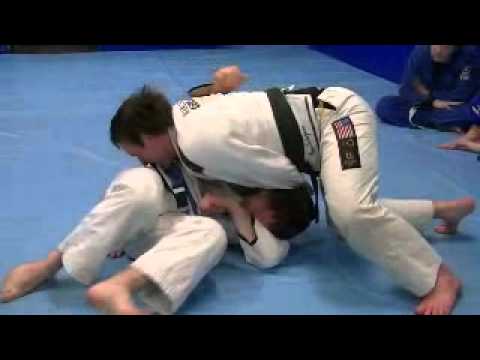
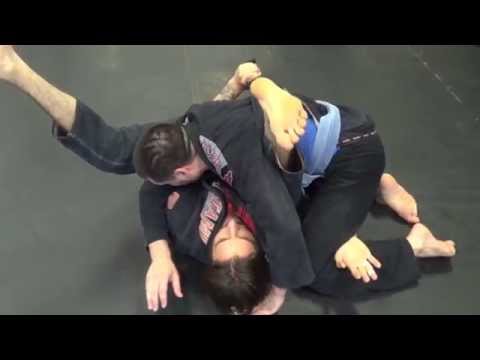
Lapel sweep chain series to back take / choke / arm-bar. Enjoy! http://www.BJJAfter40.com
Translation: Lapel Tail Feed Choke (katakana loanword)
The lapel tail feed choke involves pulling out the tail end of the opponent's gi lapel and threading it around their neck from back control to create a noose-like strangle. [1],[2] Unlike standard collar grips that use the fabric already near the neck, the lapel tail feed uses the loose end of the belt-area fabric, which provides extra length for creative routing around the throat. [1] The extended fabric can be passed hand-to-hand, threaded under the chin, or looped through the collar to create various choking configurations. [1],[3]
Lapel tail feeds emerged in BJJ as gi players explored unconventional uses of the uniform fabric. [1],[2] The concept of using the lower lapel tail gained systematic development in the 2010s alongside the lapel guard revolution led by Keenan Cornelius and others. [1] While rear lapel tail chokes predate the lapel guard era, the broader exploration of lapel manipulation brought renewed attention to these techniques in competition. [1],[3]
The lapel tail feed choke uses the loose end of the opponent's belt or lapel tail to thread a strangle. [1]
Lapel tail chokes are a modern BJJ development, part of the creative use of the gi for submissions. [1]
Lapel tail chokes appear at advanced IBJJF competition levels. [1]
No images yet for this technique.
Sign in to suggest an image.
Lapel sweep chain series to back take / choke / arm-bar. Enjoy! http://www.BJJAfter40.com
By holding your oppoent in traditional side control you can quickly feed your lapel to your near hand and place it over …
The lapel tail feed choke is a gi-based rear control submission executed from positions of dominance, typically following a sweep or transition to back control or side control. BJJ After Forty demonstrates the technique as a natural conclusion to a lapel sweep chain from closed guard, emphasizing the mechanics of breaking the opponent down, passing the lapel across the body, shooting the hand under the neck, catching the tail, and pulling upward while squeezing—often while controlling the opponent's leg or transitioning to back control with hooks. Maryland BJJ presents a detailed variant from side control, stressing the foundational control principle of keeping the opponent's sternum perpendicular to one's own ("T" position) and using the lapel as a feeding mechanism: the instructor pulls his own lapel out in an arrow-like grip, brings it across the opponent's chest, then wraps it around the shoulder while simultaneously positioning the opposite hand on the far side of the body to generate leverage. Maryland BJJ emphasizes the finishing mechanics of straightening the controlling arm and dropping weight onto the opponent's head rather than simply pulling upward. Both instructors agree on the core mechanics of lapel extraction and wrapping, but differ in entry position: BJJ After Forty approaches from back control after a sweep chain, while Maryland BJJ operates from a perpendicular side-control position with greater emphasis on positional control details before the choke itself.
Synthesized from 2 instructors
No instructional courses yet for this technique.
Sign in to suggest a course.
Risk of injury to the person this technique is applied to
Lapel feed chokes use the opponent's gi tail as an extension of the choking arm
Skill level needed to execute this technique reliably
Whether this technique is allowed under major competition rule sets
Japanese BJJ community standard katakana transliteration
Japanese BJJ community standard katakana transliteration
Standard katakana transliteration of Western martial arts terminology (外来語) — used in Japanese MMA, boxing, and BJJ communities
Japanese terminology sourced from Japanese BJJ community standard katakana transliteration
grip or squeeze strength, positional control
strong upper body for sustained compression
forearms, biceps, pectorals, core stabilisers
Keep your knee inside your opponent's hip to control their lower body, while your left hand stays underneath their head to control their upper body. Grab them by the shoulder and keep this grip nice and tight before transitioning to the choke.
Maryland BJJ emphasizes that the hand feeding the lapel must go to the other side of your opponent's body rather than staying on the same side—this creates a huge leverage point. Then straighten your left arm, step over their body, and put your weight down to finish the choke.
Once you break your opponent down and shoot an underhook, catch the tail on the other side of their body. Then lift your hips, pull, and pass to transition into the choke position.
The lapel tail feed choke involves pulling out the tail end of the opponent's gi lapel and threading it around their neck from back control to create a noose-like strangle. Unlike standard collar grips that use the fabric already near the neck, the lapel tail feed uses the loose end of the belt-area fabric, which provides extra length for creative routing around the throat.
Lapel tail feeds emerged in BJJ as gi players explored unconventional uses of the uniform fabric. The concept of using the lower lapel tail gained systematic development in the 2010s alongside the lapel guard revolution led by Keenan Cornelius and others.
IBJJF: legal — Legal at all belt levels, gi and no-gi — chokes are the safest submission cat…; IJF: legal — Legal (shime-waza) — strangulation techniques are one of three permitted subm…; ADCC: restricted — N/A (no-gi competition only — technique requires gi); Unified MMA: restricted — N/A (technique requires gi — not applicable in MMA); FIAS Sport Sambo: banned — All chokes prohibited in Sport Sambo; FIAS Combat Sambo: legal — Legal
Danger rating 8/10. Lapel feed chokes use the opponent's gi tail as an extension of the choking arm
The standard setup chain: Achieve Controlling Position → Isolate the Neck → Set the Grip → Apply Pressure.
Standard counters include: Tuck Chin — protect the neck by lowering the chin to prevent the choke from sinking / Two-on-One Grip Fight — use both hands to strip the choking grip before it locks / Turn Into — rotate toward the choking arm to relieve carotid pressure / Posture Up — straighten the spine and create distance to break the choking angle.
Common variants: Standard grip variation (primary hand configuration for maximum choking pressure); Gi variation (uses the lapel or collar as an anchor for additional fric…); No-gi variation (adapted grip and positioning for submission grappling wit…); Transition finish (applied during a positional change to catch the opponent …).
Lapel tail chokes appear at advanced IBJJF competition levels.
Top errors to watch for: Not untucking enough lapel — the tail must be long enough to cross the neck and be gripped on the far side; too short… / Feeding the lapel above the chin — the lapel must cross below the chin, across the throat; above the chin is a crank,… / Losing back control while feeding the lapel — maintain hooks and chest contact; the lapel feed should not compromise … / Not pulling the lapel tight before gripping the far end — slack in the lapel allows the opponent to work their finger….
The Lapel Tail Feed Choke is also known as Raperu Teiru Fīdo Chōku, Tail Choke, Lapel Feed Strangle, Skirt Choke.