Gift Wrap Triangle
0
Gift Wrap Lapel Choke·Applied Pressure MMA·Added by Admin
Translation: Gift Wrap Lapel Choke (katakana loanword)
The gift wrap lapel choke uses a controlling position where the attacker wraps the opponent's own arm across their head or body and pins it there, then feeds the lapel around the neck to create a strangle. [1],[2] The 'gift wrap' refers to trapping the opponent's arm by threading it across themselves — this eliminates one defensive hand and exposes the neck for the lapel feed. [1] The attacker then routes the collar around the neck and tightens from back control or side control. [1],[3]
The gift wrap control position has roots in wrestling and catch wrestling as an arm-trapping pin. [1] BJJ practitioners adapted it by adding lapel feeds to convert the controlling position into a choking submission. [1],[2] The gift wrap lapel choke became popular in competition during the 2010s as a way to overcome opponents with strong rear choke defenses. [1],[3]
The gift wrap choke uses the opponent's own arm wrapped across their neck combined with a lapel grip to create a strangle. [1]
The gift wrap position was developed in BJJ and MMA for controlling and submitting opponents from top positions. [1]
Gift wrap chokes and transitions are used in BJJ competition as an advanced control-to-submission chain. [1]
No images yet for this technique.
Sign in to suggest an image.
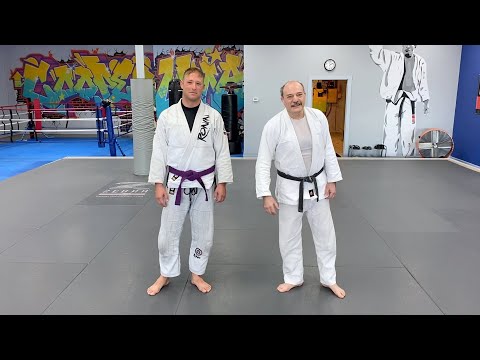
Mark Gilston, 4th degree judo black belt, and BJJ black belt shows strategies and submissions using an arm wrap techniqu…
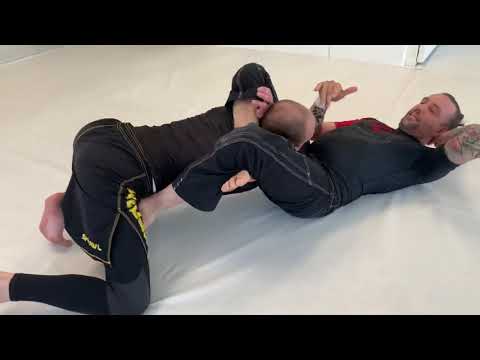
I filled this video with a ton of moves! But stay till the end for a simple armlock anyone can do (and almost no one kno…
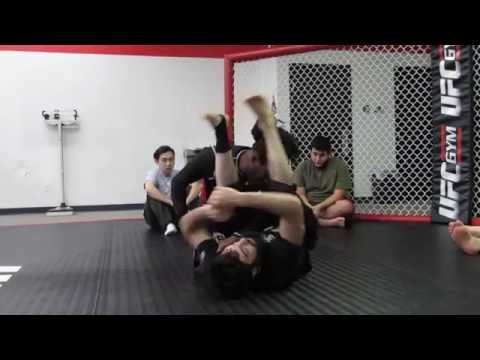
The gift wrap lapel choke, also known as the cobra clutch in wrestling terminology, is a rear-control submission where the attacker's arm wraps around the opponent's crossed arm and neck. According to Seiryoku Zenyo, the position arises when an opponent's arm crosses their head during side control transitions, creating a natural control point where the wrist becomes immobilized due to arm flexion. The choke itself is executed by sliding the hand's edge along the sternomastoid muscle, pushing it laterally before rotating the palm downward into the neck—a motion emphasized by all three instructors as critical to effectiveness. Applied Pressure MMA highlights body tension over hand strength, recommending practitioners keep the opponent's arm centered against their chest and use hip pressure to control arm rotation, particularly against thumb-up defense. Seiryoku Zenyo provides multiple choke variations when the direct neck entry fails: the gi lapel feed (grabbing the near gi flap and crossing it), the bow and arrow choke (using knee and far collar), and the kimura finish. BJJ After Forty demonstrates the face wrap variant from mount position, where the arm trap transitions into triangle leg lock combinations with spinal leverage. All instructors agree that controlling the wrist is essential to preventing escape, and that body mechanics (hip positioning, chest pressure, shoulder alignment) supersede grip strength in finishing the submission.
Synthesized from 3 instructors
No instructional courses yet for this technique.
Sign in to suggest a course.
Risk of injury to the person this technique is applied to
Gift wrap controls one arm while using the opponent's own lapel to create a strangle
Skill level needed to execute this technique reliably
Whether this technique is allowed under major competition rule sets
Japanese BJJ community standard katakana transliteration
Japanese BJJ community standard katakana transliteration
Standard katakana transliteration of Western martial arts terminology (外来語) — used in Japanese MMA, boxing, and BJJ communities
Japanese terminology sourced from Japanese BJJ community standard katakana transliteration
grip or squeeze strength, positional control
strong upper body for sustained compression
forearms, biceps, pectorals, core stabilisers
Come in with a straight hand (not a fist) under the elbow, push the muscle out of the way, then turn it in. According to Seiryoku Zenyo, if it's too tight to slide through, grab the near flap of your opponent's gi instead and bring it across, then have your other hand grab it to control the arm and finish.
Applied Pressure MMA emphasizes using your body instead of your arms—keep the arm hugged tight to your chest, pushing and pulling rather than relying on hand control, as this makes it much harder for your opponent to turn their arm and escape.
According to BJJ After Forty, if they keep their hand inside, that's fine—it will just get trapped. You can proceed to slip your knee between their elbows, transition to S-mount, and finish the choke; whether their hand stays in or comes out, you maintain control.
Yes. BJJ After Forty shows that from the face wrap position you can transition into a triangle lock by dropping and rolling onto your shoulder, grabbing your shin, and hooking your foot to create leverage against the opponent's back while trapping their arm—creating a submission that's very difficult to escape.
The gift wrap lapel choke uses a controlling position where the attacker wraps the opponent's own arm across their head or body and pins it there, then feeds the lapel around the neck to create a strangle. The 'gift wrap' refers to trapping the opponent's arm by threading it across themselves — this eliminates one defensive hand and exposes the neck for the lapel feed.
The gift wrap control position has roots in wrestling and catch wrestling as an arm-trapping pin. BJJ practitioners adapted it by adding lapel feeds to convert the controlling position into a choking submission.
IBJJF: legal — Legal at all belt levels, gi and no-gi — chokes are the safest submission cat…; IJF: legal — Legal (shime-waza) — strangulation techniques are one of three permitted subm…; ADCC: restricted — N/A (no-gi competition only — technique requires gi); Unified MMA: restricted — N/A (technique requires gi — not applicable in MMA); FIAS Sport Sambo: banned — All chokes prohibited in Sport Sambo; FIAS Combat Sambo: legal — Legal
Danger rating 8/10. Gift wrap controls one arm while using the opponent's own lapel to create a strangle
The standard setup chain: Achieve Controlling Position → Isolate the Neck → Set the Grip → Apply Pressure.
Standard counters include: Tuck Chin — protect the neck by lowering the chin to prevent the choke from sinking / Two-on-One Grip Fight — use both hands to strip the choking grip before it locks / Turn Into — rotate toward the choking arm to relieve carotid pressure / Posture Up — straighten the spine and create distance to break the choking angle.
Common variants: Standard grip variation (primary hand configuration for maximum choking pressure); Gi variation (uses the lapel or collar as an anchor for additional fric…); No-gi variation (adapted grip and positioning for submission grappling wit…); Transition finish (applied during a positional change to catch the opponent …).
Gift wrap chokes and transitions are used in BJJ competition as an advanced control-to-submission chain.
Top errors to watch for: Not trapping the arm securely — the opponent's arm must be locked across their face before the lapel is fed; a loose … / Feeding the lapel too loosely — the lapel must be tight against the neck; slack in the lapel reduces compression / Not controlling the opponent's posture — from back control, maintain chest-to-back contact throughout / Attempting without gi — the gift wrap lapel choke requires the gi; it does not work in no-gi.
The Gift Wrap Lapel Choke is also known as Gifuto Rappu Raperu Chōku, Gift Wrap Choke, Embrulho, Lapel Gift Wrap.