Standard Tight Turtle

Genus

スタンダードタイト亀(Sutandādo Taito Kame)

Hybrid

Translation: standard tight turtle

Overview

The Standard Tight Turtle compresses the body to its smallest configuration, with elbows pressed to knees, forehead on the mat, hands protecting the neck, and hips as low as possible. [1] This ultra-compressed turtle provides maximum protection at the expense of mobility, used when the defender is under heavy attack and needs to prevent hooks, chokes, and turnovers. [1],[2] The tight turtle is the grappling equivalent of a defensive shell — survive until an escape opportunity presents itself. [2],[3]

Also known as
Classic Tight Turtle[1]Basic Compact Turtle[2]

History & Origin

The standard tight turtle represents the maximum-protection variant of the defensive turtle, used as a survival position across all grappling disciplines. [1] Its emphasis on total protection over escape reflects its role as the last defensive option. [2],[3]

Effectiveness

The standard tight turtle is the baseline maximally-tucked defensive position. [1]

Lineage

A refined defensive turtle variant. [1]

Competition Record

Used in competition for defensive purposes. [1]

Images

No images yet for this technique.

Sign in to suggest an image.

Biomechanical Mechanism

Primary ActionEstablishing and maintaining a controlling position relative to the opponent
Joints InvolvedBody positioning determines which joints and limbs are available for control and attack
Force VectorVaries by position — gravity, frames, hooks, and pressure dictate control dynamics
Positional MechanicHierarchy of positions — each position offers different offensive and defensive capabilities

Position & Entry

From guard pass defenceWhen the guard is about to be passed, turn to hands and knees (turtle) to prevent giving up side control
From takedown defenceAfter a partial takedown, land on hands and knees in turtle to prevent being put flat on the back
From scrambleDuring a scramble, transition to turtle as an intermediate defensive position

Variants

Standard turtlehands and knees with elbows tight, head protected
Flattened turtledriven to the mat from turtle, attempting to re-turtle
Active turtleusing sit-outs or rolls from the turtle position

Videos

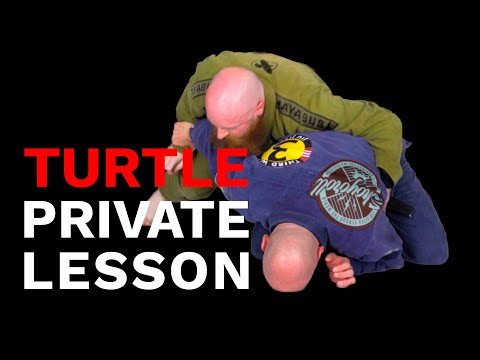
Private Lesson: Turtle Position

0
Standard Tight Turtle·The Art of Skill·Added by Admin

OLD GRAPPLER SUMMIT IS HAPPENING! An all-inclusive immersion retreat on Halloween weekend 2025. https://oldgrapplersummi

1 video

Learn This Technique

No instructional courses yet for this technique.

Sign in to suggest a course.

Ratings

Danger Rating

Risk of injury to the person this technique is applied to

3
Moderate3/10

Turtle is a defensive shell position; vulnerable to back takes and chokes

Difficulty

Skill level needed to execute this technique reliably

Beginner
Competition Legality

Whether this technique is allowed under major competition rule sets

Legal
IBJJF — Legal — common transitional position
IBJJF Rules Book v6.0, June 2024PDF
Unified MMA — Legal
Unified Rules of MMA, August 2025PDF
UWW — Legal — bottom position, opponent works to turn/pin
UWW International Wrestling Rules, January 2026PDF
FIAS Sport Sambo — Legal
FIAS International Sambo Competition RulesPDF

Training Notes

Standard tight turtle execution: from the turtle position, close every gap by bringing the elbows to the thighs, tucking the chin to the chest, protecting the neck with both forearms, and curling the body into the tightest possible ball (Marcelo Garcia, Advanced Brazilian Jiu-Jitsu, 2011)
Step 1: from standard turtle, bring the elbows down to touch the inner thighs — no gap between arms and legs
Step 2: bring both forearms up to the neck, crossing them to protect the throat
Step 3: tuck the chin deeply — try to touch the chin to the chest
Step 4: round the back to make the body as small as possible
Step 5: from tight turtle, the opponent should have no entry points: no gaps for hooks, no exposed neck, no available arms
Step 6: while maintaining tightness, plan the escape: feel which direction the opponent is attacking from and escape the opposite way
Tight turtle is the 'panic button' of turtle defence: when all else fails, get tight and survive
Drill: partner attacks your turtle with back-take attempts, maintain tight turtle for 10 seconds, then escape — 5 reps

Common Mistakes

!Leaving the elbows raised away from the thighs — the elbows must be sealed against the inner thighs
!Not crossing the forearms at the neck — the cross provides double protection against choke entries
!Uncurling the body under pressure — maintain the tight ball despite the opponent's attacks
!Not breathing properly — controlled breathing is essential in the compressed position
!Staying tight without an escape plan — tight turtle buys 5-10 seconds; use them to prepare the escape
!Panicking in tight turtle — the position is defensive but safe if maintained; stay calm and plan
!Not training transitions from tight turtle to escape — the exit from tight turtle must be practised

Related Techniques

Counter Techniques

Setup Chain

1Achieve Positiontransition into this position through passing, sweeping, or scrambling
2Stabilizeestablish controlling grips and weight distribution
3Maintainadjust to the opponent's escape attempts to hold position
4Attacklaunch offensive techniques from the stabilized position

Sources & References

Primary Source

Jiu-Jitsu University (Saulo Ribeiro, 2008)

1BookKodokan Judo (Kano, 1986)

Alias sources — [1] Jiu-Jitsu University (Ribeiro, 2008) [2] Mastering Jujitsu (Gracie & Danaher, 2003)

2BookJiu-Jitsu University (Ribeiro, 2008)

Effectiveness sources — [1] Jiu-Jitsu University (Ribeiro, 2008)

Official Kodokan ground technique classification system

4OtherJapanese Martial Arts Hybrid Terminology

Mixed Japanese-Western terminology — combines traditional Japanese terms with katakana loanwords

5CitationKodokan Judo (Kano, 1986)

Alias sources — [1] Jiu-Jitsu University (Ribeiro, 2008) [2] Mastering Jujitsu (Gracie & Danaher, 2003)

6CitationJiu-Jitsu University (Ribeiro, 2008)

Effectiveness sources — [1] Jiu-Jitsu University (Ribeiro, 2008)

Community

Athletics

Requires

core strength, tight elbow position, neck protection

Favours

compact build with strong core for stability

Key muscles

core stabilisers, shoulders, neck, hip flexors

Frequently Asked Questions

Where should I position my arms in the Standard Tight Turtle to protect myself?

According to The Art of Skill instructor, you don't want your opponent positioned between your armpits and knee—keep that space protected. The key is maintaining integrated systems where all your defensive elements work together to keep opponents out of that critical zone.

How do I use my legs effectively when defending from the Standard Tight Turtle?

Foot engagement is crucial for generating drive and preventing your opponent from taking your back. The Art of Skill instructor emphasizes that having that foot contact gives you options—you can either defend or create space to move away if needed.

What's the key to getting closer to my opponent in the Standard Tight Turtle?

The Art of Skill instructor explains that you can release your back leg to allow yourself to come in closer, which gives you better control and positioning once you've established your initial catch.

How does the Standard Tight Turtle work?

The Standard Tight Turtle compresses the body to its smallest configuration, with elbows pressed to knees, forehead on the mat, hands protecting the neck, and hips as low as possible. This ultra-compressed turtle provides maximum protection at the expense of mobility, used when the defender is under heavy attack and needs to prevent hooks, chokes, and turnovers.

Where does the Standard Tight Turtle come from?

The standard tight turtle represents the maximum-protection variant of the defensive turtle, used as a survival position across all grappling disciplines. Its emphasis on total protection over escape reflects its role as the last defensive option.

Is the Standard Tight Turtle legal in competition?

IBJJF: legal — Legal — common transitional position; IJF: restricted — Legal position but extended turtle without attacking penalized for non-combat…; ADCC: legal — Legal; Unified MMA: legal — Legal; UWW: legal — Legal — bottom position, opponent works to turn/pin; FIAS Sport Sambo: legal — Legal

How dangerous is the Standard Tight Turtle?

Danger rating 3/10. Moderate — turtle is a defensive shell position; vulnerable to back takes and chokes

How do I set up the Standard Tight Turtle?

The standard setup chain: Achieve Position → Stabilize → Maintain → Attack.

How do I defend against the Standard Tight Turtle?

Standard counters include: Posture Control — maintain strong posture to limit the opponent's offensive options / Escape to Neutral — work back to standing or a neutral position.

What are the variants of the Standard Tight Turtle?

Common variants: Standard turtle (hands and knees with elbows tight, head protected); Flattened turtle (driven to the mat from turtle, attempting to re-turtle); Active turtle (using sit-outs or rolls from the turtle position).

How effective is the Standard Tight Turtle in competition?

Used in competition for defensive purposes.

What are common mistakes when doing the Standard Tight Turtle?

Top errors to watch for: Leaving the elbows raised away from the thighs — the elbows must be sealed against the inner thighs / Not crossing the forearms at the neck — the cross provides double protection against choke entries / Uncurling the body under pressure — maintain the tight ball despite the opponent's attacks / Not breathing properly — controlled breathing is essential in the compressed position.

What are other names for the Standard Tight Turtle?

The Standard Tight Turtle is also known as Sutandādo Taito Kame, Classic Tight Turtle, Basic Compact Turtle.