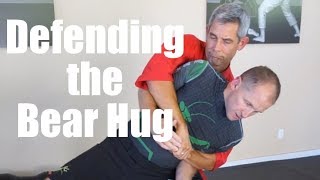
Introduction & Technique Overview
Professor Freddy Trillo introduces the standard over-arms bear hug escape, a critical defensive technique for law enforcement. This week's tip addresses one of the most common close-range attacks officers may encounter in the field.
Initial Defense: Securing Your Structure
When caught in a bear hug over the arms, the defender's first priority is to bring both elbows inward against the torso. This structural compression prevents the attacker from drawing the defender closer and buys critical space for counter-action.
Hand Positioning & Base Control
Immediately after securing the elbows, the defender drops their base and drives both hands inside to the attacker's waist. This hand placement establishes control while preventing further compression, regardless of the attacker's pulling force.
Lateral Weight Shift & Takedown Setup
The defender shifts laterally while placing their front hand to the attacker's back and sweeping their leg across. The defender then sits straight down, using bodyweight and leg placement to take the attacker directly to the ground.
Ground Control: Scissor Lock & Seatbelt Grip
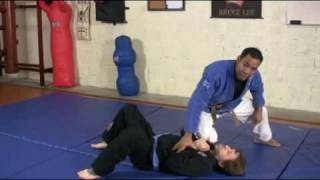
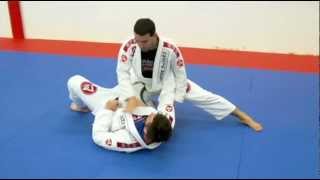
As the attacker hits the ground, the defender secures a seatbelt grip (one arm over the shoulder, one under the arm) while turning to their knees. The defender's scissored legs control the attacker's body and prevent escape or rotation.
Advanced Position: Leg Isolation & Securing the Wrist
The defender steps over with the top leg, securing the attacker's wrist with their grip. Proper knee placement—high and away from the attacker's face—prevents counter-attacks while maintaining complete positional control.
Transition to Arrest Position
From the advanced control position, the defender transitions to chest-to-back contact with their knee on the ground. This controlled positioning allows the officer to direct the suspect face-down and prepare for handcuffing while maintaining safety.
Practical Application & Instructor Credentials
Professor Trillo emphasizes that these techniques are designed for officers lacking extensive training resources. With 25 years of law enforcement experience, 24 years of Brazilian Jiu-Jitsu training, and tenure as a defensive tactics instructor for a 3,000-officer department, the instructor provides field-tested methodology applicable across varying skill levels.
Police Self Defense Tip of the Week. Front Bear Hug Over Your Arms
Key Takeaways
- •Introduction & Technique Overview
- •Initial Defense: Securing Your Structure
- •Hand Positioning & Base Control
- •Lateral Weight Shift & Takedown Setup
Your attacker bear hugs you from the front, over your arms, and you'll not strong enough to break his grip. You don't have to. Follow my instruction and you will have a very good chance of not only getting out, but putting him in a position control, which can lead to handcuffing. Trillo Jiujitsu Academy 18400 NW 75 Place #122 Miami, Florida 33015 786-294-0447 TrilloJiujitsu.com https://www.facebook.com/TrilloJiujitsu Instagram - @Trillo_Academy -~-~~-~~~-~~-~- Please watch: "Intro to Brazilian Jiujitsu Academy (Miami Gardens)" https://www.youtube.com/watch?v=nozugabrVUU -~-~~-~~~-~~-~-
Frequently Asked Questions
What does this video teach about standard over-arms bear hug?
This video covers introduction & technique overview, initial defense: securing your structure, hand positioning & base control. It provides detailed instruction from Trillo Jiujitsu Academy.
How long does it take to learn standard over-arms bear hug?
The basic mechanics can be understood in a single session, but developing reliable execution requires consistent drilling over weeks of practice. This 8-part breakdown helps structure your training by isolating each phase of the technique.
What are the key details for finishing standard over-arms bear hug?
From the advanced control position, the defender transitions to chest-to-back contact with their knee on the ground. This controlled positioning allows the officer to direct the suspect face-down and prepare for handcuffing while maintaining safety.