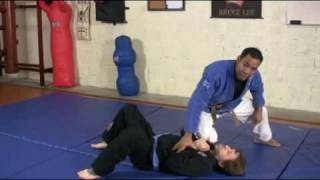
Situation Overview
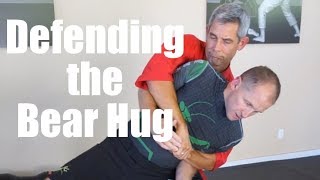
The under-arms bear hug is a common street self-defense scenario where an attacker approaches from behind and wraps both arms around the defender's torso beneath the arms. Quick reaction and proper hand positioning are critical to preventing the attacker from securing control.
Initial Defensive Reaction
Upon feeling the bear hug engage, the defender must immediately squat downward to create distance and prevent the attacker from controlling the hands. This quick drop maintains defensive integrity and prepares the transition to counterattack.
Over-Hook and Rib Pressure
From the squat position, the defender places both hands over the attacker's arms and closes the elbows tightly against the ribs, creating significant pressure. This compression often forces the attacker to release or open slightly, signaling the moment to execute space and execute a takedown.
Adjustment for Stronger Opponents
If the attacker maintains grip strength despite the over-hook, the defender twists the torso to create chest separation, then lifts the head and repositions it against the attacker's chest. The defender then wraps one arm around the attacker's waist to control hip movement and prevent striking.
Hip Entry and Takedown Setup
With the head secured against the attacker's chest and the arm controlling the hips, the defender steps inside with their leg closest to the attacker's back and engages their hips. This positioning prevents the attacker from striking effectively while setting up a takedown.
Execution of Takedown
The defender lifts through the hips and drives the attacker backward onto the ground, landing with knee placement on the attacker's back. Proper leg positioning is essential—the defender should maintain a wide, stable base rather than placing the knee directly on the spine.
Control Position and Armlock Setup
Once mounted on the attacker's back, the defender transitions from arm control to a wrist lock by threading one arm inside the attacker's arm and clasping their own wrist. The other hand secures the attacker's shoulder, with elbows closed tightly against the body.
Finishing the Lock
The defender grabs their wrist using a five-finger grip with the same-side hand while the opposite hand holds the attacker's shoulder, then closes both elbows and arches the upper body to apply finishing pressure. This hand position maximizes leverage and prevents loss of control.
Bear Hug Under the Arms Defense
Key Takeaways
- •Situation Overview
- •Initial Defensive Reaction
- •Over-Hook and Rib Pressure
- •Adjustment for Stronger Opponents
http://gbtwincities.com/ https://www.facebook.com/pages/Gracie-Barra-Twin-Cities-MN/199007333443329 https://www.facebook.com/graciebarra.bjjminnesota If an attacker grabs you in a Front Bear Hug under you arms they can take you down in a variety of ways. You need to have a quick reaction to prevent the takedown.
Related Techniques
Frequently Asked Questions
What does this video teach about under-arms bear hug?
This video covers situation overview, initial defensive reaction, over-hook and rib pressure. It provides detailed instruction from Gracie Barra Twin Cities.
How long does it take to learn under-arms bear hug?
The basic mechanics can be understood in a single session, but developing reliable execution requires consistent drilling over weeks of practice. This 8-part breakdown helps structure your training by isolating each phase of the technique.
What are the key details for finishing under-arms bear hug?
Once mounted on the attacker's back, the defender transitions from arm control to a wrist lock by threading one arm inside the attacker's arm and clasping their own wrist. The other hand secures the attacker's shoulder, with elbows closed tightly against the body.