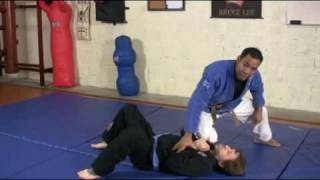
Rear Bear Hug Defense Overview
The rear bear hug is a clinch position where an attacker secures both arms around the defender from behind, typically with intent to lift and slam. The primary immediate threat is the transition to a rear naked choke, requiring the defender to control the attacker's hands by draping their own hands over the attacker's grip.
Hip Position and Leverage
The defender must drop their hips and maintain a wide base to stay on their feet, as the attacker's primary objective is to generate enough leverage to lift and throw them to the ground. Maintaining low hips prevents the attacker from achieving the vertical leverage necessary for an effective slam.
The Arm Split Escape and Its Limitations
A common escape involves splitting the arms to slip free from the bear hug. This technique is effective when the attacker's grip is positioned high on the defender's arms, but fails when the attacker secures a lower grip around the elbows, which prevents arm mobility and limits escape options.
Base Control and Disturbance Techniques
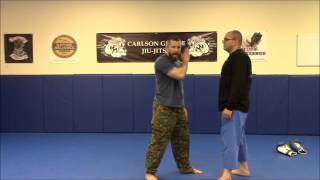
The defender should establish a strong base, control the attacker's grip to prevent chokes, and use hammer fists to the groin combined with foot stomps to the outer foot to destabilize the attacker's position. Stomping with the inside foot compromises the defender's central balance and facilitates being thrown sideways.
Single-Leg Takedown Transition
After destabilizing the attacker through disturbance techniques, the defender arches backward, secures an underhook, and transitions into a single-leg takedown. This escape is most effective when the attacker maintains a wider stance; a narrow foot position limits hand placement and reduces viability.
Sequential Escape Strategy
If the initial single-leg takedown attempt fails, the disturbance attacks sufficiently loosen the attacker's grip to make the arm split escape viable as a secondary option. The sequential combination of base control, disturbance, and primary escape attempt creates opportunities for the backup escape technique.
Post-Escape Striking Options
Once the defender achieves separation and positions themselves in front of the attacker with control of the head, immediate striking options include knee strikes to the face or pulling the attacker's head down onto an ascending knee. These techniques capitalize on the broken posture of the attacker.
Fireman's Carry Takedown Finish
With the attacker's posture broken and controlled at the head, the defender can execute a fireman's carry by passing their head underneath the attacker's arm, maintaining grip control, and loading the attacker across the shoulders. The key is to keep the attacker's head low around the defender's back rather than loading it onto the head, preventing spinal compression during the throw.
Defending against the Bear Hug- PASS vs FAIL Tips
Key Takeaways
- •Rear Bear Hug Defense Overview
- •Hip Position and Leverage
- •The Arm Split Escape and Its Limitations
- •Base Control and Disturbance Techniques
Jumped from behind? Your opponent got position on you? No matter how it happened, it's a bad place to be. Join me, and my special guest Sensei Ando, as we show what to watch out for, and how to make one of the most commonly failed escapes, succeed. The rear bear hug with your arms trapped in can feel like a helpless situation to deal with. Part of succeeding from a self-defense standpoint, is knowing how to manage the crisis. ►For more of Sensei Ando's tips and tactics, SUBSCRIBE to Sensei Ando: https://www.youtube.com/user/AndoMierzwa ►Also visit Sensei Ando's website here: http://senseiando.com BASE AND CONTROL: First thing to do is to drape the hands to defend the choke, and drop your stance to keep your center of gravity lower, making it difficult for your adversary to pick you up. Next, it is important to realize that standard escapes with splitting the arms do not work unless your opponent makes a mistake. The objective of holding you from behind, unless a multi-attacker scenario, is to pick you up and slam you. This means, our adversary is going to grab us lower, around the elbows; making it impossible to split the arms and slink out. After establishing control of the arms and a good wide base, start using your hammer fist attacks to the groin, combined with foot stomps to rattle your opponent and get them moving around. Remember to always use the 'outside' foot to stomp. Never the inside. Since our opponent has widened their stance for stability and to avoid the attacks we are making, we can now make our first attempt to escape using the underhook to the single leg takedown. Caution Be careful not to walk out and stop. This is transitional only. We have to immediately move to the takedown, or re-establish our base and position if something went awry. As you shoot for the single leg, if the opponent moves, or you do not have enough mobility to get a strong hook/position, then we can abandon that and use the elbow splitting escape that previously did not work. After all the moving around, chances are that the grip they had before, has slipped higher on our arms and we can make our secondary attempt a success. Where to? Once we're out of the bear hug, we want to look for a follow-up move to secure our position and turn the tides. Sensei Ando has a good go to he shows, followed by a variation I would use. After the elbow split - immediately snag the neck hook position to keep control. Ando Attack the head with a knee to the face to soften them up. Maintain the neck hook and do not give up a strong position. Immediately follow up with a shoot underneath using the elbow in the groin to bring them over the back for a Fireman's Carry Takedown. Tips: Sensei Ando makes note to watch the danger of the headlock as we're slipping out. Good tip. He also points out to tuck the foot so they don't land on you and break your toes. Randy I start off the same way and attack the head with a knee. I'm anticipating the block, but if they don't, even better. We're done here. If they do block as planned, then I shoot over the top and thread my arm under the neck all the way to the other underarm. Clasp the hands, and we have a nice guillotine setup. Use your shoulder to drop weight on them making it difficult for them to posture up and move. Follow this up with a nice reaping leg takedown variation for the finish. The finish is up to you and your skillset. You can chuck them and go to a ground and pound, pound the ground package, or you can hold on to the guillotine, keep a solid position on the same side of the body as you started on, and finish the choke you already have. Like the video? Don't forget to hit subscribe. ►SUBSCRIBE on YouTube: https://www.youtube.com/mantisboxers ►Get FREE Email Updates on everything I do: http://randybrownmantisboxing.com/#contact-section ►Read my BLOG for tips on training, nutrition, and recent announcements: http://randybrownmantisboxing.com/articles/ ►TRAIN WITH ME in person, online, or at a seminar. http://randybrownmantisboxing.com/#contact-section ▼ FOLLOW ME ▼ FACEBOOK: https://www.facebook.com/RandyBrownMantisBoxer/ INSTAGRAM: https://www.instagram.com/randybrownmantisboxer/ Get Hooked!!! ★ LIKE ★ SHARE ★ SUBSCRIBE ★
Related Techniques
Frequently Asked Questions
What does this video teach about over-arms bear hug?
This video covers rear bear hug defense overview, hip position and leverage, the arm split escape and its limitations. It provides detailed instruction from Randy Brown.
How long does it take to learn over-arms bear hug?
The basic mechanics can be understood in a single session, but developing reliable execution requires consistent drilling over weeks of practice. This 8-part breakdown helps structure your training by isolating each phase of the technique.
What are the key details for finishing over-arms bear hug?
Once the defender achieves separation and positions themselves in front of the attacker with control of the head, immediate striking options include knee strikes to the face or pulling the attacker's head down onto an ascending knee. These techniques capitalize on the broken posture of the attacker.