Setup and Stance Foundation
The instructor begins by establishing the foundational position with the partner in a square stance. This neutral posture provides the baseline from which both double and single leg attacks will be executed. Proper setup ensures the athlete can maintain control and balance throughout the technique.
Double Leg Mechanics: Level Change and Positioning
For the double leg attack, the shooter steps into the center of the opponent's stance, positioning the head on the outside. The critical movement is the level change—dropping from the hips while maintaining a straight back and engaged core. The feet should align in a triangle zone with toes nearly matched to the opponent's, creating optimal distance for penetration.
Posture and Head Alignment in Double Leg Entry
Maintaining proper spinal alignment is essential throughout the attack. The head must stay up with the back straight; conversely, a curved spine or lowered head creates vulnerability to being driven downward. The level change originates from the legs, not the upper body, allowing the shooter to generate upward driving force while maintaining structural integrity.
Eliminating Space in the Attack
The most common error in development is creating space between the shooter's body and the opponent. Any gap allows the defender to create leverage for a cross-face or other counterattack. The head must remain tightly aligned with the spine and body, closing all distance while penetrating through the opponent's center.
Single Leg Technique: Outside Foot, Inside Head
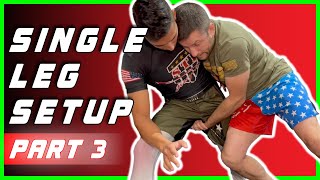
The single leg attack reverses the positional principle of the double leg: the foot steps on the outside while the head positions on the inside. The arm comes above mid-thigh with the palm facing downward, and the head maintains tight contact with the opponent's sternum. This configuration generates maximum leverage while preventing defensive counters.
Palm Down Position and Arm Strength
The palm-down position in the single leg drastically improves control and strength application. Without this positioning, the opponent's leg and arm strength will overpower the shooter. When properly executed, the palm-down grip creates a strong structural position that nearly off-balances the opponent and prevents them from extracting their leg.
Distance Management and Point of Contact
Successful attacks require maintaining close proximity to the opponent rather than shooting from distance. Stepping backward before attacking telegraphs intent and allows the opponent to move before engagement. The shooter should maintain a point of contact and attack from a close ready position, creating simultaneous level change and penetration.
Snatch Single Finish: Grip and Wrist Control
The snatch single finish incorporates a reverse grip on the opponent's wrist, which allows the shooter to turn the arm away while maintaining strength to pull downward. This grip position also enables pushing action and prevents the opponent from creating space or switching the position. Close proximity is maintained while the grip secures the attacking arm.
Execution of the Finish: Level Change to Pickup
From the snatch single position, the shooter closes distance while maintaining head alignment and a straight spine. A slight push into the opponent causes them to hop backward, creating the opportunity to slide the hand down and complete the leg pickup. The entire sequence remains compact with no space created between attacker and defender.
Double + Single Entry +Snatch Single Finish
Key Takeaways
- •Setup and Stance Foundation
- •Double Leg Mechanics: Level Change and Positioning
- •Posture and Head Alignment in Double Leg Entry
- •Eliminating Space in the Attack
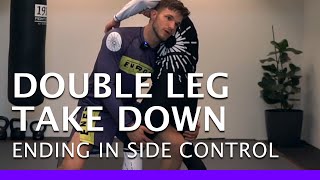
Coach Derek Brignell shares information on double and single leg takedown entries and finishing information on a sweep single. #bjj #wrestling
Frequently Asked Questions
What does this video teach about standard snatch double?
This video covers setup and stance foundation, double leg mechanics: level change and positioning, posture and head alignment in double leg entry. It provides detailed instruction from BALANCE JIU JITSU.
How long does it take to learn standard snatch double?
The basic mechanics can be understood in a single session, but developing reliable execution requires consistent drilling over weeks of practice. This 9-part breakdown helps structure your training by isolating each phase of the technique.
What are the key details for finishing standard snatch double?
The snatch single finish incorporates a reverse grip on the opponent's wrist, which allows the shooter to turn the arm away while maintaining strength to pull downward. This grip position also enables pushing action and prevents the opponent from creating space or switching the position. Close proximity is maintained while the grip secures the attacking arm.