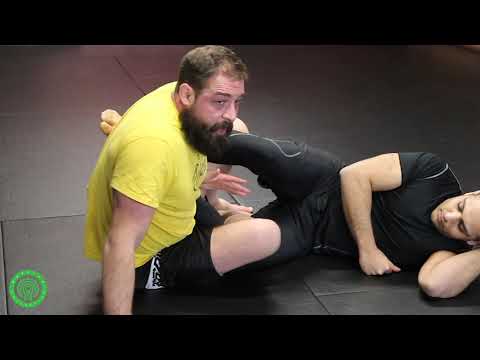
Jiu Jitsu - The Inside Sankaku Recovery System with Ed Ingamells
0
Inside Sankaku·Stuart Tomlinson
| Jiu Jitsu - The Inside Sankaku Recovery System | The inside Sankaku is a way to entangle the legs of your opponent. …
Not yet documented
Inside Sankaku (also called the Saddle, Honey Hole, or Game Over position) is the most dominant leg entanglement position in modern grappling — a configuration where the attacker's legs form a triangle around the opponent's thigh from the inside, with the outside knee controlling the hip line, creating the optimal angle for the inside heel hook, the most devastating submission in grappling. [1] Inside sankaku is to the leg lock game what mount is to the positional game: the apex of the hierarchy, the position from which the highest-percentage finishes occur, and the position every leg lock player aspires to achieve. [1],[2] The position was systematised by John Danaher and demonstrated by his students (Eddie Cummings, Gordon Ryan, Garry Tonon) who proved that inside sankaku with proper heel control produces finishes at the highest levels of no-gi competition. [2],[3] Once inside sankaku is established with the heel secured, escape is extremely difficult because the triangled legs prevent the opponent from extracting their leg, and the inside heel hook attacks the knee ligaments (ACL, MCL) with minimal pain warning before catastrophic failure. [3]
Inside sankaku as a named, systematised position was developed by John Danaher in the 2010s, though the underlying leg entanglement has existed in catch wrestling and sambo. [1] Eddie Cummings was the first Danaher student to demonstrate inside sankaku mastery in competition (EBI, 2014-2016), followed by Garry Tonon and Gordon Ryan. [1],[2] The position has multiple names — 'saddle' (Craig Jones), 'honey hole' (Eddie Cummings), 'Game Over' (Gordon Ryan) — reflecting its importance to multiple competitive grapplers. [2],[3]
Inside sankaku is the highest-percentage leg lock finishing position in modern grappling — the inside heel hook from this position is the most commonly finished submission at ADCC and EBI. [1] Gordon Ryan's ADCC dominance (2019, 2022 absolute champion) was built significantly on inside sankaku heel hooks. [2],[3]
No images yet for this technique.
Sign in to suggest an image.
| Jiu Jitsu - The Inside Sankaku Recovery System | The inside Sankaku is a way to entangle the legs of your opponent. …
No instructional courses yet for this technique.
Sign in to suggest a course.
Risk of injury to the person this technique is applied to
Maximum — inside sankaku with the inside heel hook is the most dangerous legal submission configuration in grappling; the inside heel hook attacks the knee ligaments (ACL, MCL, meniscus) which can be destroyed without proportional pain warning; careers have been ended by heel hooks from this position; always apply slowly and tap immediately when caught
Skill level needed to execute this technique reliably
Whether this technique is allowed under major competition rule sets
Leg Lock Anthology (John Danaher, BJJ Fanatics)
Description sources — [1] Danaher's Leg Lock Anthology [2] Eddie Cummings, Gordon Ryan competition records [3] Multiple naming conventions
Standard katakana transliteration of Western martial arts terminology (外来語) — used in Japanese MMA, boxing, and BJJ communities
Description sources — [1] Danaher's Leg Lock Anthology [2] Eddie Cummings, Gordon Ryan competition records [3] Multiple naming conventions
leg dexterity (forming the triangle), hip control (maintaining the position), grip strength (securing the heel)
long legs (easier to triangle), strong adductors (squeezing), flexible hips
adductors (squeezing the triangle), hip flexors (positioning), forearms (heel grip), core (body angle for the finish)
Every move, in any martial art, shares a few universal traits. Mix and match below to pinpoint the right tool — or compare equivalents across styles.
Inside sankaku (also called the honeyhole, saddle, or 411) is the primary leg entanglement for the inside heel hook. Systematized by John Danaher's squad — Gordon Ryan, Garry Tonon, and Eddie Cummings dominated EBI and ADCC from this position. (Danaher, Enter the System; EBI/ADCC competition records)
Inside Sankaku (also called the Saddle, Honey Hole, or Game Over position) is the most dominant leg entanglement position in modern grappling — a configuration where the attacker's legs form a triangle around the opponent's thigh from the inside, with the outside knee controlling the hip line, creating the optimal angle for the inside heel hook, the most devastating submission in grappling. Inside sankaku is to the leg lock game what mount is to the positional game: the apex of the hierarchy, the position from which the highest-percentage finishes occur, and the position every leg lock player aspires to achieve.
Inside sankaku as a named, systematised position was developed by John Danaher in the 2010s, though the underlying leg entanglement has existed in catch wrestling and sambo. Eddie Cummings was the first Danaher student to demonstrate inside sankaku mastery in competition (EBI, 2014-2016), followed by Garry Tonon and Gordon Ryan.
IBJJF: legal — Legal — guard is fundamental to BJJ, sweeps from guard score 2 points; IJF: restricted — Guard pulling penalized as non-combativity — groundwork from guard permitted …; ADCC: legal — Legal, guard pull penalized -1 point in points portion; Unified MMA: legal — Legal — no penalty for playing guard; FIAS Sport Sambo: legal — Legal
Danger rating 10/10. Maximum — inside sankaku with the inside heel hook is the most dangerous legal submission configuration in grappling; the inside heel hook attacks the knee ligaments (ACL, MCL, meniscus) which can be destroyed without proportional pain warning; careers have been ended by heel hooks from this position; always apply slowly and tap immediately when caught
The standard setup chain: Enter Ashi Garami → Advance to Inside Sankaku → Triangle the Legs → Control the Hip Line → Secure the Heel → Apply Inside Heel Hook → Finish.
Standard counters include: Boot (heel slip) — pointing toes to prevent heel hook grip / Hip Escape — clearing the hips past the knee line to extract the leg / Leg Pummel — fighting to disentangle the triangled legs / Roll — rolling in the direction of the heel hook rotation to relieve pressure.
Common variants: Standard inside sankaku (triangled legs with outside knee controlling the hip line…); Game Over position (Gordon Ryan's term) (inside sankaku with additional arm control, preventing th…); Honey hole (Eddie Cummings' term) (alternative name for inside sankaku); Reverse inside sankaku (controlling the opposite direction); Inside sankaku to kneebar (transitioning from heel hook to kneebar when the heel is …).
Inside sankaku heel hooks are the most common submission finish at ADCC and EBI. Gordon Ryan won 2 ADCC absolute titles using this position.
Top errors to watch for: Reaching for the heel without establishing the triangle — the legs must be triangled FIRST, then secure the heel / Not controlling the hip line — loose knees allow the opponent to extract the leg / Applying fast heel hooks — the most dangerous mistake in grappling; always apply slowly / Crossing the legs incorrectly — the inside leg (closer to the opponent's hip) should be on top in the triangle.
The Inside Sankaku is also known as Inside Triangle, Honeyhole, 411, Saddle.