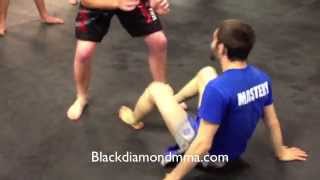
Coyote Guard Positioning
The coyote guard is initiated by locking one leg while switching hip position to tilt the opponent over the practitioner's body. This leg lock configuration allows the practitioner to advance into the dogfight position, where both competitors are upright and in close quarters. From this position, the practitioner can execute sweeps, knee taps, and back takes.
Deep Half Guard Fundamentals
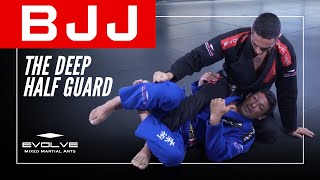
The deep half guard requires the practitioner to position themselves close to the opponent, then turn their hips while extending their knees away from their body to stretch the opponent's leg. The opponent will typically fall over if they do not recognize this pressure and fail to properly manage their hip socket position. Loss of hip socket mobility indicates the practitioner has gained a significant positional advantage.
Preventing Sweeps from Deep Half
When properly defending against the deep half, the opponent should lower their knee to the mat and establish a second hook to prevent being swept. The defender must keep their heel on the mat and slide through to maintain positional control. Failing to execute this defense leaves the defender vulnerable to being swept regardless of their other defensive attempts.
Deep Half Body Mechanics
The practitioner enters deep half by facing away from the opponent while extending their body and bringing their knees around in a swinging motion. The legs are stretched out while the hips are turned to apply pressure perpendicular to the opponent's leg. This configuration creates multiple offensive opportunities for the practitioner.
Transitioning to Leech Guard
From deep half, the practitioner can transition to leech guard by placing their back foot over top while keeping the top leg inside and using the opponent's hip to facilitate the body turn. This transition occurs by bringing the leg back and over top to reset the guard configuration. The leech guard position allows access to sweeps and positional advances similar to those available from dogfight.
Back Take Setup from Deep Half
When the practitioner establishes an underhook from deep half, the primary objective is typically to take the opponent's back. This hook placement occurs nine times out of ten when the practitioner wants to pursue a back take rather than smaller positional advantages. The back take requires a combination of athleticism, timing, and mat familiarity to execute successfully.
Deep Half to Leech Guard Reversal
The practitioner can reverse from deep half back into leech guard by reversing their hook placement and repositioning their body accordingly. Once in leech guard, the practitioner can transition to leech dogfight to access the same sweeps available from the original deep half position. The opponent's extended leg position in this configuration creates different mechanical opportunities than traditional leech guard entries.
Leech Dogfight Mechanics
In leech dogfight, the practitioner's top leg must go over the opponent's extended leg, while the bottom leg helps curl and bring in the position. From this configuration, the practitioner can execute tight knee controls or lift the hook high to block over top for further positional fighting. This variation of dogfight emerges naturally from deep half transitions when the opponent's leg remains extended.
Deep Half to Coyote Guard
Key Takeaways
- •Coyote Guard Positioning
- •Deep Half Guard Fundamentals
- •Preventing Sweeps from Deep Half
- •Deep Half Body Mechanics
The Coyote Guard is an amazing addition to the BJJ half guard allowing the guard player to take away the mobility of the top player by twisting the knee. This technique shown is how to go to deep half guard and recover the Coyote guard and attack once more.
Related Techniques
Frequently Asked Questions
What does this video teach about deep half guard?
This video covers coyote guard positioning, deep half guard fundamentals, preventing sweeps from deep half. It provides detailed instruction from Malachy Friedman.
How long does it take to learn deep half guard?
The basic mechanics can be understood in a single session, but developing reliable execution requires consistent drilling over weeks of practice. This 8-part breakdown helps structure your training by isolating each phase of the technique.
What are the key details for finishing deep half guard?
The practitioner can reverse from deep half back into leech guard by reversing their hook placement and repositioning their body accordingly. Once in leech guard, the practitioner can transition to leech dogfight to access the same sweeps available from the original deep half position. The opponent's extended leg position in this configuration creates different mechanical opportunities than traditional leech guard entries.