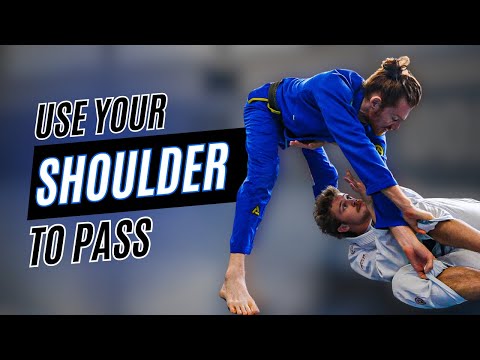
Understanding The Toreando Pass
0
Standard Toreando Pass·JonThomasBJJ
Free Video on "The Outside Knee Grip System" https://www.mavericksjj.com/courses/take/mavericks-lab/lessons/49456690-ou…
Not yet documented
The Standard Toreando Pass is the classic execution of the bullfighter pass — gripping both pant legs at the knees, throwing the legs to one side while stepping around to the other, landing in side control — the most fundamental standing guard pass in BJJ and the technique that Leandro Lo perfected. [1] This standard version uses the pure speed-and-direction-change mechanic without modifications. [1],[2]
Developed within the modern BJJ competition passing evolution. [1]
Used at IBJJF and ADCC competition. [1]
No images yet for this technique.
Sign in to suggest an image.
Free Video on "The Outside Knee Grip System" https://www.mavericksjj.com/courses/take/mavericks-lab/lessons/49456690-ou…
No instructional courses yet for this technique.
Sign in to suggest a course.
Risk of injury to the person this technique is applied to
Guard passes carry minimal injury risk for both fighters under normal conditions
Skill level needed to execute this technique reliably
Whether this technique is allowed under major competition rule sets
Jiu-Jitsu University (Saulo Ribeiro, 2008)
Description sources — [1] Modern BJJ passing methodology [2] Competition passing analysis
Standard katakana transliteration of Western martial arts terminology (外来語) — used in Japanese MMA, boxing, and BJJ communities
Description sources — [1] Modern BJJ passing methodology [2] Competition passing analysis
hip mobility, grip strength, timing
athletic ability, good reflexes
core, quadriceps, forearms
The toreando (bullfighter) pass is one of the fastest guard passes — the passer controls both pant legs or ankles and redirects them to one side while stepping around. Named after the bullfighter's cape movement. (Jiu-Jitsu University, Ribeiro)
The toreando pass is fast and unpredictable because it doesn't give the opponent time to get their feet in to defend, making it extremely difficult for them to react. Jon Thomas BJJ emphasizes that controlling the pants and hips prevents the defender from establishing proper leg positioning.
If pants grips are unavailable—such as when pants ride up or in no-gi—you can switch to an ankle grip combined with a pant grip on the other leg to maintain control and execute the pass. Jon Thomas BJJ notes this is an important backup when traditional pants control isn't reliable.
You need to create a disconnect between the opponent's elbow and knee by ripping their arms open or making your shoulder disappear, then quickly shoot your ribcage into the gap to finish the pass. Jon Thomas BJJ explains that as long as the elbow-knee connection stays tight, the defender can always press off, so breaking this is critical.
A wide stance is important both when initially approaching and when finishing the toreando pass, as it provides better support and leverage. Jon Thomas BJJ highlights this as a really important concept for executing the technique effectively.
The Standard Toreando Pass is the classic execution of the bullfighter pass — gripping both pant legs at the knees, throwing the legs to one side while stepping around to the other, landing in side control — the most fundamental standing guard pass in BJJ and the technique that Leandro Lo perfected. This standard version uses the pure speed-and-direction-change mechanic without modifications.
This passing technique is part of the modern BJJ guard passing curriculum, refined through competition at IBJJF and ADCC.
IBJJF: legal — Legal, guard pass scores 3 points; IJF: legal — Legal — transitioning past opponent's legs is part of newaza; ADCC: legal — Legal, guard pass scores 3 points; Unified MMA: legal — Legal; FIAS Sport Sambo: legal — Legal
Danger rating 2/10. Low — guard passes carry minimal injury risk for both fighters under normal conditions
The standard setup chain: Establish Position → Strip Grips → Initiate Pass → Navigate Legs → Consolidate Side Control.
Standard counters include: Guard retention / Frame and shrimp / Sweep timing / Re-guarding.
Common variants: Standard execution (the fundamental version of this pass); Modified version (adapted for specific guard types); Chain variant (transitioning to this pass from another pass that was def…).
Used at IBJJF and ADCC competition.
Top errors to watch for: Not establishing grips before initiating / Not consolidating with crossface after passing / Only passing to one side / Rushing without reading the guard player's position.
The Standard Toreando Pass is also known as Basic Toreando, Standard Bullfighter.