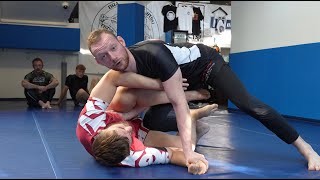
Introduction to Headquarters Position
The headquarters position is a versatile guard passing setup that can transition to either a guard pass or back take. The instructor demonstrates this position from various entry points, including no-grip scenarios and post-pull guard situations.
Initial Control and Knee Placement
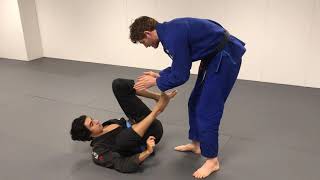
The passer controls one ankle while stepping the knee between the opponent's legs, then pinches the knees to prevent pulling. Hip positioning is critical—the passer maintains weight on the hips rather than above them, creating a stable V-shaped leg configuration that resists opponent pullback attempts.
Knee-to-Mat Transition
When the opponent pulls, the passer responds by posting the hand on the opponent's belt to settle weight. The passer systematically brings the knee to the mat while blocking the shoulder, establishing a mounted base with one knee on the ground.
Hand Connection and Upper Body Control
From the near-mount position, the passer connects both hands and brings the outside knee toward the center to prevent the opponent from achieving half-guard. This hand connection drives the transition into a full mount position while maintaining control of the opponent's leg.
Mount Finish Mechanics
The passer drives the knee inward and down while hugging the belt to transition fully into mount. Hand positioning must shift throughout to prevent the opponent from achieving under-hooks or escaping underneath.
Back Take Variation from Headquarters
An alternative finishing option involves hooking the opponent's leg and sitting on the knee to initiate a back take rather than mount. This variation requires precise positioning to prevent the opponent from establishing a strong base.
Defense Against Hip Elevation and Leglock Risk
A critical warning: if the opponent elevates the hips while the passer is in headquarters position, they can trap the passer's leg in a leglock scenario. To prevent this, the passer must drive their chest onto the opponent's hip and control the arm to prevent hip elevation or escapes.
Countering Hip Escape Attempts
If the opponent attempts to elevate and escape, the passer should secure a pocket grip around the back of the opponent's knee rather than applying downward pressure. This grip allows the passer to drive the opponent backward and flat while maintaining hip control.
Do This to Pass Headquarters EVERY Time!
Key Takeaways
- •Introduction to Headquarters Position
- •Initial Control and Knee Placement
- •Knee-to-Mat Transition
- •Hand Connection and Upper Body Control
IF YOU HAVE A HARD TIME PASS THE HEADQUATERS POSITIONS THIS VIDEO IS FOR YOU! ON this video i show how to smash and pass also i show a great way to take the back if your pass doesn't work, watch until the end to dont miss any small details. IF YOU LIKE THIS VIDEO PLEASE THUMBS-UP, SHARE AND SUBSCRIBE I Have amazing Instructional's to help you bring your Game to the Next level.. CLICK HERE https://bjjfanatics.com/search?q=marcos%20tinoco #headquaters #fundamentals #lassoguard #bigoss
Frequently Asked Questions
What does this video teach about standard headquarters pass?
This video covers introduction to headquarters position, initial control and knee placement, knee-to-mat transition. It provides detailed instruction from BIG OSS Jiu-Jitsu Channel.
How long does it take to learn standard headquarters pass?
The basic mechanics can be understood in a single session, but developing reliable execution requires consistent drilling over weeks of practice. This 8-part breakdown helps structure your training by isolating each phase of the technique.
What are the key details for finishing standard headquarters pass?
A critical warning: if the opponent elevates the hips while the passer is in headquarters position, they can trap the passer's leg in a leglock scenario. To prevent this, the passer must drive their chest onto the opponent's hip and control the arm to prevent hip elevation or escapes.