Instructional Framework: Position-Based Submissions
Rather than teaching techniques as linear chains, Professor Standing employs a position-based approach. Today's focus is top side control, from which multiple submission variations will be explored. This methodology keeps instruction fresh while avoiding repetitive chains.
Kata Gatame Fundamentals: The Arm Triangle Choke
The kata gatame (arm triangle) is an effective submission from top position, though it functions as a slower choke than techniques like the x-choke or armbar. The choke compresses the carotid arteries using the opponent's own shoulder as a closing mechanism. Patience and proper positioning are essential, as the finish may require 10-20 seconds of sustained pressure.
Standard Progression: Underhook to Mount Transition
From side control with crossface and underhook established, the instructor elevates the underhook while maintaining chin control. This creates the opportunity to set up mount submissions without releasing the dominant crossface position. The transition preserves control while opening multiple finishing pathways.
Arm Trap Variations and Straight Arm Lock Alternatives
Beyond the standard straight arm lock, practitioners can create a fulcrum at the elbow using dual knee placement to attack the arm. An unconventional climbing position over the opponent amplifies pressure, though it appears awkward until experienced firsthand. These variations provide options when the opponent defends the Americana by straightening the arm.
Defending Against Americana Defense: Flow-Based Response
When the opponent straightens their arm to escape the Americana, the instructor transitions by going with the motion rather than fighting it. The head hook is established, and the instructor comes underneath while keeping the bicep tight to the opponent's ear. This maintains pressure while preventing the opponent from establishing half guard control.
Double Arm Positioning and Elbow Control
Once the first arm is secured, the instructor brings the second arm into play, trapping both of the opponent's arms. The hands are clasped to hold the locked position while the instructor positions the trapped arm across the opponent's throat. Proper elbow control—keeping it low and tight against the neck—is critical for choke effectiveness.
Head Positioning and Pressure Application
The instructor's head serves as a third point of contact, dropping as low as possible to maintain the choke's integrity. Skull-to-skull contact helps drive pressure into the locked position. The instructor emphasizes that contact with the mat is acceptable and even preferred for maximum pressure distribution.
Transition to Knee-on-Belly and Finish Position
From the locked kata gatame position, the instructor transitions to knee-on-belly to prevent the opponent from escaping via bridging or hip movement. The instructor then lays completely flat alongside the opponent—hip to hip, shoulder to shoulder, skull to skull. This horizontal pressure distribution makes the choke extremely difficult to counter.
Final Pressure and Squeeze Mechanics
With the gable grip secured and the shoulder driven into the opponent's throat, the instructor flexes and squeezes to complete the submission. The finish may take 10-20 seconds depending on the opponent's conditioning and position. Once fully locked, the kata gatame is exceptionally difficult to escape, often resulting in submission.
Kata Gatame, Americana, Juji Gatame w Prof Chris Standing BTT
Key Takeaways
- •Instructional Framework: Position-Based Submissions
- •Kata Gatame Fundamentals: The Arm Triangle Choke
- •Standard Progression: Underhook to Mount Transition
- •Arm Trap Variations and Straight Arm Lock Alternatives
Fair use claim. I claim no credit for any audio in this video.
Related Techniques
Frequently Asked Questions
What does this video teach about kata gatame to ezequiel?
This video covers instructional framework: position-based submissions, kata gatame fundamentals: the arm triangle choke, standard progression: underhook to mount transition. It provides detailed instruction from BTT Portland.
How long does it take to learn kata gatame to ezequiel?
The basic mechanics can be understood in a single session, but developing reliable execution requires consistent drilling over weeks of practice. This 9-part breakdown helps structure your training by isolating each phase of the technique.
What are the key details for finishing kata gatame to ezequiel?
From the locked kata gatame position, the instructor transitions to knee-on-belly to prevent the opponent from escaping via bridging or hip movement. The instructor then lays completely flat alongside the opponent—hip to hip, shoulder to shoulder, skull to skull. This horizontal pressure distribution makes the choke extremely difficult to counter.
Related videos
Kata Gatame Flow - Jiu Jitsu Takedowns - Closed Guard Arm Triangle Choke
TRITAC Martial Arts
Katagatame (Head and Arm Choke) from Mount - No Gi BJJ / Jiu-Jitsu
Brian Glick
Guard: Palm Up Palm Up choke
Bellingham BJJ
BJJ - X Choke from Mount | Palm Up / Palm Down
Focused Fight Team
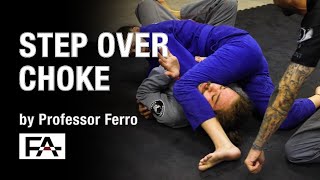
Ferro Academy BJJ Step Over Choke from knee on belly and side control.#sidechoke#bjj
Sickness Ferro