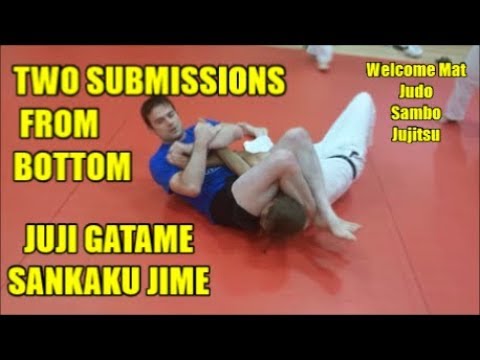
TWO SUBMISSION TECHNIQUES FROM BOTTOM JUJI GATAME & SANKAKU JIME
0
Double Attack to Kata-Gatame·welcomematstevescott
This video shows how to effectively work from the bottom position applying different variations of Juji Gatame and Sanka…
Translation: double attack to kata-gatame
Double Attack to Kata-Gatame transitions from the double attack mount position directly into a kata-gatame arm triangle, using the dual threat to force the opponent's arm across their neck. [1]
MMA-adapted submission. [1]
Proven at highest levels of MMA competition. [1]
MMA submission methodology. [1]
Used in UFC and professional MMA competition
No images yet for this technique.
Sign in to suggest an image.
This video shows how to effectively work from the bottom position applying different variations of Juji Gatame and Sanka…
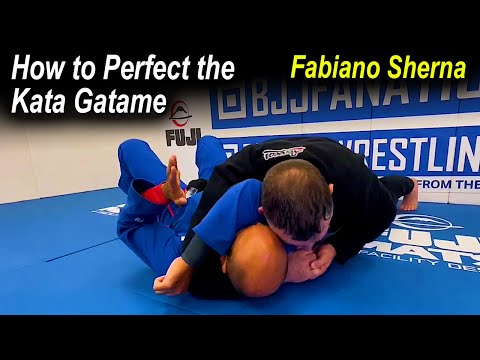
How to Perfect the Kata Gatame by Fabiano Scherner - Click Here To Check Out Fabiano Scherner's Instructional Videos - h…
The double attack to kata-gatame is a high-percentage submission sequence from bottom position that emphasizes deceptive setup and multiple finishing options. According to welcomematstevescott, the technique begins by establishing control from the bottom with feet positioned on the opponent's hips, creating space while remaining undetectable. The initial crossover arm bar attempt uses a shoulder grip and shrimping motion to lock the arm without telegraphing intent; if the opponent escapes the arm, the practitioner transitions into a necktie control using the shin to catch the opponent's arm, then flows into either a traditional triangle choke or a kata-gatame variation where the shin is clamped against the neck with the opposite arm driving the elbow inward against the thigh. Bernardo Faria's instruction on perfecting kata-gatame from top position complements this by detailing two distinct finishing methods: the first involves driving the head upward with a hand underneath, creating a blade-of-arm position with gable grip, then positioning the chin in the opponent's eye socket for maximum pressure; the second employs a deeper step and extended arm pull, creating extreme tightness more quickly. Both instructors agree that the kata-gatame's primary challenge lies in achieving sufficient neck wrap without gaps, with Faria emphasizing the importance of head positioning and shoulder placement to prevent escape routes.
Synthesized from 2 instructors
No instructional courses yet for this technique.
Sign in to suggest a course.
Risk of injury to the person this technique is applied to
Submission with fight-ending potential
Skill level needed to execute this technique reliably
Whether this technique is allowed under major competition rule sets
Mixed Martial Arts: The Book of Knowledge (Penn, Cordoza & Krauss, 2007)
description, historyOrigin: sourced from Penn, B
description, historyOrigin: sourced from Penn, B
Good grip strength
Submission finishing ability
The double attack transitioning to kata gatame (arm triangle) — threatening armbar and choke simultaneously, then settling on the head-and-arm choke when the opponent's defense creates the opening. A mount attack chain. (BJJ instructionals; Ribeiro, Jiu-Jitsu University)
Steve Scott emphasizes not giving away your intentions—keep your grip tight and don't signal the trap. Control his arms subtly by pulling him down with your feet in his hips, and only reach across to grab his shoulder when you're ready to commit to the technique.
After grabbing the shoulder, shrimp in as much as you can and push him back. From there, you can collapse back and grab the back of your thigh or butt to secure the position, or roll him over if he's resisting and keeping his grip tight.
According to Fabiano Scherner, you need to be very tight, especially when you pull your arm—make sure to maintain a secure S-grip and avoid leaving space in the position.
Double Attack to Kata-Gatame transitions from the double attack mount position directly into a kata-gatame arm triangle, using the dual threat to force the opponent's arm across their neck.
MMA-adapted submission.
IBJJF: legal — Legal at all belt levels, gi and no-gi — chokes are the safest submission cat…; IJF: legal — Legal (shime-waza) — strangulation techniques are one of three permitted subm…; ADCC: legal — Legal; Unified MMA: legal — Legal — choke submissions are among the most common finishes in MMA; FIAS Sport Sambo: banned — All chokes prohibited in Sport Sambo; FIAS Combat Sambo: legal — Legal
Danger rating 8/10. Submission with fight-ending potential
The standard setup chain: Position → Strikes → Double Attack to Kata-Gatame.
Standard counters include: Posture / Stack / Guard pass.
Common variants: Standard Double Attack to Kata-Gatame.
Used in UFC and professional MMA competition
Top errors to watch for: Abandoning position for the submission / Poor grip.
The Double Attack to Kata-Gatame is also known as Double Attack to Kata-Gatame, Mount to Arm Triangle, Dual Threat Choke.