Kata Gatame, Americana, Juji Gatame w Prof Chris Standing BTT
0
Kata Gatame to Ezequiel·BTT Portland
Fair use claim. I claim no credit for any audio in this video.
Translation: kata gatame to ezequiel
Kata Gatame to Ezequiel is a combination technique where a kata gatame (arm triangle) attempt transitions to an Ezequiel choke when the opponent defends the head-and-arm choke. [1] The grip transitions smoothly from the arm triangle to the sleeve choke. [1]
The Kata Gatame to Ezequiel is a technique demonstrated in Saulo Ribeiro's systematic BJJ methodology. [1]
Effective as part of a submission chain from side control. [1]
Gracie Jiu-Jitsu lineage. [1]
Used in UFC and professional MMA competition
No images yet for this technique.
Sign in to suggest an image.
Not yet documented
Fair use claim. I claim no credit for any audio in this video.
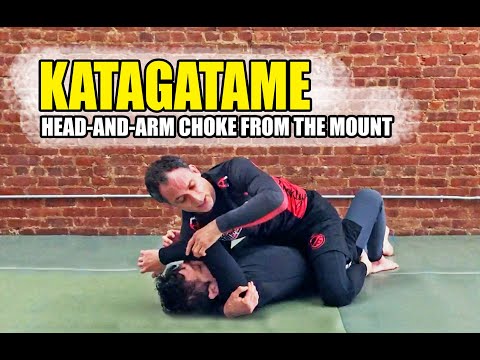
Katagatame: the head and arm choke from the mounted position isn’t only a powerful submission. It’s also a very robust m…
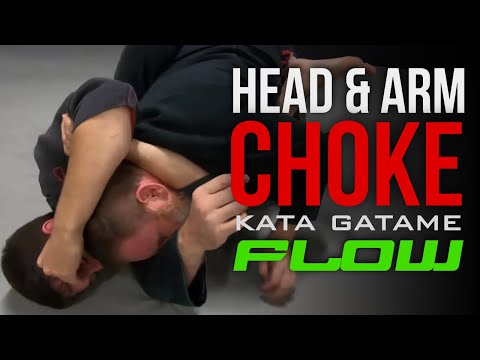
This Kata Gatame flow is one of the Jiu-Jitsu drills to develop the Kata Gatame, not only as a head and arm choke, but a…
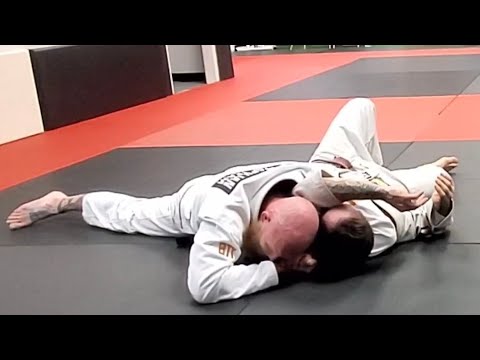
Kata gatame to ezequiel represents a progression where practitioners transition from the fundamental head-and-arm choke (kata gatame) into an ezequiel choke finish. The three instructors collectively demonstrate this as a practical submission sequence emphasizing proper body positioning and pressure mechanics. Brian Glick (Brian Glick channel) focuses on the mount position entry, highlighting the critical importance of elevating the opponent's elbow to shoulder line before transitioning the head position from inside to outside, then dismounting to finish with a sprawling body posture. BTT Portland (BTT Portland channel) presents the transition from side control, detailing how to trap the arm with the head position before cartwheeling to lay flat beside the opponent, emphasizing skull-to-skull contact and the use of gable grip or rear-naked-choke grip variants to finish the choke, noting that kata gatame can be a slower choke requiring patience. TRITAC Martial Arts (TRITAC Martial Arts channel) demonstrates entries from takedowns and closed guard, emphasizing the use of gravity and body weight to drive pressure into the opponent's neck and shoulder while maintaining deep positioning and tight control. All three instructors agree on the importance of keeping the opponent's arm trapped across their centerline, maintaining low head position with skull contact, and using body pressure rather than arm strength alone to finish the submission effectively.
Synthesized from 3 instructors
No instructional courses yet for this technique.
Sign in to suggest a course.
Risk of injury to the person this technique is applied to
Submission technique requiring tap or risk of injury
Skill level needed to execute this technique reliably
Whether this technique is allowed under major competition rule sets
Jiu-Jitsu University (Ribeiro & Howell, 2008)
description, historyOrigin: sourced from Ribeiro, S
description, historyOrigin: sourced from Ribeiro, S
Good top pressure and arm control
The kata gatame (head-and-arm choke) to Ezekiel choke transition — when the opponent defends the arm triangle by clasping hands, the attacker can switch to the Ezekiel choke using the sleeve. A gi-specific combination. (Carlson Gracie & Fernandez, BJJ for Experts Only; BJJ instructionals)
According to Brian Glick, if your hips are too high, you create space for your opponent to escape with an elbow escape or bump you off. You need to keep your hips low and your chest forward to control the position effectively.
Brian Glick emphasizes getting your elbow deep underneath your opponent's arm rather than a shallow grip. A strong person will be able to keep a shallow grip trapped, so depth is critical for controlling the arm.
Rather than trying to lift their arm directly, Brian Glick explains that using your hips is more effective. You walk underneath and use your chest to roll your partner's arm forward, which brings the elbow up naturally.
According to Prof Chris Standing (BTT Portland), if you let space open up between your heads, your opponent can slap their hand to the mat to escape the choke. Maintaining tight skull-to-skull contact eliminates this counter and makes the submission much more difficult to escape.
Prof Chris Standing emphasizes laying down flat beside your opponent, hip to hip, shoulder to shoulder, and skull to skull. You should drop your shoulder into their throat while keeping your head low and driving your body into them with continuous pressure.
Kata Gatame to Ezequiel is a combination technique where a kata gatame (arm triangle) attempt transitions to an Ezequiel choke when the opponent defends the head-and-arm choke. The grip transitions smoothly from the arm triangle to the sleeve choke.
The Kata Gatame to Ezequiel is a technique demonstrated in Saulo Ribeiro's systematic BJJ methodology.
IBJJF: legal — Legal at all belt levels, gi and no-gi — chokes are the safest submission cat…; IJF: legal — Legal (shime-waza) — strangulation techniques are one of three permitted subm…; ADCC: legal — Legal; Unified MMA: legal — Legal — choke submissions are among the most common finishes in MMA; FIAS Sport Sambo: banned — All chokes prohibited in Sport Sambo; FIAS Combat Sambo: legal — Legal
Danger rating 7/10. Submission technique requiring tap or risk of injury
The standard setup chain: Side control → Kata Gatame to Ezequiel attempt → Chain to next technique.
Standard counters include: Defend the initial grip / Create space / Bridge and escape.
Used in UFC and professional MMA competition
Top errors to watch for: Rushing the technique / Losing position during transition.
The Kata Gatame to Ezequiel is also known as Kata Gatame to Ezequiel, Arm Triangle to Ezequiel Transition.