Introduction and Setup
This instructional focuses on executing a triangle choke submission from the 9-3 guard position, a fundamental rubber guard configuration in gi jiu-jitsu. The instructor assumes students have prior knowledge of establishing the 9-3 guard with proper palm-inside knee grip and leg underhook positioning.
Defending the Over-the-Top Pass
When the opponent attempts a pass by driving over the top, the defender maintains their underhook grip to prevent the pass from progressing. This defensive positioning creates immediate frustration for the passing opponent, establishing control that prevents the guard from being compromised.
Closing the Gap Against Mid-Guard Passes
If the opponent attempts to pass by sliding between the defender's shin and their body, the defender immediately closes this gap and places their foot on the opponent's back. This tactical response prevents the pass from developing and maintains the guard's structural integrity.
Countering Shoulder Pressure and Hip Pins
When the opponent uses shoulder pressure to turn down the defender's hip and pin their legs, the defender maintains their upper-body grip to keep the opponent's chin elevated while explosively flaring the knee outward. This prevents the opponent's chest from settling and maintains guard control.
Transition to Knee Control
The defender releases their initial grip and transitions to gripping the opponent's knee instead, maintaining hand position without adjustment. From this position, the defender removes their bottom leg from underneath by pushing the opponent's hip away, initiating the triangle setup.
Triangle Choke Completion with Chin Control
If the opponent continues applying pressure, the defender maintains their initial grip to keep the opponent's chin elevated and locked into the triangle. This grip preference prevents the opponent from inserting their hand defensively into the triangle, securing a higher probability of submission success.
Advanced Hand Positioning
For increased submission security, the defender can transition to a two-handed grip setup on the opponent's body. By controlling with both arms, the defender eliminates defensive options and optimizes the angle for triangle completion.
Strategic Variation: Moment Clock Sweep
When triangle submission may be inefficient—such as in tournament settings where leg fatigue is a concern—the defender can execute alternative techniques from the same setup. Using identical initial grips and positioning, the defender can transition to a forward roll that leads into the moment clock sweep.
Moment Clock Execution
From the upside-down guard position with established grips, the defender performs a controlled forward roll to transition into moment clock positioning. This directional change creates a sweeping opportunity that capitalizes on the same foundational guard setup with modified finishing mechanics.
BJJ Triangle Choke: Gi Jiu Jitsu Rubber Guard Submission presented by Self Defined Fitness
Key Takeaways
- •Introduction and Setup
- •Defending the Over-the-Top Pass
- •Closing the Gap Against Mid-Guard Passes
- •Countering Shoulder Pressure and Hip Pins
Jiu Jitsu submission from the 93 Guard position, Triangle choke and an Omaplata variation presented by Self Defined Fitness. View all Rubber Guard Submission videos and learn more Brazilian Jiu Jitsu techniques, submissions, moves, and sweeps on our Subscribed Channel! Instructor: James Wright Location: http://www.FunctionalCoreFitness.com Bio: James Wright is a former Brazilian Jiu Jitsu instructor out AKA San Jose. James is a Purple belt under Dave Camarillo Guerilla JiuJitsu. James has continued his training out of Brazil 021. Filmmaker: Raymundo Archila http://www.MMAAGuardian.com Powered by Self Defined Sport http://www.SelfDefined.com
Related Techniques
Frequently Asked Questions
What does this video teach about jiu-claw?
This video covers introduction and setup, defending the over-the-top pass, closing the gap against mid-guard passes. It provides detailed instruction from Self Defined.
How long does it take to learn jiu-claw?
The basic mechanics can be understood in a single session, but developing reliable execution requires consistent drilling over weeks of practice. This 9-part breakdown helps structure your training by isolating each phase of the technique.
What are the key details for finishing jiu-claw?
When triangle submission may be inefficient—such as in tournament settings where leg fatigue is a concern—the defender can execute alternative techniques from the same setup. Using identical initial grips and positioning, the defender can transition to a forward roll that leads into the moment clock sweep.
Related videos
19 Submissions/Transitions From Closed Guard You've Probably Never Seen Before - BJJ Techniques
Ben Eddy Bravo
Use the "CLAW" to Attack from the Back!
TeachMeGrappling Coach Brian
Ice Pick on the Ground
Kalah UK
The Carni Shoulder Lock From BJJ Z Guard by Richie "Boogeyman" Martinez
Bernardo Faria BJJ Fanatics
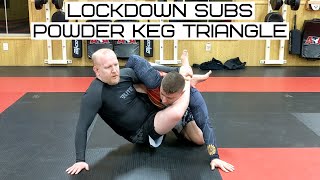
Lockdown Half Guard, Part 12: Powder Keg Triangle
Cheat Code Jiu Jitsu